




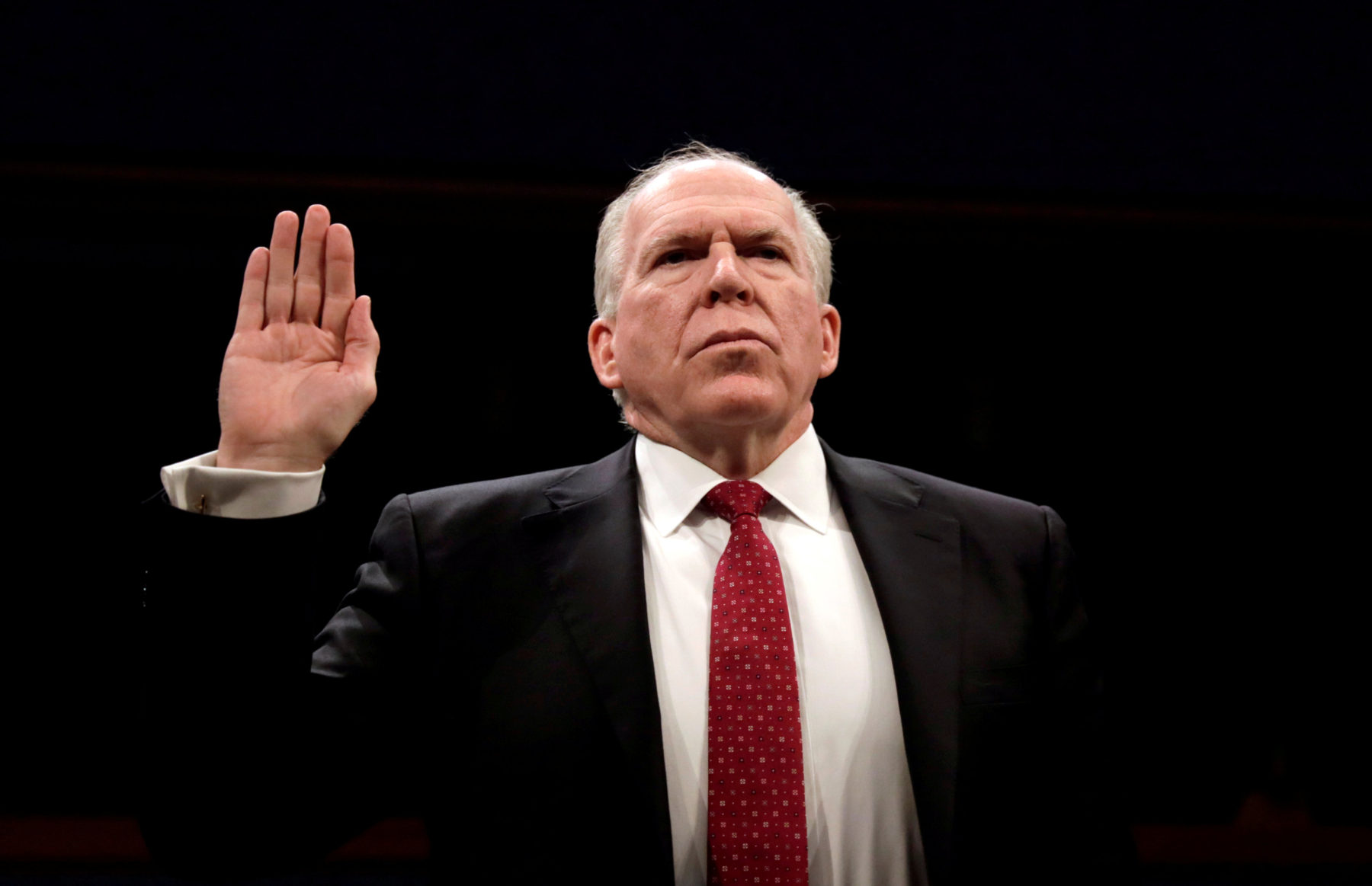
National security expert Stephen Bucci criticized former CIA Director John Brennan and other top Obama-era officials for what he described as a calculated and politically motivated abuse of intelligence operations designed to undermine Donald Trump’s candidacy and presidency.
Bucci, a former Pentagon official and current visiting fellow at the Heritage Foundation, joined host Dan Proft in the wake of newly declassified documents released by former Congresswoman Tulsi Gabbard. The documents allegedly confirm long-suspected efforts by senior intelligence officials to promote the discredited Steele dossier and suppress conflicting information during the 2016 election cycle.
According to Bucci, the new disclosures offer further evidence that Brennan, along with former FBI Director James Comey, National Security Advisor Susan Rice, and others, worked in tandem to derail Trump’s rise—and later, his administration—using the tools of government intelligence. He described Brennan as the “archetype of a politicized intelligence operator,” whose conduct has not only undermined trust in the intelligence community but contributed to a larger erosion of public confidence in federal institutions.
Bucci rejected Brennan’s defense of the Russia investigation, calling it “a failed information operation” intended to mislead both the public and the incoming Trump administration. He said the former CIA director’s continued insistence on the legitimacy of the collusion narrative—despite contrary evidence—is part of a broader strategy to avoid accountability and maintain media relevance.
Tulsi Gabbard’s recent revelations were characterized by Bucci as containing new material that had been buried for years. He criticized Brennan’s claims that the documents offer nothing new and pointed out that Director of National Intelligence John Ratcliffe and others had confirmed that certain intelligence findings, including Hillary Clinton’s role in the anti-Trump smear campaign, had been kept from public view until now.
The conversation also expanded to include Gina Haspel, who served as CIA station chief in London during the period in question, and other officials like John Bolton, who allegedly withheld information that contradicted the collusion narrative. Bucci suggested that many inside the federal bureaucracy—especially career civil servants loyal to Obama-era policies—worked quietly but deliberately to undermine Trump’s presidency from within.
Reflecting on Trump’s first term, Bucci argued that the president’s personnel strategy inadvertently allowed politically hostile actors to remain embedded in key agencies. He noted that acting appointments and reliance on non-political staffers, many of whom had ideological allegiances to the previous administration, made it difficult for Trump to govern effectively.
When asked whether any of the individuals involved would ever face consequences, Bucci expressed cautious optimism. He believes public awareness is significantly higher now than during past scandals, like the IRS targeting of conservative nonprofits, and said that Americans are far more skeptical of the federal government’s actions and motives.
However, Bucci remained realistic about the entrenched nature of the problem. He emphasized that unless there is a concerted legal effort to hold senior officials accountable for deliberate misconduct, history is likely to repeat itself. He singled out Brennan as a particularly egregious example, calling him a serial liar whose public commentary continues to distort the truth under the guise of authority and experience.
Ultimately, Bucci’s warning was clear: if voters and lawmakers fail to demand transparency and accountability from intelligence and law enforcement agencies, the political weaponization of government will only become more deeply embedded in the American system.