




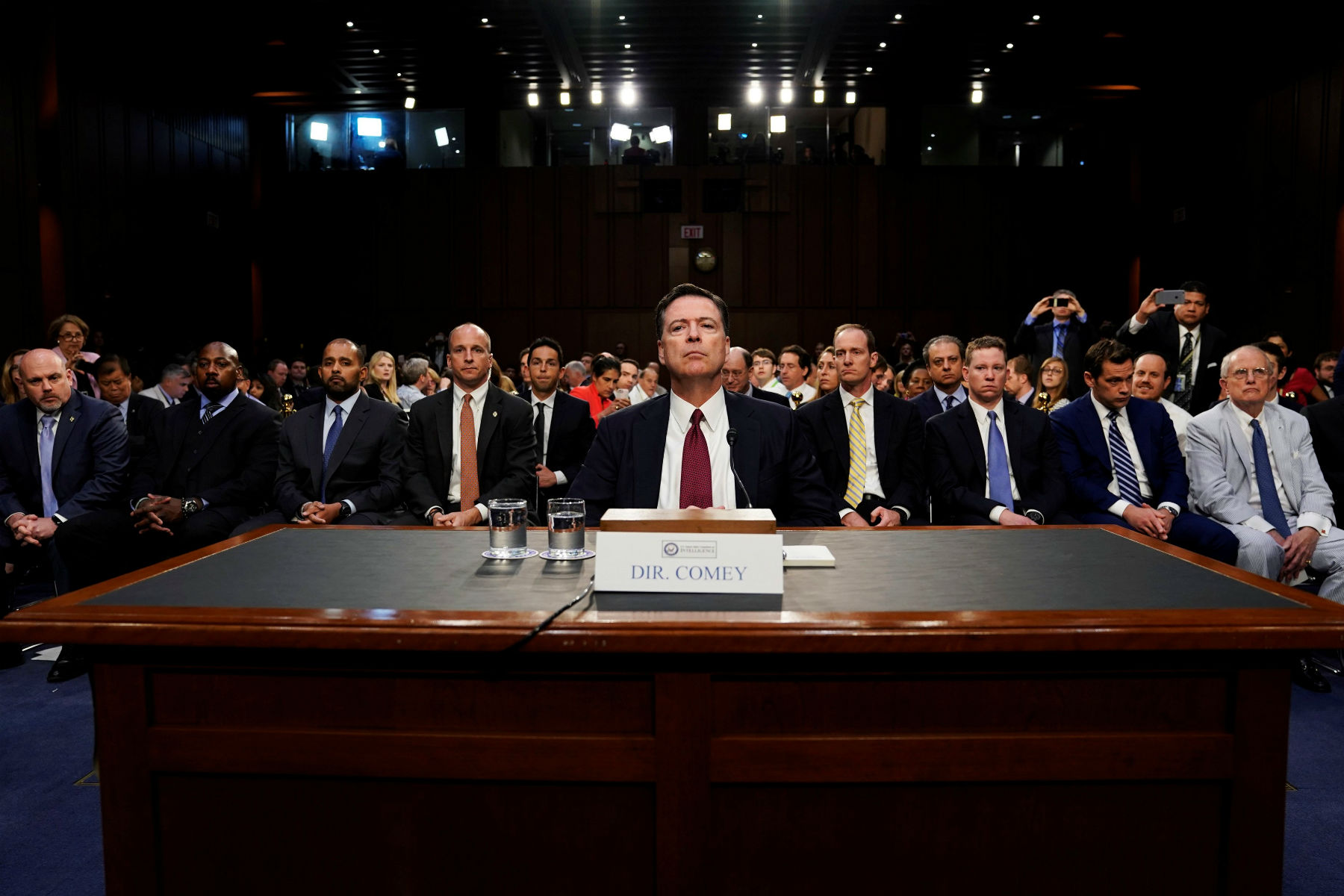
Former FBI Director James Comey took a victory lap this week after a federal judge dismissed criminal charges against him and New York Attorney General Letitia “Tish” James. But according to former federal prosecutor and Army combat veteran Joseph Moreno, the ruling says a lot less about their alleged conduct than it does about a technical fight over how prosecutors are appointed.
Moreno joined Dan Proft on Chicago’s Morning Answer to walk through what actually happened in the Eastern District of Virginia and why Comey’s self-congratulatory video may be premature.
A federal judge tossed the indictments against Comey and James on the grounds that the Trump-appointed special prosecutor, Lindsey Halligan, was improperly installed in violation of the Constitution’s Appointments Clause. The judge found that Halligan’s interim appointment as U.S. attorney exceeded the limits of the statute that allows presidents to name temporary prosecutors for 120 days while the Senate considers a permanent nominee.
Moreno noted that the dismissal was “without prejudice,” meaning the court did not rule on whether Comey or James did anything wrong. Instead, the court concluded that the prosecutor bringing the case was not lawfully in that role. That leaves the door open for the Trump administration to revisit the cases.
Under federal law, U.S. attorneys are supposed to be nominated by the president and confirmed by the Senate. While that process plays out, the president can name an interim U.S. attorney for up to 120 days. In this case, Halligan was the second interim appointment in the Eastern District of Virginia without a Senate-confirmed U.S. attorney ever having been installed.
The judge read the law to mean a president gets only one bite at the interim apple. After that, Moreno explained, the acting U.S. attorney should be a career prosecutor already in the office, typically the deputy, until the Senate acts. The concern, the court suggested, is that a president could otherwise sidestep the Senate indefinitely by chaining together interim appointments.
Moreno acknowledged the statute is not a model of clarity and said there is a plausible argument on the other side. Some legal scholars have argued that interim appointments can be renewed in 120-day increments as long as a nominee is pending and the Senate has not rejected that nominee. They worry that an uncooperative Senate could otherwise effectively cripple a Justice Department by refusing to confirm anyone and blocking interim choices after a single term.
Because the ruling turns on statutory interpretation, Moreno said the Trump administration has options. It could appeal and ask higher courts—up to and including the Supreme Court—to adopt a more flexible reading of the interim appointment statute. Or it could sidestep the appointments question entirely by re-filing the cases elsewhere, under a different U.S. attorney or directly out of Main Justice.
“These dismissals weren’t about the facts,” Moreno emphasized. “If the administration still believes the evidence is strong, it can bring these charges again in a different posture.” For that reason, he suggested Comey’s framing of the decision as a rebuke of Trump’s DOJ is, at best, selective.
The judge’s ruling applied equally to the case against New York’s attorney general, since Halligan signed both indictments. As with Comey, James’ case was wiped off the docket on process grounds, not because the court found the charges baseless.
Moreno said if the administration wants to continue, it might avoid another procedural fight in the Eastern District of Virginia by choosing a different venue—such as New York in James’ case—or by having a properly seated U.S. attorney lead the matter. The key question going forward, he said, is less about technicalities and more about whether the Trump Justice Department wants to spend political capital to pursue these prosecutions again.
Moreno and Proft also discussed a separate controversy where legal vocabulary and political messaging collided: a video released by six Democratic lawmakers—five from the House and one from the Senate—reminding U.S. service members they are not obligated to follow “illegal orders” from the president.
The lawmakers, including Sen. Mark Kelly of Arizona and Rep. Jason Crow of Colorado, both military veterans, framed the clip as a civic-minded reminder to troops about their duty to the law. Critics, including former President Trump, blasted it as seditious and accused the group of encouraging resistance inside the ranks.
Moreno, who served in the Army’s Judge Advocate General’s Corps, called the video “disgusting” and condescending to the troops. He pointed out that one of the first things drilled into new soldiers is their obligation to obey lawful orders and refuse unlawful ones. The military maintains an entire corps of JAG officers, he added, whose job is to ensure commanders and units act within the law of war and the Uniform Code of Military Justice.
In other words, no one in uniform needed a taped lecture from members of Congress to learn this.
Asked whether the participants could face legal consequences—such as recall to active duty for a court-martial—Moreno was skeptical. While the UCMJ clearly applies to active-duty personnel and reservists on orders, applying it to retirees is much murkier. Technically, retirees remain subject to military law, but in practice, recalls are typically reserved for misconduct tied to their time in service: fraud, corruption, criminal acts discovered post-retirement.
If Kelly were still on active duty, Moreno said, his conduct might raise issues under provisions like Article 88, which covers contempt toward officials. But recalling a retired officer to prosecute him for a political video would be an uphill legal battle and likely spark significant backlash.
Moreno said if anyone wanted to explore legal avenues, the more logical path would be civilian law—statutes related to incitement or insurrection. Even there, he cautioned, the actual words used in the video were too carefully lawyered to make a strong case. The lawmakers talked only about refusing unlawful orders, not disobeying the president as such.
Ultimately, Moreno argued, the fight over the video should play out in politics, not the courts. “You don’t need to criminalize this,” he said. “You beat them in the court of public opinion.” That means reminding voters, particularly in their home states and districts, how little these officials apparently think of the military’s professionalism that they felt compelled to issue a “reminder” of something every service member already knows.
In both the Comey dismissal and the lawmakers’ video, Moreno’s core theme was the same: process matters, law matters—but so does the way political actors try to frame themselves as guardians of the rule of law while playing hardball with the institutions they claim to protect.