




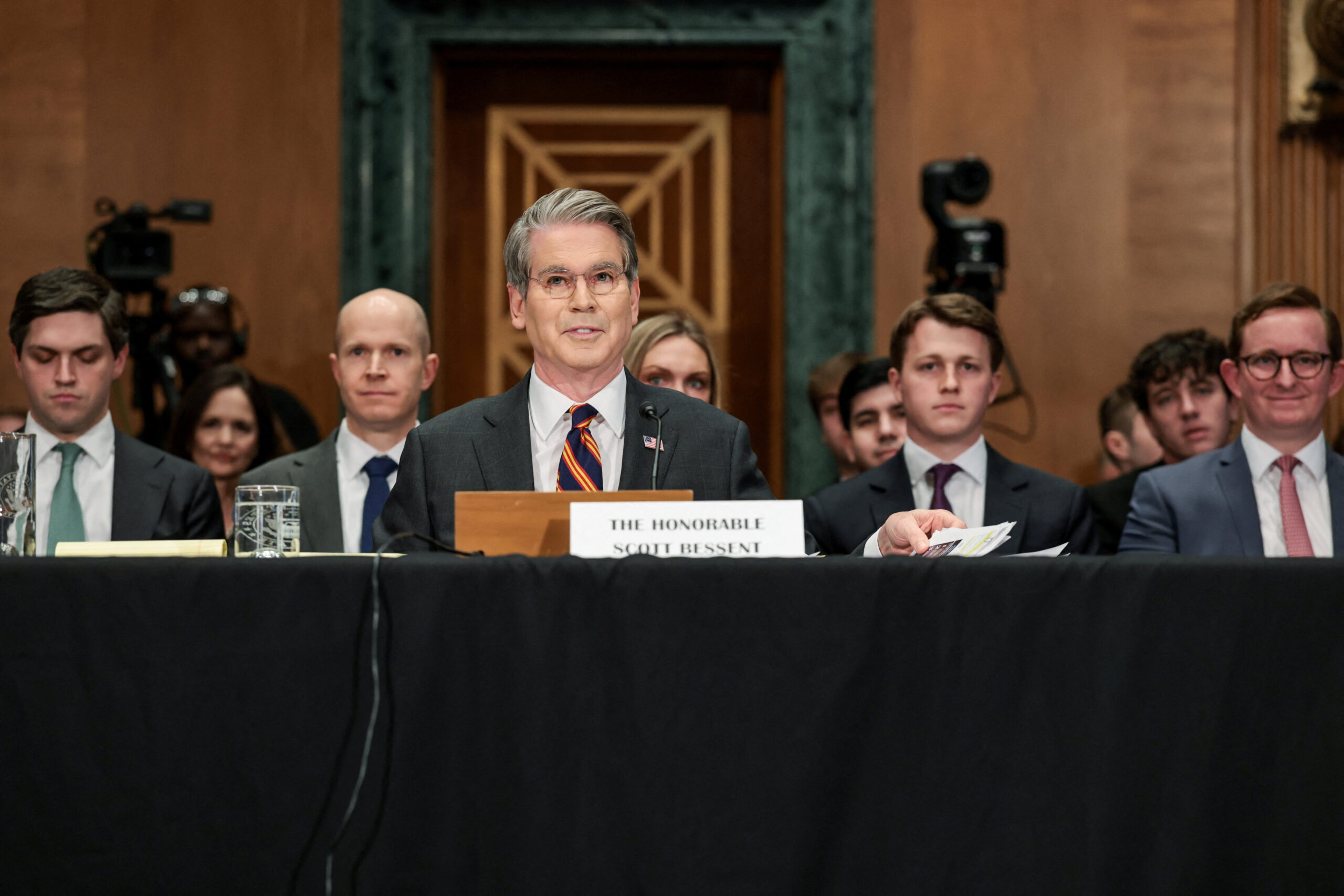
A contentious House Financial Services Committee hearing featuring Treasury Secretary Scott Bessent set the stage for a broader debate this week over the state of the U.S. economy, the role of government in markets, and renewed volatility in cryptocurrencies. While Bessent opened his testimony by citing recent economic growth figures and progress against inflation, the hearing quickly devolved into partisan clashes that produced more viral moments than substantive discussion, underscoring ongoing frustration with Washington’s approach to economic oversight.
Dan Proft used the hearing as a springboard for a wider conversation with John Tamny, editor of RealClearMarkets and author of The Money Confusion. Tamny criticized Bessent’s reliance on headline economic indicators, arguing that measures like GDP growth obscure more than they reveal and wrongly credit government activity for economic expansion that, in his view, comes from private enterprise.
The discussion then turned to cryptocurrency markets after Bitcoin fell sharply below recent highs, reigniting questions about its role as money versus speculation. Tamny argued that Bitcoin’s volatility disqualifies it from functioning as true money, which he defined as a stable medium of exchange. Assets that fluctuate wildly in value, he said, cannot reliably facilitate trade without creating winners and losers in ordinary transactions. While acknowledging that many investors treat cryptocurrencies as speculative assets, he maintained that this reality undercuts claims that Bitcoin or similar tokens can replace the U.S. dollar.
Despite the pullback, Tamny rejected the idea that declining crypto prices signal the end of what he calls a broader crypto or private-money revolution. He compared the current downturn to the early-2000s internet crash, which wiped out weak companies but ultimately cleared the way for more durable innovations. In his view, corrections provide information, helping markets distinguish between speculation and solutions that genuinely address problems created by unstable government-issued currencies.
Tamny argued that the long-term opportunity lies not in volatile digital tokens but in the eventual emergence of private currencies designed to maintain consistent value. Such currencies, he said, would reduce the enormous resources currently devoted to hedging against inflation and currency instability, freeing capital for productive investment rather than defensive strategies like stockpiling gold.
The conversation also touched on monetary policy and the Federal Reserve, particularly the nomination of Kevin Warsh to serve as Fed chair. While Warsh has drawn praise from some free-market advocates, Tamny expressed skepticism, labeling him an interventionist shaped by crises in 2008 and 2020. He argued that central bank efforts to “do whatever it takes” during periods of turmoil often create or worsen crises rather than prevent them, and he dismissed the idea that the Fed meaningfully controls interest rates or inflation over the long term.
Taken together, the discussion reflected a deeper unease about economic policymaking, from the performative nature of congressional hearings to unresolved questions about money itself. As markets adjust to shifting expectations around crypto, inflation, and the Fed’s future leadership, critics like Tamny argue that less intervention, not more, remains the missing ingredient in restoring stability and long-term growth.