




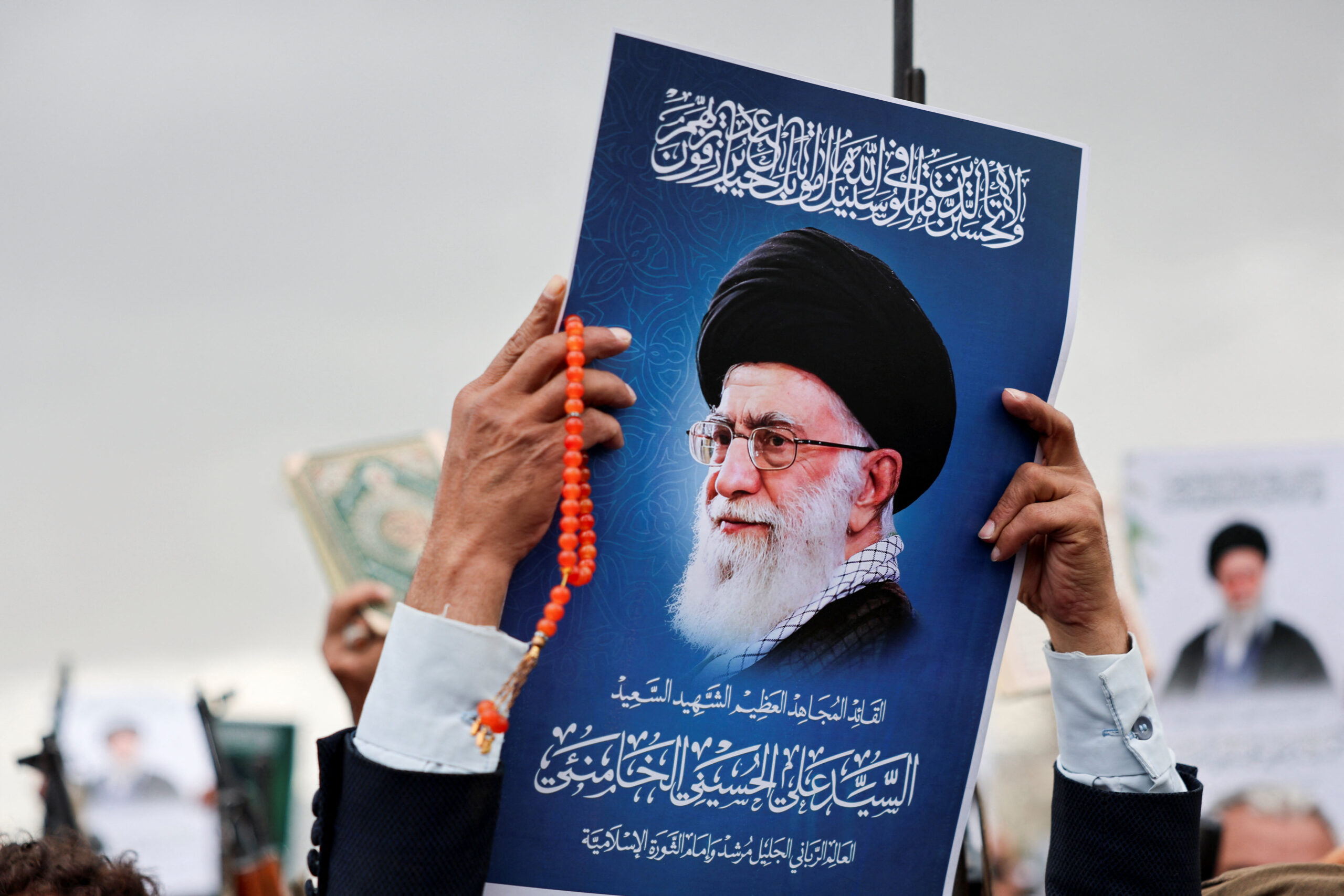
The death of Iran’s Supreme Leader has triggered a complex succession process that could reshape the balance of power within the Islamic Republic, according to Middle East policy expert Jason Brodsky.
Brodsky, policy director at United Against Nuclear Iran and a scholar affiliated with the Middle East Institute’s Iran program, said the coming months will determine whether Iran maintains its current structure of religious leadership or moves toward a more militarized power structure dominated by the country’s security apparatus.
Under Iran’s constitution, the death of a supreme leader triggers the formation of an interim leadership council that temporarily governs the country while the Assembly of Experts selects a permanent successor.
“That interim council is composed of three individuals,” Brodsky explained. “The president of Iran, the chief justice, and a member of the Guardian Council, which oversees elections. Their role is to maintain continuity until the Assembly of Experts chooses the next supreme leader.”
The Assembly of Experts, an 88-member clerical body, holds the constitutional authority to select the next leader of the Islamic Republic. However, Brodsky noted that the process is heavily influenced by powerful political factions operating behind the scenes.
One name that has surfaced prominently in discussions about succession is Mojtaba Khamenei, the son of the late supreme leader. According to Brodsky, Mojtaba has spent years operating quietly within Iran’s political system and has built influence among key security and military institutions.
“Mojtaba Khamenei has long been associated with hardline elements within the regime,” Brodsky said. “He has effectively run much of his father’s office for years and has developed relationships within Iran’s security establishment that position him as a formidable contender.”
Still, Brodsky said Mojtaba’s potential rise would not be without controversy. Iran’s 1979 Islamic Revolution overthrew a hereditary monarchy, and installing the supreme leader’s son could raise concerns that the system is drifting toward dynastic rule.
“The revolution was founded in part on opposition to hereditary leadership,” Brodsky said. “That makes his candidacy politically sensitive.”
Another major factor shaping the succession process is the role of the Islamic Revolutionary Guard Corps, widely regarded as the most powerful institution in Iran.
Over the past several decades, the IRGC has expanded far beyond its original role as a military force and now holds major economic, political, and security influence throughout the country.
“The IRGC is the most powerful actor in the Islamic Republic today,” Brodsky said. “It controls significant portions of the economy and its members occupy many of the most influential positions in the political system.”
According to Brodsky, the organization has effectively become a kingmaker in the leadership transition and could attempt to steer the selection process in a direction favorable to its interests.
Some reports suggest factions within the IRGC are pressuring members of the Assembly of Experts to support Mojtaba Khamenei’s candidacy.
If that influence continues to grow, Brodsky said Iran could face a future in which the supreme leader holds less independent authority while the Revolutionary Guard becomes the dominant power center.
“That scenario could produce a weaker supreme leader who is more dependent on the IRGC,” he said.
Beyond the leadership question, Brodsky also addressed the broader geopolitical conflict between Iran and the United States, arguing that tensions between the two countries stretch back decades.
“This conflict didn’t start recently,” he said. “It began in 1979 when Iranian revolutionaries seized the U.S. embassy in Tehran and held American diplomats hostage.”
Brodsky said Iran’s hostility toward the United States has continued through actions including support for militant proxy groups and attacks against American personnel.
During the Iraq War, he noted, Iranian-supplied weapons contributed to the deaths and injuries of hundreds of U.S. service members.
“This has been a pattern of hostility toward the United States for decades,” Brodsky said.
Brodsky also criticized the 2015 Iran nuclear agreement, arguing that the deal focused too narrowly on nuclear development while failing to address other aspects of Iran’s regional influence.
“The nuclear issue is only one part of the challenge,” he said. “Iran is also involved in terrorism, proxy warfare, and human rights abuses. Those issues were not addressed adequately.”
He argued that sanctions remain an important tool in limiting Iran’s ability to finance military programs and support armed groups throughout the Middle East.
Sanctions, Brodsky said, have historically pressured Iran’s leadership and helped bring the country to the negotiating table in past diplomatic efforts.
“Sanctions deprive the regime of resources it would otherwise use to fund weapons programs and proxy forces,” he said.
While the leadership transition unfolds, analysts will be closely watching how Iran’s military, clerical establishment, and political elites navigate the succession process.
The outcome could determine not only who leads Iran next, but also whether the country’s future government remains centered on religious authority or shifts toward greater dominance by the security state.
“The succession question is not just about one individual,” Brodsky said. “It’s about the future balance of power inside the Islamic Republic.”