




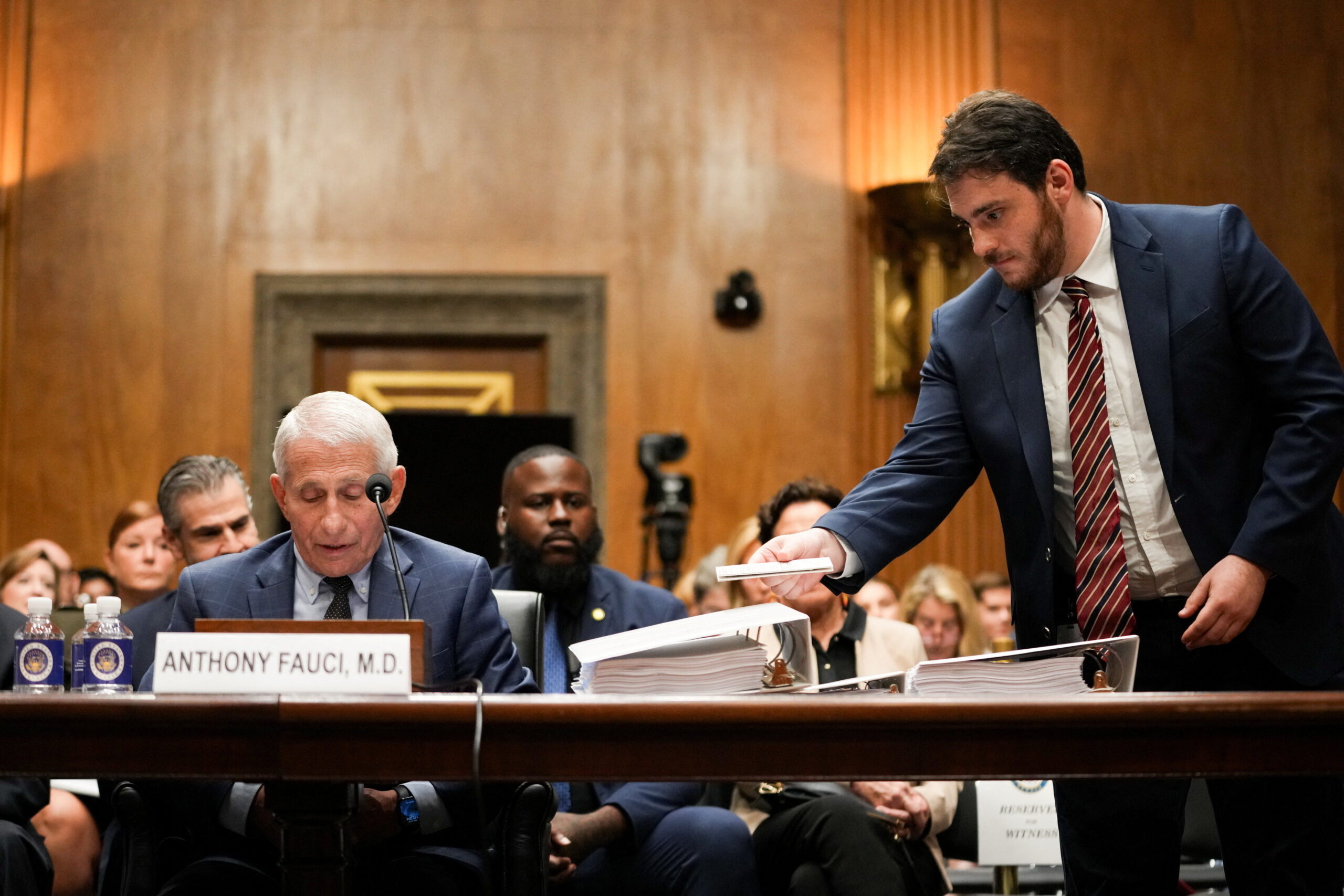
Dr. Anthony Fauci’s newly released diary entries ahead of his testimony before Congress continue to make news. Dan Proft pushed back on characterizations from some critics suggesting the release amounted to a privacy violation, noting the documents were produced on government computers as part of Fauci’s official work product at the National Institutes of Health. Proft played audio the show characterized as a parody call illustrating the celebrity culture surrounding Fauci during the pandemic, before turning to substantive commentary on the diary’s contents, including reported entries describing tension between Fauci and CNN’s Chris Cuomo regarding Stanford neuroradiologist Dr. Scott Atlas, whom Cuomo publicly criticized after joining the White House’s COVID advisory circle.
Proft welcomed Jeffrey Tucker, founder and president of the Brownstone Institute and senior economics columnist for the Epoch Times, to discuss the diary’s implications. Tucker said he has spent several days closely reading the more than one-thousand-page document and described it as effectively an early draft of Fauci’s planned memoir, noting that the material appears to have been compiled with substantial staff support, including detailed daily case data and comprehensive logs of his media appearances. Tucker argued the sheer effort invested in cataloging favorable coverage suggests a deliberate, sustained campaign to shape public perception rather than a private, reflective journal.
Tucker offered his own theory for Fauci’s motivations, suggesting his heavy media presence and cultivation of public adoration functioned partly as a defensive strategy against scrutiny of his agency’s prior support for gain-of-function research linked to the pandemic’s origins. Tucker also argued that Fauci’s popularity stemmed significantly from his positioning as a political foil to President Trump, citing diary passages in which Fauci reportedly made critical private comments about Trump to members of the media, comments Tucker said created an implicit alignment between Fauci and journalists covering the administration.
Much of the conversation focused on diary entries Tucker said reveal Fauci had significant private knowledge of the COVID-19 vaccines’ declining effectiveness against emerging variants far earlier than was publicly acknowledged. Tucker cited an entry from January 2021, in which Fauci reportedly received early warnings from a United Kingdom-based virologist regarding reduced vaccine efficacy against the Delta variant, and described Fauci using the word “useless” in his own private assessment of the shots’ declining protection, despite continuing to publicly advocate for widespread vaccination and eventual mandates affecting millions of Americans. Tucker also referenced a separate entry from later in 2021 in which Fauci privately expressed concern about becoming infected despite vaccination while dining at a crowded restaurant, a private admission Tucker said stood in contrast to his public reassurances regarding vaccine protection at the time.
Tucker closed by arguing that the diary’s revelations, taken as a whole, reflect a deeper level of calculated self-interest than he had previously believed to be the case, even accounting for his own long-standing criticism of Fauci’s pandemic-era leadership throughout the Brownstone Institute’s work during the crisis.