




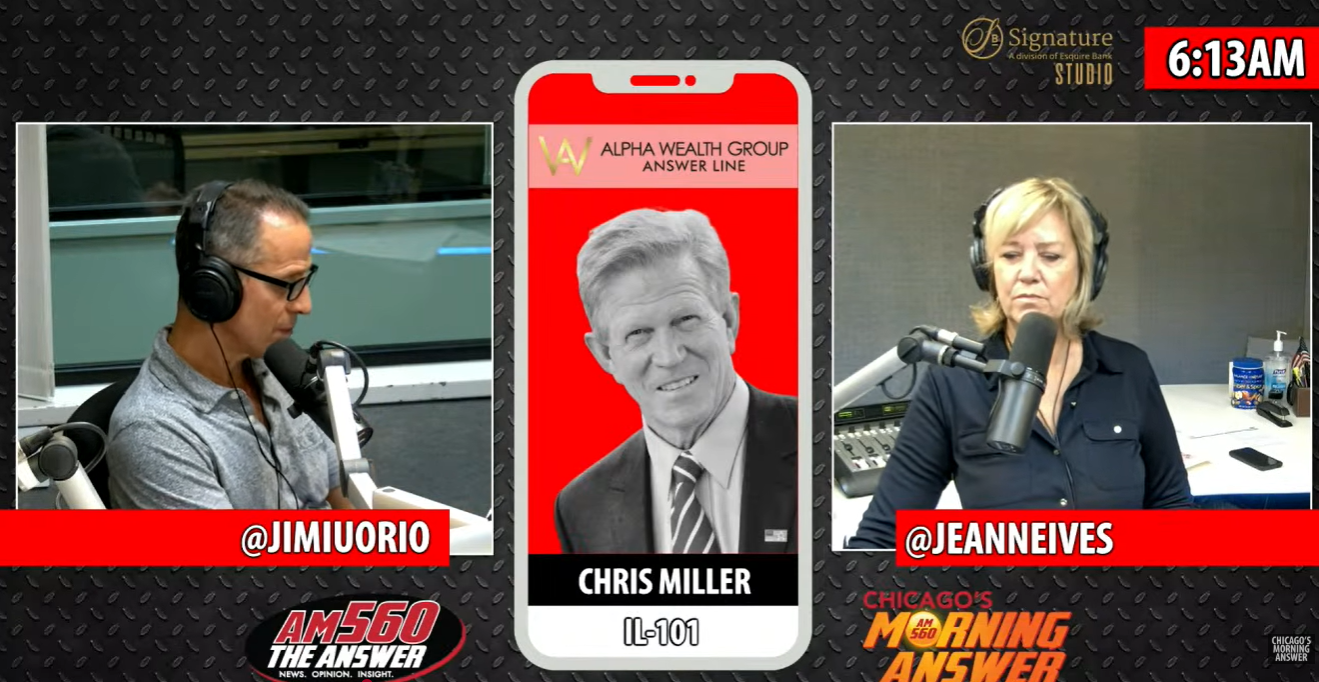
Illinois’ estate tax is putting family farms at risk of being broken up or sold, according to State Rep. Chris Miller, who joined Chicago’s Morning Answer Tuesday to discuss the tax and the growing push to repeal it.
Miller, a Republican and longtime farmer from East Central Illinois, told hosts Jeanne Ives and Jim Iuorio, who were filling in for Dan Proft, that the state’s estate tax is particularly burdensome for farmers whose land and other assets have increased significantly in value over the past decade.
The Illinois Farm Bureau has also criticized the estate tax, arguing that it can force farm families to sell portions of their operations in order to meet their tax obligations. Brian Duncan of the Illinois Farm Bureau said in a segment preceding Miller’s interview that the tax can affect ordinary farm families whose wealth is tied primarily to the land and business they operate.
Miller said he has experienced the issue personally. He has farmed in Illinois for approximately 50 years and said his own family has spent tens of thousands of dollars over multiple generations on legal and accounting expenses aimed at preserving the farm for the next generation.
Miller said his father, now 95, spent significant sums to ensure the family farm could be passed down, and Miller is now facing the same challenge as he works to transfer the operation to his own children. He estimated that he has already spent between $10,000 and $20,000 on attorneys and accountants in the current process.
At the center of the debate is Illinois’ $4 million estate-tax exemption, which Miller and the hosts noted has not been adjusted for inflation since 2013. With farmland values having risen substantially since then, Miller argued that farms that might not traditionally be considered large or extraordinarily wealthy can now exceed the state’s threshold simply because of the value of their land.
Ives and Iuorio argued during the interview that the tax represents a relatively small portion of the state’s overall revenue while creating a significant burden for families attempting to preserve businesses and farms across generations. They also pointed to the fact that the federal estate-tax exemption is substantially higher than Illinois’ threshold.
Miller said Democrats have the votes to change the law, given their supermajorities in both chambers of the Illinois General Assembly and control of the governor’s office, but argued that there has been little political appetite to repeal the tax.
Gov. JB Pritzker has previously said he supports efforts to lower costs for Illinois residents and help farmers build wealth that can be passed down to future generations. During the discussion, however, Miller and the hosts questioned why the state has not made changes to the estate tax despite those statements.
Miller accused Pritzker and Democratic lawmakers of making promises about the issue without following through, particularly during election years. He argued that the only way to permanently resolve the issue is to repeal the state estate tax.
The discussion also turned toward the Illinois Farm Bureau and its approach to the issue. Ives criticized the organization for what she characterized as an overly conciliatory relationship with Democratic lawmakers and questioned why it has not taken a more aggressive position on behalf of farmers facing the estate tax.
Miller agreed, arguing that the Farm Bureau has significant influence among Illinois farmers and should use its platform to put more pressure on lawmakers and the governor. He said the organization should more forcefully challenge politicians who claim to support family farms while opposing or failing to advance changes to the estate tax.
For Miller, the issue is ultimately about whether family farms can remain in families from one generation to the next. He said the combination of rising land values, an unchanged exemption threshold, and the costs of navigating the tax system can make succession planning increasingly difficult for farm families.
The estate tax debate is likely to remain part of the broader discussion over Illinois’ tax burden as lawmakers and candidates campaign ahead of the November election. For Miller, however, the issue is more than a political talking point. It is a challenge he says his own family has faced for decades and one that he believes threatens the ability of Illinois farm families to preserve their operations for future generations.