




Questions about election administration in Milwaukee are once again drawing scrutiny after a recent Democratic primary was disrupted by a ballot-counting error, according to Federalist senior elections correspondent Matt Kittle.
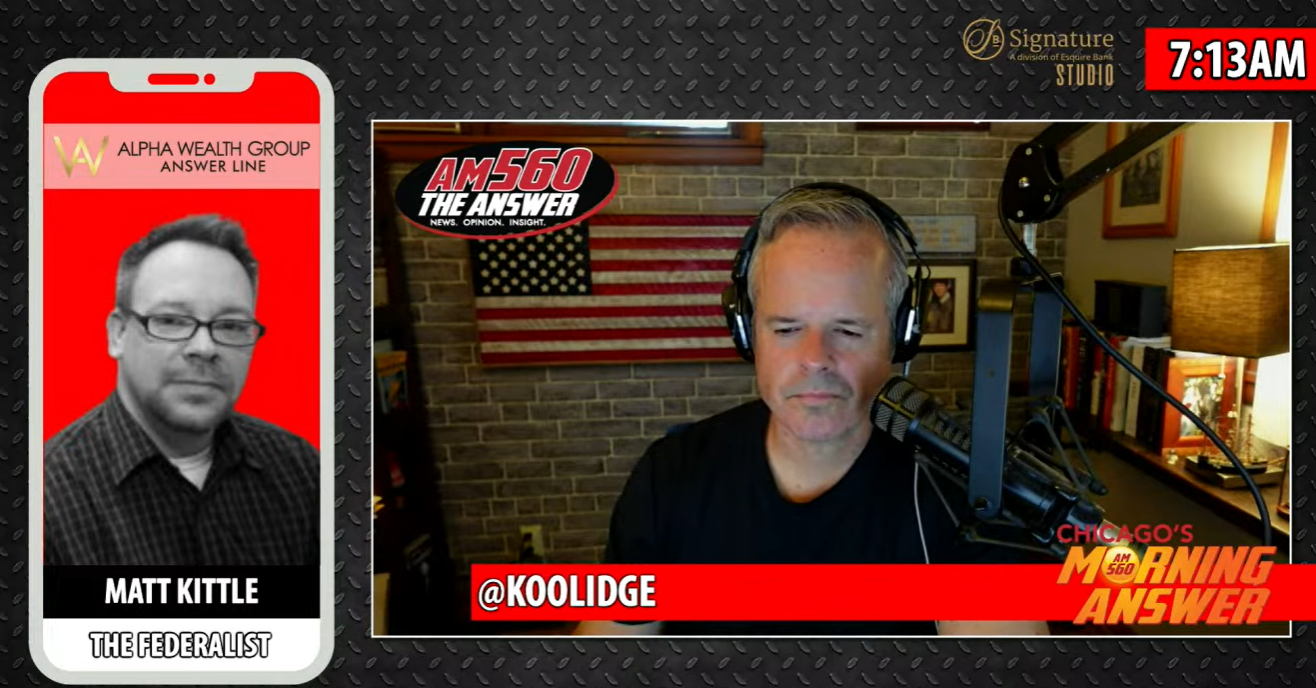
Kittle, who previously served as executive director of Empower Wisconsin, joined Mike Koolidge on Chicago’s Morning Answer while Koolidge was filling in for Dan Proft to discuss the unusual primary and what he described as a broader pattern of problems with election administration in Milwaukee.
The primary centered on Francesca Hong, a Democratic state representative and self-described socialist who was leading the field in the race for Milwaukee County executive. According to Kittle, incumbent Milwaukee County Executive David Crowley initially left the race after polling showed him well behind Hong, only to be encouraged by Democratic Party officials to reenter the contest because of concerns about Hong’s ability to defeat Republican nominee Tom Tiffany in the general election.
Crowley ultimately won the primary, but the result was overshadowed by problems with the counting process on election night.
Kittle said election officials mistakenly loaded audit information onto five of nine memory sticks rather than the actual election results. The error contributed to a delay in reporting the results, creating another late-night wait for Milwaukee voters and fueling renewed questions about the city’s election procedures.
For Kittle, the episode was particularly concerning because Milwaukee has experienced other controversies involving election administration in recent election cycles. He pointed to the city’s handling of the 2020 election, including outside funding from Facebook founder Mark Zuckerberg that went to several Wisconsin cities and allegations that Democratic-aligned operatives became involved with local election offices.
Kittle also recalled controversies surrounding ballot counting and election transparency during the 2020 election, including concerns about whether members of the public were able to observe the process. He argued that regardless of one’s political affiliation, citizens should retain the ability to question how elections are conducted.
“Human error” has become a familiar explanation for problems in Milwaukee election administration, Kittle said, but he argued that repeated mistakes deserve more than an internal review.
The Milwaukee Election Commission conducted its own review of the most recent incident and characterized the problem as human error. The Wisconsin Elections Commission also considered the matter but, according to Kittle, decided that it needed additional information before determining whether to pursue a formal investigation.
That response has not satisfied Kittle, who compared the situation to having an organization investigate its own problems. He argued that outside scrutiny is necessary when election officials repeatedly encounter problems that affect public confidence in the voting process.
Kittle’s concerns come as the U.S. Department of Justice prepares to deploy federal election monitors around the country. He said Milwaukee should be considered a prime location for additional oversight because of its history of election-administration controversies.
The issue of election observers has already become politically contentious. Kittle argued that monitoring elections should not be characterized as voter intimidation or an attempt to undermine democracy. Instead, he said, transparent observation is an important part of maintaining public confidence in the process.
The discussion also touched on broader disagreements between Republicans and Democrats over election-integrity policies. Kittle criticized Democrats for opposing measures such as voter identification requirements and legislation establishing that only U.S. citizens should participate in federal elections.
Koolidge and Kittle agreed that election administration should be transparent enough that voters from either political party can have confidence in the results. For Kittle, the controversy in Milwaukee is less about the outcome of one primary than about whether election officials are doing enough to prevent errors and provide the public with confidence that votes are being counted accurately.
With Wisconsin heading toward another closely watched election season, the attention on Milwaukee is unlikely to disappear. For election officials, the challenge will be demonstrating that mistakes are isolated incidents rather than evidence of systemic problems. For voters, Kittle argues, the ability to ask questions and observe the process should remain a fundamental part of American elections.