




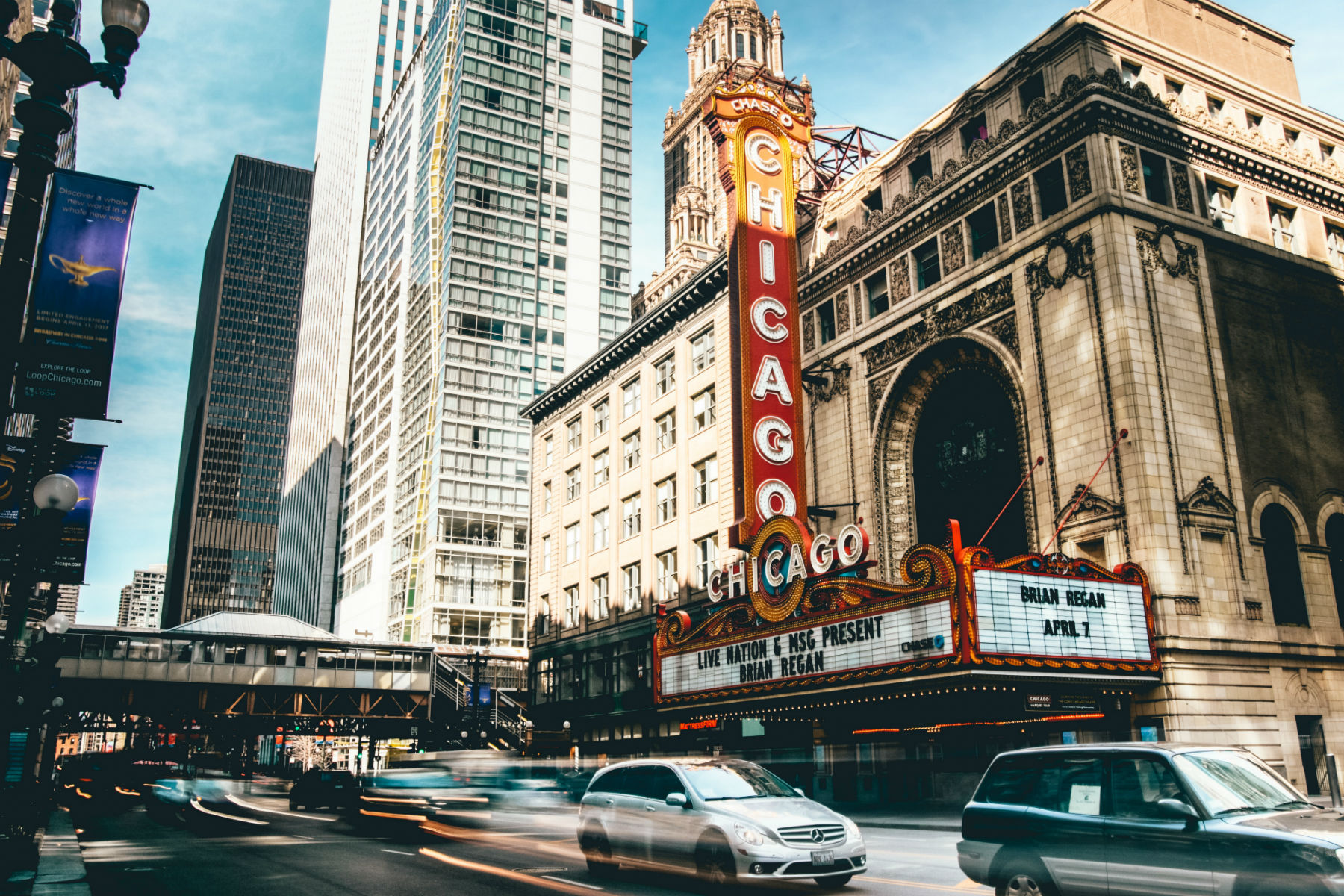
A mass shooting near the Chicago Theatre on Friday night—eight wounded on State Street and a 14-year-old killed around the corner on Dearborn—has once again forced City Hall to confront the public-safety crisis it has long insisted could be managed with “youth investment” and non-police interventions. Mayor Brandon Johnson, who once dismissed such roving teenage mobs as “silly kids” making “silly decisions,” adopted a markedly different tone this time, acknowledging that the city’s plan “did not do enough” despite an additional 700 officers deployed for the tree-lighting festivities.
But according to retired Chicago Police Lt. John Garrido, a former commander in the 16th District and head of the Garrido Stray Rescue Foundation, the chaos was not a resource problem—it was a policy problem.
Joining Dan Proft on Chicago’s Morning Answer, Garrido said the critical tool missing Friday night was the snap curfew ordinance that Johnson vetoed earlier this year. That measure would have allowed the police superintendent to declare an immediate temporary curfew during rapidly developing situations. “He could have looked at that scene at 8:30 and said, ‘This is getting out of control—curfew at 9 p.m., everyone has to leave,’” Garrido explained. “Instead, he vetoed it because he said it was racist. And now a 14-year-old is dead.”
Garrido said he and his wife were downtown themselves on Friday evening, attempting to see the holiday lights before quickly realizing how dangerous the situation had become. “They say 300 teens—I saw at least a thousand,” he said. A stampede erupted after gunfire nearby, and an officer told Garrido that the city had shut down the tree early due to the eruptions of violence.
Those images—including a terrified elderly couple ducking for cover and police racing on foot toward gunfire—underscore what Garrido calls a deeper cultural problem: an emboldened youth population that does not fear consequences. “This is scarecrow policing,” he said. “You line up 700 officers and tell them to stand there until something happens. The criminals know nothing will happen until the moment violence erupts—and by then it’s too late.”
Garrido also weighed in on the case of Bethany McGee, the Blue Line passenger set on fire last week by a man with a long criminal history who should never have been released. New reporting shows Cook County prosecutors warned Judge Teresa Molina-Gonzalez—and the electronic monitoring program—that the suspect repeatedly violated conditions of release, yet no action was taken. Garrido called the judge’s approach “a complete failure,” saying her public remarks about adjudicating cases from her “Latina perspective” demonstrate precisely the type of identity-based leniency undermining public safety. “I’m a Latino Chicagoan too,” Garrido said. “I’m sick of unqualified people making decisions that put us all at risk.”
Garrido questioned the silence from newly elected State’s Attorney Eileen O’Neill Burke, saying she cannot lead effectively if she refuses to publicly challenge judicial decisions that endanger residents. “Being better than Kim Foxx is not enough,” he said. “We need leadership.”
Proft also raised concerns about the continuing fallout from the “Pritzker purge law,” which has forced judges to release offenders charged with burglary and other so-called non-violent offenses—even when the accused have long, violent criminal histories. Garrido said the law has normalized property crime by reframing it as something minor or inevitable. “They’ve programmed the public to think, ‘It’s only a car, it’s only a burglary, insurance covers it.’ That’s how you destroy a city.”
On another unresolved controversy, Garrido said he doubts the public will ever see the promised after-action report regarding the stand-down order CPD commanders issued when ICE agents were attacked weeks ago—a moment recorded on radio dispatch. “That was the clearest stand-down order I’ve ever heard,” he said, adding that silence from city leadership and the wider political class signals there is little appetite to correct a harmful pro-criminal narrative.
Garrido also noted the unusual quiet coming from the Fraternal Order of Police, saying internal turmoil has distracted the union from its role as a public watchdog. “They need to get their house in order,” he said.
Despite the grim news, Garrido closed on a lighter note, highlighting a fundraising effort for Bobble, a rescue dog suffering from serious neurological issues. His foundation is raising money for a surgery expected to cost up to $16,000. Donations can be made at gerridostrayrescue.org or via the group’s Facebook page.
But on matters of crime and safety, Garrido’s message was unequivocal: Chicago is not suffering from a shortage of officers—it is suffering from a shortage of political will. And until that changes, he warned, the city will continue to see the same violent outcomes, no matter how many times leadership urges “silly kids” to behave.