




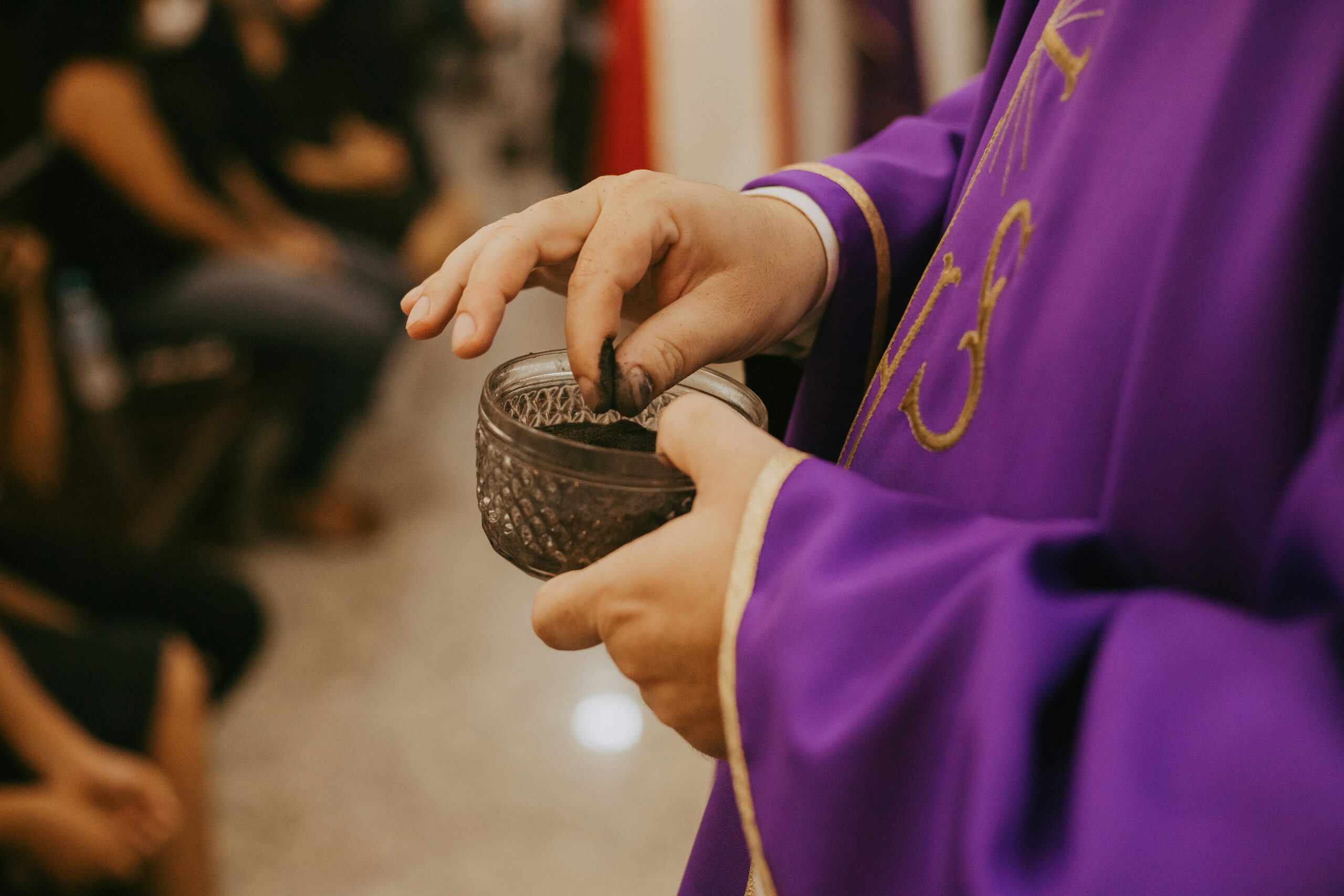
A conversation about public life, faith, and mortality took center stage this Ash Wednesday as author and longtime journalist T.R. Reid reflected on the meaning of the Lenten season and the tension between private devotion and public witness.
Reid, a former Washington Post correspondent and author of books ranging from health care reform to tax policy, recently wrote about Ash Wednesday and what he calls “our shared dust.” His essay examines the apparent contradiction embedded in the day’s ritual: Christians are marked publicly with ashes on their foreheads, even though the Gospel reading for the day includes Jesus’ admonition not to practice religion in order to be seen by others.
In Matthew 6, Jesus instructs his followers to pray in private, to give alms discreetly, and to fast without drawing attention to themselves. Yet on Ash Wednesday, believers line up to receive a visible cross of ashes on their foreheads before returning to workplaces, schools, and city streets.
Reid said he has long been struck by that tension.
“It’s exactly what Jesus told us not to do,” he noted. “Don’t stand out in the street like the hypocrites. And yet on Ash Wednesday, we walk out of church with a big black cross on our foreheads.”
Over the years, he has listened closely to priests attempt to reconcile that contradiction. One explanation, he said, is that the ashes are not a badge of spiritual superiority but a symbol of repentance. Rather than proclaiming virtue, they represent a public acknowledgment of human frailty and the need for change.
Another interpretation focuses on the phrase traditionally spoken when ashes are imposed: “Remember that you are dust, and to dust you shall return.” That reminder of mortality, Reid said, underscores a shared human condition. It places believers not above others but among them, part of creation rather than masters of it.
The Ash Wednesday ritual arrives at the beginning of Lent, a season that calls for reflection, repentance, and renewal. Reid said he has come to think of Lent less as a time for deprivation and more as an opportunity for generosity.
Instead of giving something up, he gives something away. Each year, he withdraws small bills from the bank, staples them to information about services offered by the Colorado Coalition for the Homeless—an organization whose board he serves on—and distributes them to people living on the street.
“I don’t give up for Lent,” he said. “I give away.”
The broader theme of humility and perspective also surfaced in discussion of public life. In recent reflections, former Nebraska Senator Ben Sasse—who is battling stage-four pancreatic cancer—spoke about “redeeming the time,” a phrase drawn from Puritan theology that emphasizes using one’s limited days in service to others.
Sasse argued that politics, while important, should never become the center of a person’s identity. Government exists to secure rights, not to define the meaning of life. The enduring things, he said, are not political victories but relationships, service, and love of neighbor.
Reid agreed that such a view offers needed balance in a moment when civic engagement often bleeds into obsession. Politics matters, he said, but it should not eclipse deeper commitments.
Ash Wednesday’s bracing reminder—“to dust you shall return”—cuts through much of the noise. It situates personal ambition, political conflict, and daily anxieties within a finite frame.
For Reid, that message is not morbid but clarifying.
“It reminds us that we’re all part of creation,” he said. “We started as dust, we have this time on Earth, and we return as dust.”
In a culture often driven by visibility and performance, the quiet call of Lent runs counter to prevailing currents. It invites believers to step back, to measure their lives not by public acclaim but by faithfulness in small acts, and to treat time as a gift rather than a guarantee.
As the ashes fade from foreheads in the days ahead, the question remains: how best to redeem the time that follows.