




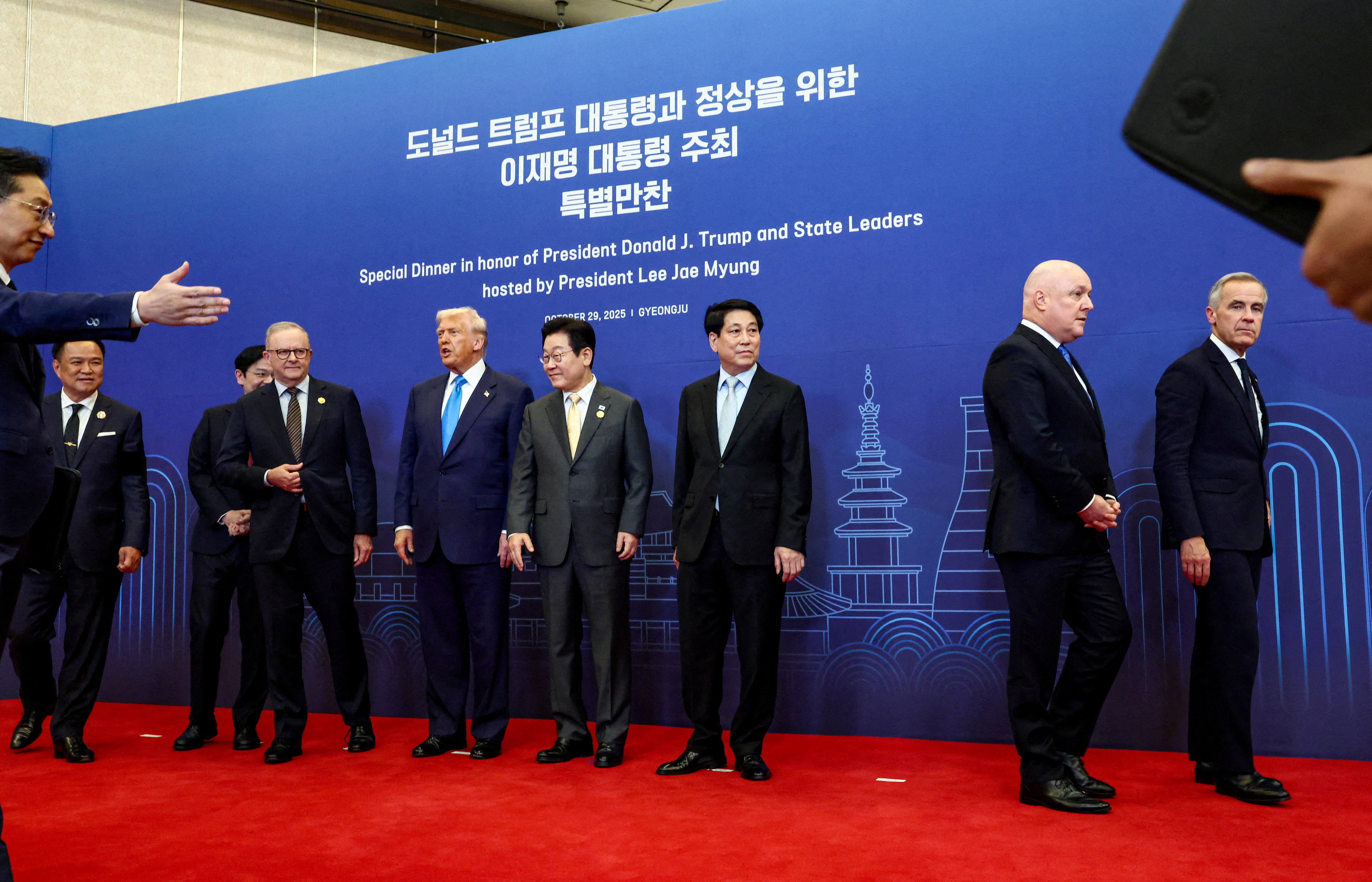
Cliff May, president of the Foundation for Defense of Democracies and foreign affairs columnist for The Washington Times, joined Chicago’s Morning Answer to discuss President Trump’s Indo-Pacific tour and the geopolitical implications of his meetings with key U.S. allies. May said Trump’s outreach to nations such as Japan, South Korea, and Thailand strengthens America’s strategic position and forces Beijing to reconsider its expansionist ambitions.
“Xi Jinping is a very competitive man,” May said. “He knows what he wants to achieve while he remains president for life, and that includes increasing China’s influence in the region. But Trump’s efforts to build strong, independent alliances make that harder.”
May praised the administration’s push for reciprocal trade agreements with countries across Asia, calling them “stabilizing victories” that promote economic balance while countering China’s dominance over critical supply chains. He pointed to Trump’s emerging deals with Malaysia, Cambodia, and South Korea as part of a broader plan to reduce dependence on Beijing.
He also highlighted the creation of the National Energy Dominance Council, chaired by Interior Secretary Doug Burgum and Energy Secretary Chris Wright, as a major shift from the previous administration’s climate-driven policy. “Energy security is national security,” May said. “Trump’s team understands that we need to mine and process critical minerals here at home instead of relying on China.”
Turning to Taiwan, May said Xi remains intent on bringing the island under Communist control, but a full-scale invasion is not his only option. “He could try to strangle Taiwan through blockades, cyberattacks, or political infiltration,” May warned. “But he knows that an invasion would destroy China’s economy. Taiwan produces the world’s most advanced semiconductors — Xi can’t afford to burn the village to save it.”
The conversation then shifted to the Middle East, where May provided updates on Israel and Hamas amid a fragile ceasefire. He confirmed that fighting briefly resumed after Hamas violated the truce, but the ceasefire was later restored. “If Hamas kills an Israeli soldier without consequence, they’ll do it again,” May said. “Israel has to respond, and President Trump supports that. He’s made clear that Hamas will either disarm or be disarmed.”
May said Trump hopes to enlist regional Arab partners such as the UAE and Saudi Arabia to help disarm Hamas and rebuild Gaza, but acknowledged that Israel may ultimately have to act alone. “If no one else is willing to do it, Trump will tell Israel, ‘You have to decide whether to finish the job yourselves,’” he said.
Despite the challenges ahead, May said Trump’s foreign policy approach marks a decisive break from previous administrations. “He’s combining economic leverage, energy independence, and strong alliances to project stability,” May concluded. “It’s a strategy that’s working — and the world is taking notice.”