




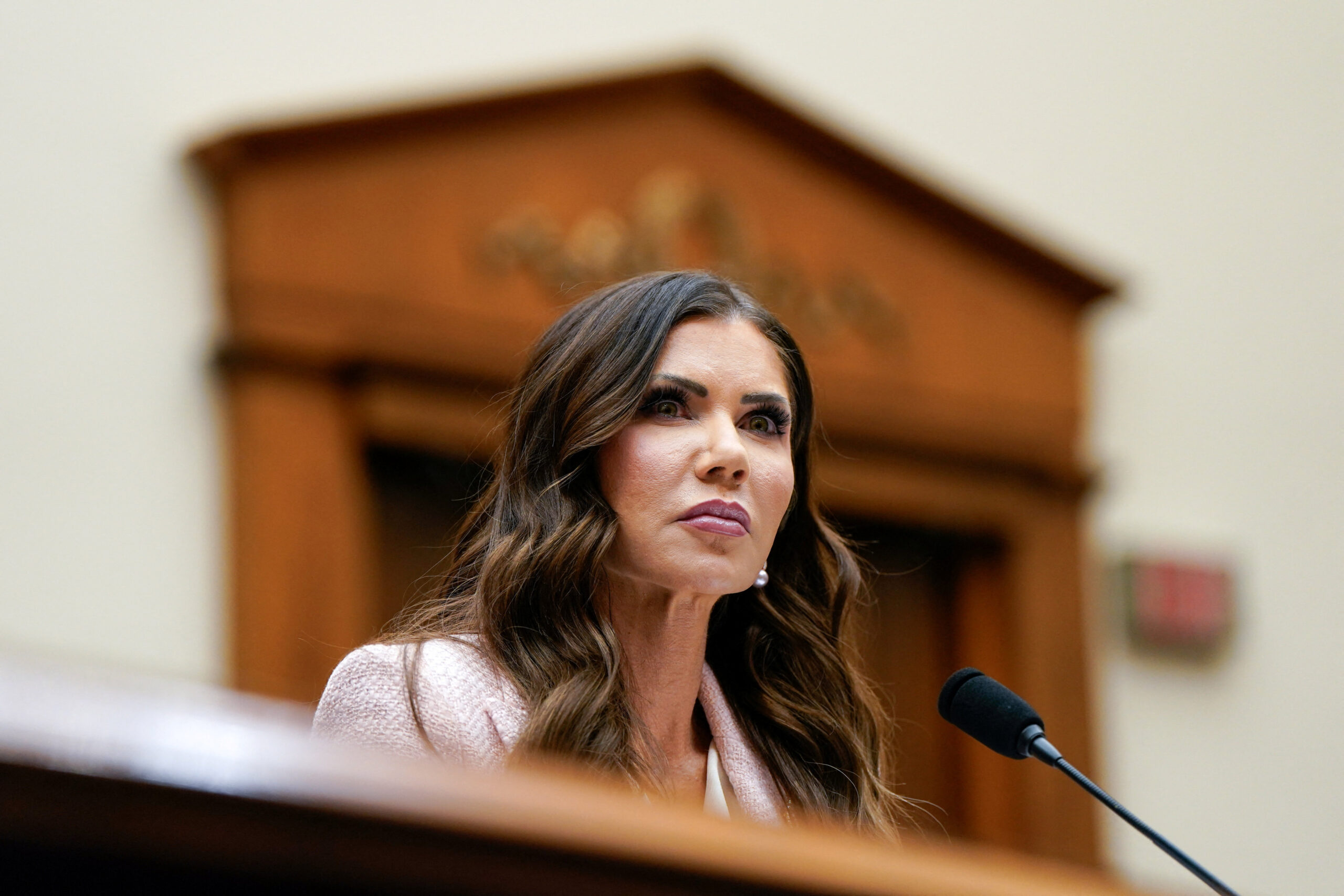
A series of contentious congressional hearings has intensified scrutiny on Homeland Security Secretary Kristi Noem, prompting speculation in Washington about whether President Donald Trump could consider replacing a member of his own cabinet amid mounting political pressure.
The hearings, which focused on both immigration policy and spending decisions at the Department of Homeland Security, produced several tense exchanges with lawmakers from both parties. At one point, Noem was confronted with a personal question during testimony that drew immediate criticism and accusations that the committee was venturing into tabloid-style territory.
Beyond the personal controversy, lawmakers also pressed the secretary about a $220 million advertising campaign encouraging migrants in the United States illegally to self-deport. Some senators questioned whether the White House had personally approved the effort and whether the scale of the spending was justified.
The confrontational tone of the hearings has fueled speculation that Trump may be weighing whether a change in leadership at the department would help reset the political narrative.
Political commentator Ed Morrissey said cabinet officials often serve as lightning rods for controversy and can be replaced when administrations want to change the conversation.
“Part of the job of a cabinet secretary is that you are expendable,” Morrissey said, noting that replacing a senior official can sometimes provide a political reset when controversies begin to dominate public attention.
Still, Morrissey suggested that Trump may be reluctant to make such a move quickly, particularly if it would trigger a lengthy confirmation battle in the Senate. Cabinet reshuffles can consume valuable political capital, especially when administrations are trying to advance major policy priorities.
Another factor complicating the decision is the political dynamic surrounding Noem’s appointment. Morrissey noted that cabinet positions are often given to political allies who supported a presidential campaign, and Noem’s endorsement during the election cycle played a role in her selection.
At the same time, he said there are potential replacements who could receive bipartisan consideration if the administration did decide to make a change. Former immigration enforcement official Tom Homan has been mentioned by some analysts as a possible successor because of his experience and previous work with multiple administrations.
While the focus on Homeland Security dominated headlines, the hearings in Washington also highlighted broader political disputes involving state leadership and government oversight.
Minnesota Governor Tim Walz faced tough questioning during a separate hearing examining fraud in a state autism services program. Lawmakers pressed Walz on dramatic increases in spending on autism-related services over several years and questioned how oversight failures may have allowed millions of dollars to be misused.
One case involved a 22-year-old man who pleaded guilty to orchestrating a scheme that diverted funds intended for autism services while falsely claiming to provide care. Prosecutors said the operation involved falsified documentation and payments to individuals who never received services.
Morrissey described the hearing as a public accountability moment for state leadership, arguing that the revelations underscored concerns about how government programs are monitored.
“The whole thing is obviously fraud,” he said, suggesting that investigators uncovered the scheme with surprising ease.
Despite the seriousness of the allegations, Morrissey expressed skepticism that the controversy would significantly reshape Minnesota’s political landscape. He argued that strong partisan loyalties in the state’s largest metropolitan areas may limit the electoral consequences for Democratic leaders.
The hearings unfolded against the backdrop of another major political debate in Washington involving U.S. military policy toward Iran.
Democratic lawmakers in Congress have considered measures designed to restrict the president’s authority to conduct military operations without additional approval from Congress. Some progressive groups have warned they may challenge Democrats who fail to support limits on the administration’s war powers.
Morrissey believes the issue may already be effectively settled after a recent Senate vote rejected an effort to constrain the administration’s authority. Because the measure failed in the Senate, he said the chances of a similar effort advancing in the House are extremely limited.
Even if such a measure were to pass both chambers, the president could veto it, requiring a two-thirds congressional majority to override the decision.
In Morrissey’s view, the failed Senate vote effectively amounts to tacit political approval for the administration’s actions, at least for the near term.
“The vote basically endorses what the president is doing,” he said.
For lawmakers considering additional votes on the issue, Morrissey warned that symbolic political gestures can sometimes carry unintended consequences, particularly for members representing competitive districts.
Performative votes designed primarily to send a political message may energize primary voters but could create vulnerabilities in general elections if the underlying policy proves successful.
As Washington continues to grapple with cabinet controversies, government oversight battles, and foreign policy debates, Morrissey suggested the political stakes for both parties remain high heading into the next phase of congressional activity.
Whether the administration chooses to stand by its current leadership or make strategic changes, he said, the broader political narrative will likely depend on how effectively the White House manages the growing number of high-profile disputes unfolding in Congress.