




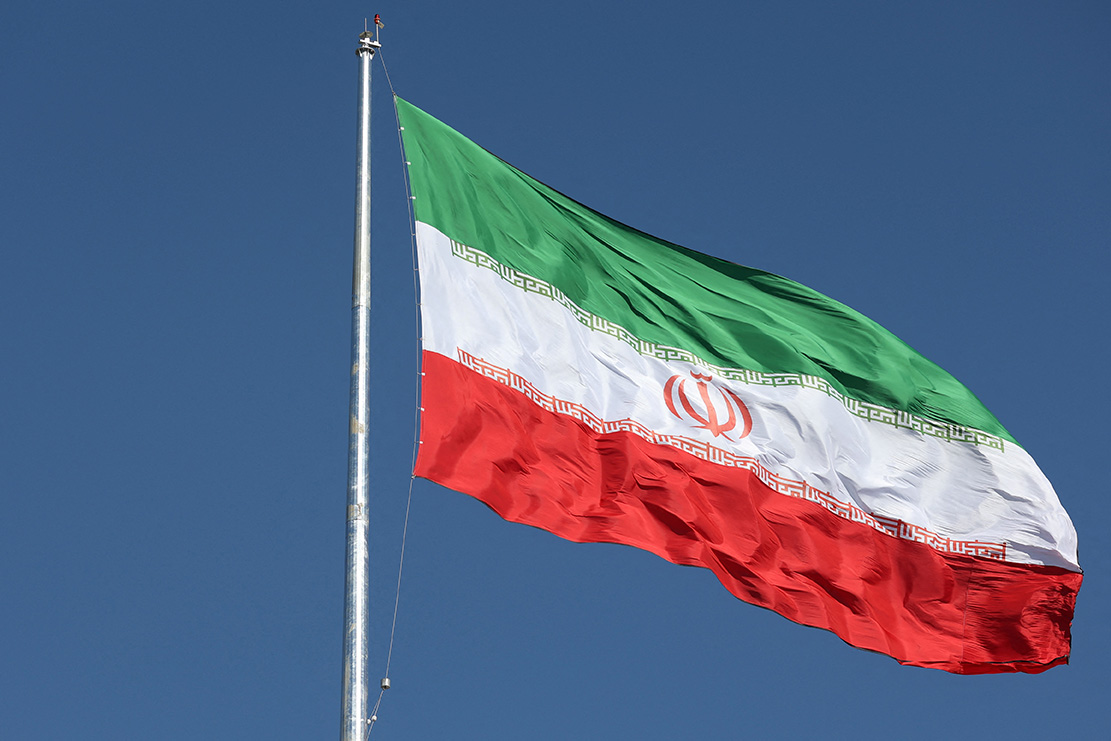
As negotiations between the United States and Iran move into what officials describe as “technical-level discussions,” foreign policy analyst Katherine Thompson says the shift signals cautious progress — but not certainty.
Thompson, a senior fellow in defense and foreign policy studies at the Cato Institute and former national security adviser to Senators Mike Lee and Josh Hawley, said the move from political statements to technical talks is a meaningful development in ongoing efforts to prevent Iran from obtaining a nuclear weapon.
“The devil is in the details,” Thompson said, noting that issues such as uranium enrichment levels, weaponization capabilities, and monitoring mechanisms require granular negotiations. “The fact that we’re moving into the technical sphere at least puts us in the lane of potential progress.”
Secretary of State Marco Rubio recently drew a distinction between civilian nuclear power and nuclear weapons development, arguing that Iran does not need to enrich uranium domestically in order to operate a peaceful nuclear energy program. Countries that pursue civilian nuclear power typically import fuel and operate above-ground facilities, he noted, while Iran has enriched uranium at higher levels and conducted activities deep underground — actions that raise proliferation concerns.
Iranian officials have publicly characterized recent discussions in Geneva as constructive, with mediators suggesting talks would resume after consultations in each capital. Thompson cautioned against taking such statements at face value but described continued diplomacy as preferable to immediate military escalation.
“It’s encouraging that diplomacy is still very much the first and foremost option,” she said.
Vice President J.D. Vance has also emphasized that the administration seeks to prevent Iran from acquiring a nuclear weapon while avoiding a prolonged Middle East conflict. Thompson described those remarks as consistent with a broader effort to balance deterrence with negotiation.
While the Iran talks show signs of movement, Thompson was more skeptical about progress in Ukraine. She said negotiations over ending the Russia-Ukraine war remain stuck at the political level, with neither side appearing willing to concede core demands.
“We haven’t moved past the political elements of that conversation,” she said, contrasting the stalled diplomatic environment in Ukraine with the more detailed technical discussions underway with Iran.
Thompson suggested that tensions between the Trump administration and European leaders have complicated the Ukraine dynamic. Although NATO allies have pledged increased defense spending and agreed to shoulder more of the financial burden for arming Ukraine, she said there has been little progress toward a negotiated end to the conflict.
“The chips on the board are not in the favor of the Europeans long term,” she said, arguing that a peaceful resolution will ultimately require concessions from both Moscow and Kyiv.
Beyond Iran and Ukraine, Thompson highlighted emerging concerns in other regions, including tensions involving Pakistan, a nuclear-armed state, and instability in the Western Hemisphere.
Any situation involving a nuclear power demands vigilance, she said, but emphasized that U.S. strategy must prioritize core national interests and avoid overextension.
“The United States is not prepared to fight more than one major conflict at a time,” Thompson said, pointing to the constraints outlined in recent defense planning assessments. She argued that deterrence and burden-sharing among allies should guide U.S. responses in secondary theaters.
In the Western Hemisphere, Thompson noted the administration’s emphasis on reasserting U.S. influence while weighing how far to go in confronting regimes such as Cuba and Venezuela. Recent reports of a Cuban maritime interdiction involving an armed vessel underscore the complexity of verifying foreign government claims and calibrating responses.
Independent verification, she said, is essential before drawing conclusions or escalating tensions.
As the administration balances negotiations with Iran, a prolonged war in Ukraine, rising tensions in other regions, and ongoing competition with China, Thompson said the challenge lies in articulating a clear hierarchy of priorities.
“The question is what are the core national interests at stake, and how far are we willing to go to defend them,” she said.