




The two-week ceasefire between the United States and Iran announced Tuesday, brokered through Pakistani intermediaries, drew cautiously optimistic analysis from some corners and skeptical assessments from others.
Eugene Kontorovich, professor of law at George Mason University’s Scalia Law School and senior fellow at the Heritage Foundation, joined Dan Proft on Chicago’s Morning Answer to offer his read on the ceasefire, the regional coalition Trump has been building throughout the campaign, the state of the NATO relationship, and what realistically comes next.
Proft opened with two analytical frameworks worth examining. The first, from retired General Jack Keane, emphasized that Trump’s willingness to threaten civilizational destruction for Iran gave the ceasefire the appearance of a significant concession even though no such destruction occurred, and that Kharg Island, Iran’s primary oil export terminal, remains an ace in the hole that can be played at any point in the negotiations to fundamentally alter the regime’s economic calculus. The second, from a widely circulated analysis on social media, argued that each time Trump extended a deadline he was not simply stalling but methodically expanding the negotiating architecture, bringing Pakistan in as a channel, then Egypt, Saudi Arabia, and Turkey to a regional table in Islamabad, and ultimately framing the emerging agreement not as a bilateral US-Iran deal but as Iran against a regional coalition with Trump holding the pen on behalf of that coalition.
Kontorovich said the end-of-civilization gambit clearly worked in bringing Iran to the table and that the threat of massive infrastructure destruction was real enough to produce a response. He is less convinced that Iran has come to the table in genuine good faith rather than to buy time and reposition. He said both sides may be doing the same thing simultaneously, using the ceasefire window for their own preparation, and that the question is which side emerges from the pause in a stronger position. His answer is unambiguous: the United States has overwhelming military superiority and will do a far better job of using the pause productively than an Iranian regime licking its wounds after losing its navy, air force, and most of its missile production capacity.
He noted what he described as a genuinely strange geopolitical inversion that the campaign has made visible: Israel now has the respect and friendship of Arab Gulf states in ways that would have seemed impossible a decade ago, while Iran’s most vocal defenders in the current conflict have been Spain, France, and other Western European governments. Spain recently sent its ambassador back to Iran, Kontorovich noted, making it more enthusiastic about cozying up to Tehran than virtually any Muslim-majority state in the region. He contrasted this with Israel, which has no American bases on its soil, no American combat forces, and no formal defense treaty, yet has been fighting shoulder-to-shoulder with the United States, including participating in the rescue of downed American pilots.
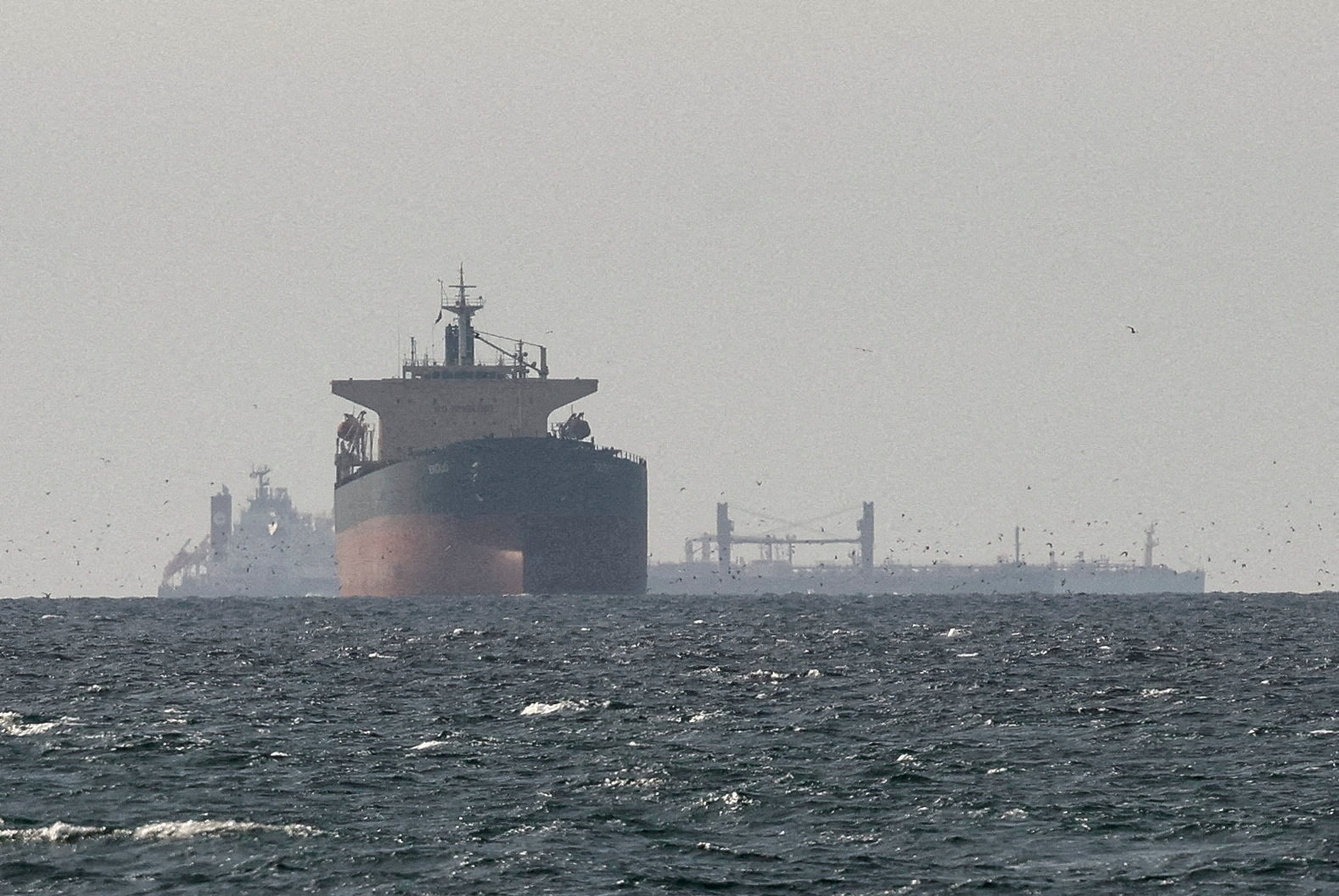
On the question of what a successful outcome from the weekend’s negotiations would look like, Kontorovich said any arrangement that leaves Iran operating as a toll booth on the Strait of Hormuz would be unacceptable, would violate basic principles of international maritime law, and would sustain higher energy prices globally for as long as it persisted. He said he cannot imagine Trump accepting such an arrangement, and predicted the more likely outcome is an indeterminate result that kicks the can down the road with fighting resuming sometime after the ceasefire window closes, following the same pattern of broken ceasefires seen repeatedly during the Israel-Hamas conflict in Gaza.
He was pointed in his assessment of Trump’s NATO posture following the president’s meeting with Secretary General Mark Rutte, in which Trump essentially restated his criticism of European allies who declined to participate in or even politically support the Iran campaign while continuing to expect American security guarantees against Russia. Reports of potential American troop movements away from unhelpful NATO members and toward more cooperative allies, Kontorovich said, are entirely welcome. He argued that maintaining American bases in countries that refuse to allow those bases to be used when the United States strikes a nation that attempted to assassinate its president raises obvious questions about what strategic value those bases actually provide.
He drew a distinction between Western European governments that have been actively obstructionist, calling out the United Kingdom and Spain by name as countries whose far-left governments have been openly critical of American operations while benefiting from American security commitments, and the eastern flank NATO members like Poland and the Baltic states, who have not been the problem and should not be penalized for the failures of their western counterparts. A bilaterally targeted approach that removes American presence from specific bad actors without dismantling the NATO architecture entirely, he said, would be both proportionate and strategically rational.
On Russia and the concern that a weakened NATO commitment would embolden Vladimir Putin toward the Baltic states and Poland after Ukraine, Kontorovich acknowledged the risk but said it argues for targeted responses to specific European governments rather than wholesale withdrawal from the alliance, which he described as a more drastic step that would require greater provocation to justify.
He closed by returning to the core question of whether Trump will see the Iran campaign through to its stated objectives if the ceasefire fails to produce a durable agreement covering the strait, the enriched uranium stockpile, the nuclear program, and the proxy network. His assessment was direct: Trump is in it to win it. The ceasefire is a tactical pause. The Iranians will almost certainly double down rather than cash in their remaining cards, because that is what every Iranian proxy from Hamas to the Houthis has done in every previous negotiation. But Trump, he said, is not going to let the regime walk away keeping the nuclear material, keeping the militias, and keeping the strait, and the military tools to enforce that outcome remain fully available.