




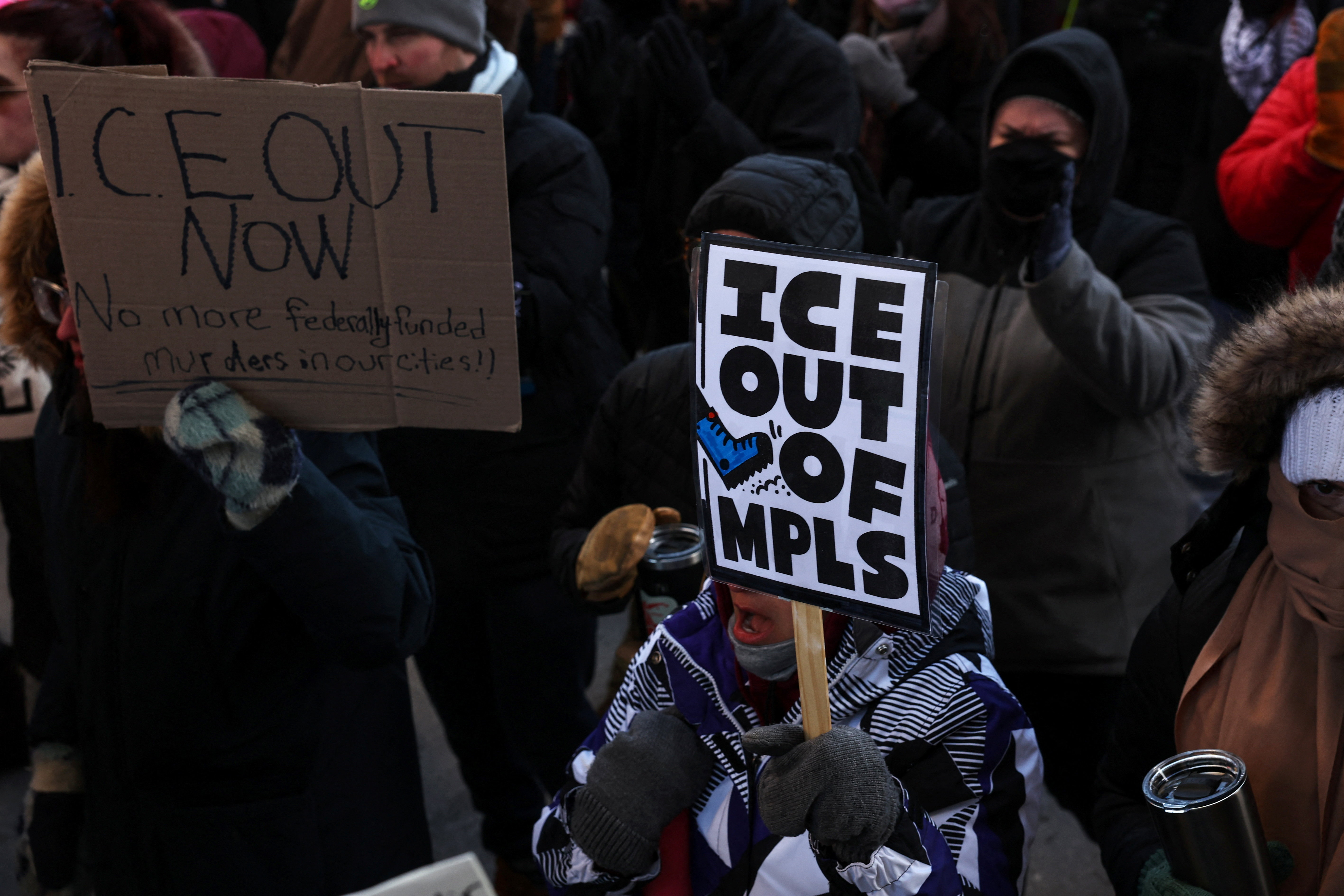
Rhetoric calling for the abolition of federal law enforcement agencies is echoing familiar themes from the unrest of recent years, according to retired Chicago Police Chief of Detectives Eugene Roy, who spoke with Dan Proft amid renewed controversy surrounding immigration enforcement and public safety.
The discussion followed comments by Chicago Mayor Brandon Johnson during a national television interview in which he questioned the continued existence of Immigration and Customs Enforcement, citing what he described as abusive and terrorizing conduct. Proft argued that the mayor’s language closely mirrors calls to abolish or defund local police that followed the 2020 unrest, noting that similar accusations were leveled against Chicago police officers in previous years.
Roy agreed, saying the rhetoric directed at ICE appears to follow the same pattern used during the defund-the-police movement. He described what he sees as a coordinated effort to demonize law enforcement broadly, regardless of whether the officers involved are local, state, or federal. In his view, recent incidents, including an ICE-involved shooting in Minneapolis, have been met with a media-driven rush to judgment before all facts have been gathered and independently reviewed.
Roy cautioned against drawing conclusions from partial or unverified video clips circulating online, emphasizing that law enforcement incidents require time for evidence collection, professional analysis, and formal statements from officers involved. He said premature commentary from politicians and media outlets can inflame tensions and distort public understanding of what actually occurred.
While declining to second-guess officers’ actions in the Minneapolis case, Roy suggested that ICE could benefit from adjusting its operational tactics. He argued that large, visible convoys moving through neighborhoods can escalate tensions and invite interference. Instead, he recommended a more targeted, “surgical” approach focused on high-risk offenders such as violent criminals, child predators, and organized cartel figures, rather than broad, highly visible operations that attract organized resistance.
Roy acknowledged, however, that even narrowly focused enforcement is likely to encounter opposition in sanctuary jurisdictions. He said political leaders in states and cities such as Minnesota and Illinois have energized activist networks that will resist federal enforcement efforts regardless of whom agents are targeting. That reality, he argued, makes it even more important for federal agencies to adapt their methods without abandoning their mission.
The conversation also turned to public safety conditions in Chicago, where Roy described a policing environment strained by years of policy decisions. He pointed to the cumulative impact of the state’s SAFE-T Act, the elimination of tools such as ShotSpotter, and what he characterized as lax prosecution policies under the previous Cook County state’s attorney. According to Roy, the city is still digging out from nearly a decade of reforms that weakened accountability for repeat offenders.
He contrasted that period with what he described as recent improvements under the current state’s attorney, citing faster processing of felony gun cases and closer cooperation with Chicago police. Even so, Roy warned that progress remains fragile, given ongoing issues with electronic monitoring, repeat offenders, and a political climate he said is openly hostile to police.
Speculation about future leadership at City Hall also surfaced, including rumors that Chicago Police Superintendent Larry Snelling could consider a mayoral run. Roy declined to comment on the rumor itself but said Chicago urgently needs a leader willing to educate the public about how past policies contributed to current problems and to clearly articulate a path forward on public safety.
Throughout the discussion, Roy stressed that slogans and symbolic gestures do little to address the realities faced by officers and residents alike. He argued that lasting improvements in public safety require sober assessment, clear-eyed leadership, and a rejection of rhetoric that treats law enforcement as the enemy rather than a necessary institution charged with protecting the public.