




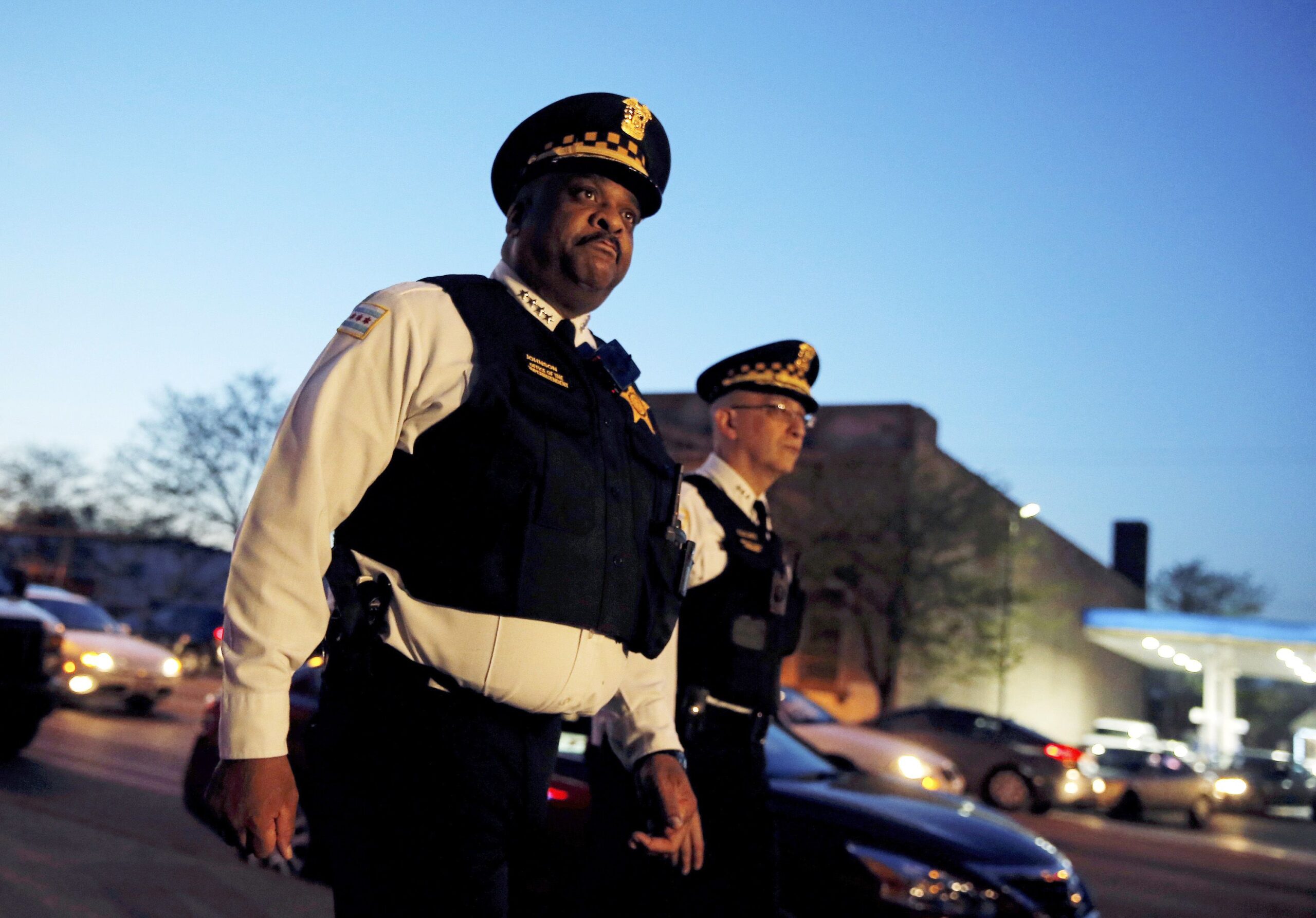
Former Chicago Police Superintendent Eddie Johnson did not mince words on Chicago’s Morning Answer when asked whether Illinois’ controversial Safety Act should remain on the books. “I think it’s ridiculous,” Johnson said. “It’s an injustice to the public at large.” His blunt assessment came during a wide-ranging discussion with host Dan Proft that highlighted both systemic failures and a political unwillingness to confront them.
The interview opened with a case that has become emblematic of critics’ concerns: the repeated release of 43-year-old Tyon Stampley, accused of a months-long pattern of violent offenses that culminated in three knife attacks in Old Town this fall. Review of police and court records shows a familiar cycle—arrests, missed court dates, violations of electronic monitoring, new charges, yet repeated release under the Safety Act’s tightened pretrial detention standards. Felony charges were ultimately filed only after prosecutors reclassified the October attacks, and detention was secured not because of the crimes themselves but due to Stampley’s accumulated violations.
Johnson called the case “a perfect example” of how the law fails residents. Violent offenders, he said, should not be routinely released pending trial. “Some people need to go to prison,” he emphasized. “If you continuously let violent offenders out to repeat the offense, that’s just ridiculous.”
The former superintendent disputed the claims made by Gov. JB Pritzker and Mayor Brandon Johnson that crime is at a 30-year low and that current policies are responsible. Crime trends, Johnson argued, are cyclical, and any recent dip is a credit to frontline police officers rather than political leadership or the Safety Act. “They’re not the ones out there on the front lines arresting these people,” he said of state and city officials.
Johnson also expressed concern about the surge in large, sometimes violent youth gatherings downtown and in high-traffic nightlife districts—incidents the mayor has publicly described as kids “being silly.” Johnson took a different view. “If you don’t have the certainty of a consequence,” he said, “you’ll keep getting what you’re getting.” He argued these are not harmless gatherings but events that frequently involve assaults, property damage, and in some cases fatal violence. Without real accountability—and without holding parents responsible when minors repeatedly take part—he warned such incidents will persist.
The former superintendent also revisited a point he raised during his tenure: that a relatively small, identifiable group of offenders is responsible for much of the city’s violence. Of roughly 120,000 self-identified gang members known to police when he left office, Johnson said about 2,000 were “the worst of the worst.” Targeting that group for removal from the streets, he argued, would have an immediate and significant impact on violent crime. “All 40 members of a gang aren’t shooters,” he said. “It takes a certain individual. If you identify that group and deal with them, Chicago will be safer.”
Johnson concluded that the Safety Act—a law he supports revisiting in theory—has in practice created loopholes and burdens so substantial that public safety is at risk. Between the narrow definitions of willful flight, the requirement that prosecutors imagine hypothetical conditions that might allow release, and the routine drop from felony to misdemeanor charges before cases are refiled, Johnson said the law is not serving the public interest.
“I think it needs to be repealed,” he said plainly.
The sentiment highlights a widening gap between the experience of law enforcement professionals and the messaging coming from Springfield and City Hall. And as high-profile cases like Stampley’s continue to surface, the pressure to revisit Illinois’ approach to pretrial detention is likely to intensify.