




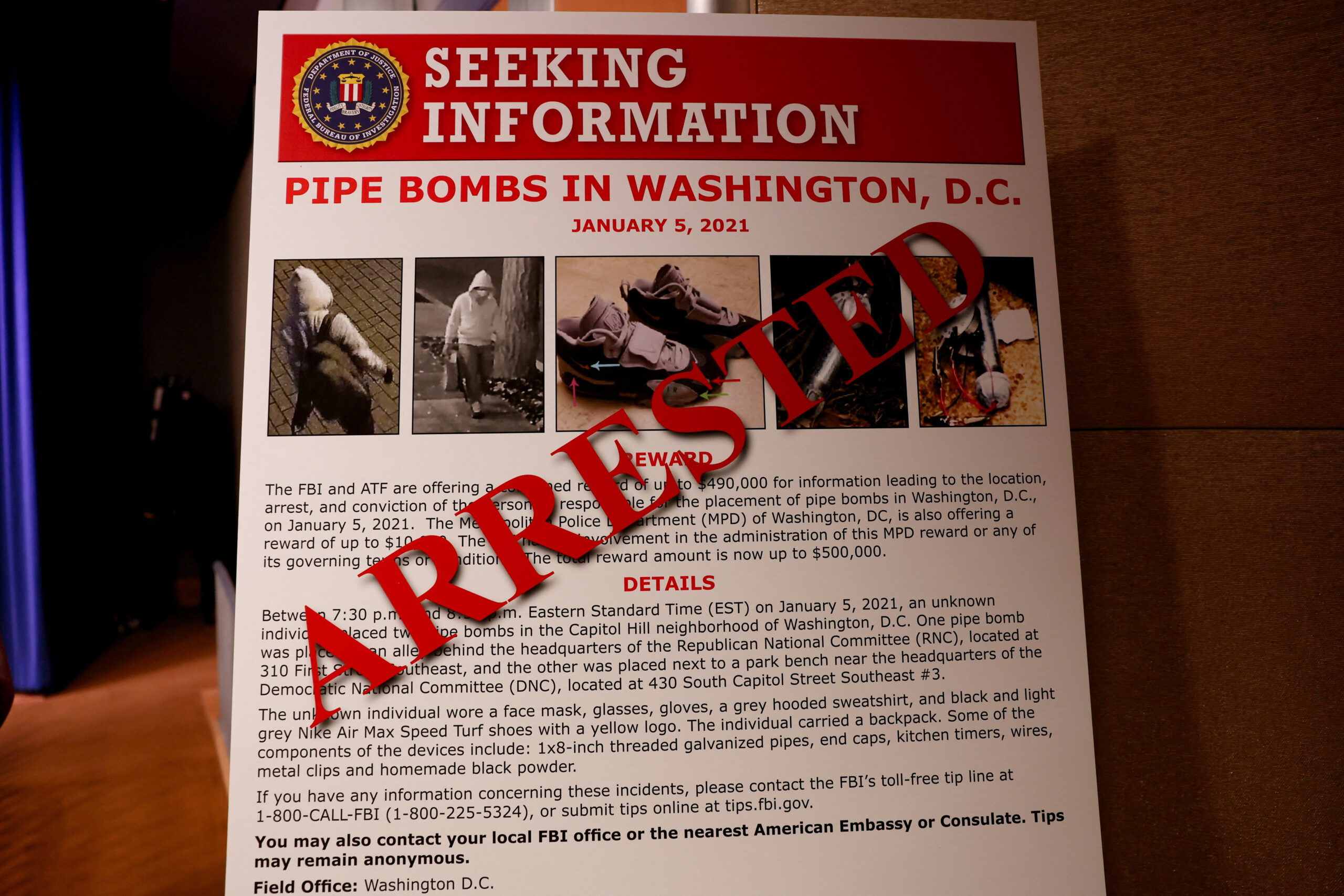
Nearly five years after pipe bombs were discovered outside the Republican National Committee and Democratic National Committee headquarters on January 6, 2021, the FBI finally announced an arrest: Brian Cole, a Virginia man identified through a combination of cell-site data, license-plate readers, and forensic analysis. But the bureau’s handling of the long-dormant case—and the manner in which it was announced—has sparked new questions about transparency, professionalism, and leadership.
On Chicago’s Morning Answer, host Dan Proft spoke with James Gagliano, a retired FBI supervisory special agent and homeland security scholar, about what the arrest means, what the public still doesn’t know, and why the bureau’s senior brass continues to undermine its own credibility.
“Investigations aren’t Law & Order—but five years still demands answers.”
Gagliano began by offering what he called “inside baseball” about bomb investigations. Because the devices outside the DNC and RNC never detonated, evidence was intact—but the bombs were amateurish, complicating efforts to link components to a specific individual. He rejected accusations that rank-and-file agents slow-walked the case, saying cold cases often require new personnel and fresh analysis before breakthroughs occur.
Still, he acknowledged that the timeline raises legitimate questions.
“People expect everything to unfold like a Law & Order episode,” he said. “But building a case off circumstantial evidence—video stills, receipts, travel data—takes time. It’s a needle in a haystack.”
Yet when Proft pressed for a step-by-step explanation of what the bureau did between 2021 and 2024, Gagliano said those answers will likely only surface at trial. Anything disclosed prematurely, he explained, risks giving defense attorneys material to challenge the investigation or introducing details that could compromise prosecution.
A Breakthrough Built on Forensics, Not Tips
Deputy FBI Director Paul Abbate and his team insisted during the press conference that the break in the case came from analysis of existing evidence, not new whistleblowers or tips. That means investigators had to sift through years of footage and data to isolate the suspect’s movements, ultimately narrowing in on:
- Cell-phone pings correlating with the pipe bomb placement timeline
- License-plate reader hits placing Cole’s car in the relevant neighborhoods
- Physical profile analysis—the masked suspect appeared between 5’6″ and 5’8″; Cole is 5’7″
- Retail purchases of components matching those used in the devices
Gagliano described this as the cumulative architecture of a circumstantial but powerful case: “You add one piece to another until it becomes a mosaic. No single detail makes someone a bomber. But the totality may.”
If the case is legitimate, why the controversy?
Because the press conference announcing the arrest turned into what Proft called a “chest-beating exercise” rather than a sober briefing. Deputy Director Abbate—once a behind-the-scenes role—was out front giving interviews, referencing political narratives, and framing the moment as a personal validation.
Gagliano echoed that criticism bluntly:
“It was cringe. The deputy director historically is not a public performer. And this is the same individual who once amplified theories that government insiders were behind the bombs—now he wants credit for solving it.”
He said the bureau has adopted the tone of a political actor rather than an apolitical investigative agency, something he believes harms public trust even when the investigative work is sound.
Why details matter now more than ever
Proft argued that because of the FBI’s recent credibility struggles—including the Thomas Crooks investigation and the Epstein debacle—the bureau owes the public a full accounting of how this case evolved. Without it, suspicions fester, and confidence erodes further.
Gagliano agreed that transparency is needed but insisted timing matters.
“When you reveal too much, too soon,” he said, “you risk giving the defense arguments that the investigation was tainted or selective. These are decisions senior leadership agonizes over.”
In other words, the public may not get the complete narrative until prosecutors reveal it in court—assuming the case goes to trial.
Why “the investigation is just beginning” raised eyebrows
Deputy Director Abbate said solving the identity of the bomber is “only the beginning,” leaving observers puzzled: if the bureau is “confident we have our guy,” what remains?
Gagliano offered two possibilities: Investigators may still be reconstructing motive or digital activity, or prosecutors may pursue additional charges or examine whether Cole had contact with others
But absent specifics, he acknowledged the remark was unclear and poorly delivered.
A Bureau Still Capable—But Poorly Led
The central tension in the interview was this: Did the FBI do competent investigative work while simultaneously mishandling its communication and public posture?
Gagliano believes so.
“The agents who worked this deserve credit,” he said. “My issue is leadership—tone, discipline, transparency. They’re in over their heads in some respects.”
Proft summed up the dilemma this way: the public doesn’t need movie-style bravado or vague assurances. It needs a clear explanation of how an explosive threat near national party headquarters went unsolved for nearly half a decade—and what finally broke the case open.
Until then, questions will remain not about whether the FBI can solve cases like this, but whether Americans can trust the people who speak on the bureau’s behalf.