




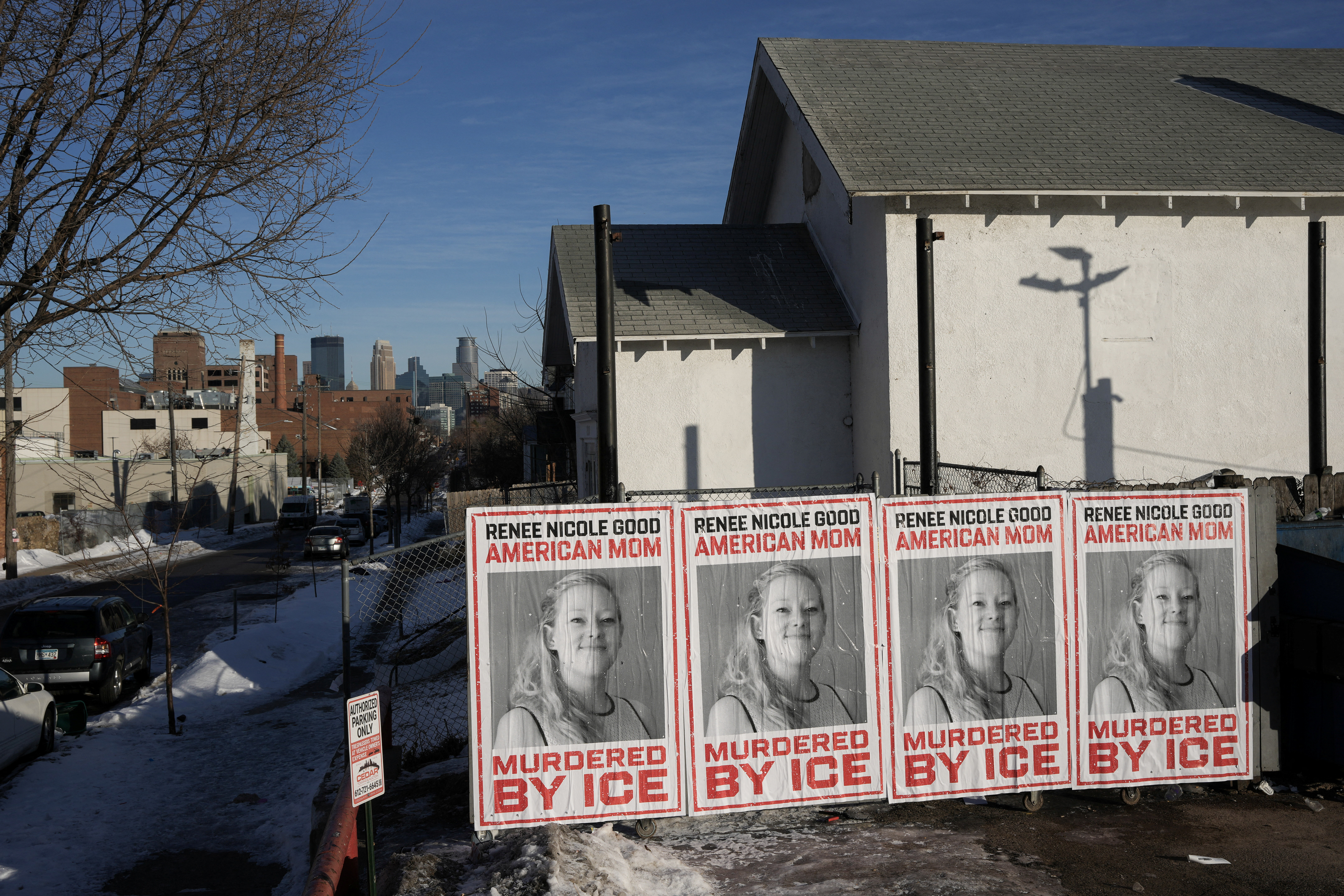
A fatal confrontation between an Immigration and Customs Enforcement officer and a civilian in suburban Minnesota has ignited a sharp political debate, with critics accusing federal authorities of misconduct while law enforcement veterans argue the shooting was legally justified under established use-of-force standards.
The incident occurred during an ICE operation when a woman intervened in an enforcement action and drove her vehicle toward an armed officer after ignoring repeated lawful commands. Video footage released by the Department of Homeland Security shows the moments leading up to the shooting, fueling a national argument over whether the officer acted in self-defense or failed to properly deescalate the encounter.
Minnesota Sen. Tina Smith accused the Trump administration of attempting to cover up the circumstances surrounding the death and argued that professional law enforcement training emphasizes stepping away from moving vehicles rather than engaging with deadly force. Her comments were echoed by activists who described the woman as a protester exercising her rights during an ICE operation.
Retired FBI supervisory special agent James Gagliano strongly rejected that characterization, saying the senator’s account misrepresents both police training and constitutional law. Gagliano, who spent more than 25 years in federal law enforcement, said officers are routinely forced to make split-second decisions under extreme stress and that the standard governing such encounters is not hindsight but “objective reasonableness,” a doctrine established by the U.S. Supreme Court.
According to Gagliano, the key factor in the Minnesota case was noncompliance. He said decades of data show that deadly force incidents overwhelmingly occur when individuals refuse lawful commands, particularly when a vehicle is used in a threatening manner. A moving car, he noted, is considered a potentially lethal weapon, and an officer facing an oncoming vehicle can reasonably fear serious bodily harm or death.
While acknowledging the loss of life as tragic, Gagliano said legality and advisability are separate questions. He argued that a shooting can be lawful even when the outcome is deeply regrettable, adding that no officer begins a shift intending to use lethal force. He said the ICE agent involved will live with the consequences of the encounter regardless of whether charges are filed.
The discussion also turned to the broader climate surrounding immigration enforcement in sanctuary jurisdictions. Gagliano criticized state and local leaders who have restricted cooperation with federal authorities, arguing that such policies embolden activists to physically interfere with operations and increase the likelihood of violent outcomes. He warned that inflammatory rhetoric from elected officials risks encouraging confrontations that place both civilians and officers in danger.
Gagliano drew parallels to hypothetical scenarios in which states refuse to cooperate with federal firearms enforcement, calling such selective nullification a form of anarchy. He said disputes over immigration policy should be resolved through legislation and the courts, not through what he described as political vigilantism in the streets.
As investigations continue, legal experts say prosecutors will weigh the totality of circumstances, including video evidence and witness statements, to determine whether the officer’s actions met constitutional standards. For now, the case remains a flashpoint in the ongoing national argument over immigration enforcement, protest tactics, and the limits of lawful resistance to police authority.