




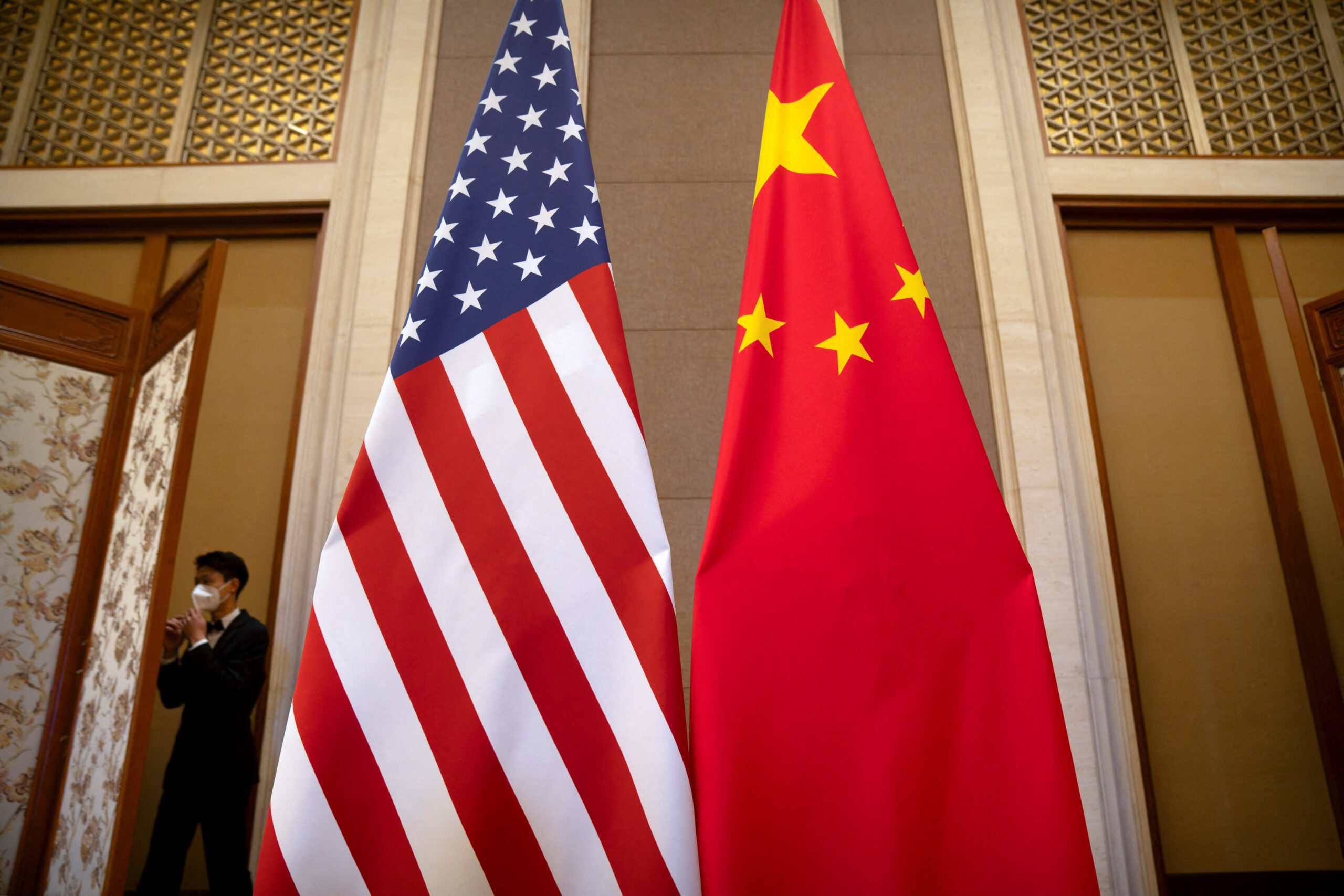
Author and China analyst Gordon Chang, known for The Great U.S.–China Tech War and Plan Red: China’s Project to Destroy America, joined Chicago’s Morning Answer to preview President Trump’s upcoming summit with Chinese Communist Party leader Xi Jinping and to assess the broader U.S.–China power struggle.
Chang described the meeting as a tactical pause rather than a breakthrough. “What President Trump is doing looks like negotiating a one-year truce,” he said, explaining that the temporary deal would halt new 100 percent tariffs while preserving limited cooperation on trade and rare-earth supplies. According to Chang, the arrangement buys valuable time for the United States to secure new supply chains with allies such as Australia, Japan, and Thailand—steps that reduce reliance on Chinese materials and manufacturing.
He argued that Beijing is entering the talks from a position of weakness. “China is doubling down on industrial policy, which makes it more trade-dependent at a time when the global market is turning against it,” he said. “The U.S. represents about a third of global consumer spending; China can’t function without that.”
Chang warned that China’s role in the fentanyl crisis should remind Americans of the regime’s hostility. “The Communist Party has been fully behind the fentanyl gangs,” he said. “Those 48,000 American deaths weren’t overdoses—they were murders enabled by Chinese policy.”
He also pointed to humanitarian diplomacy as a test case for Trump’s leverage. Chang said China may be ready to release Hong Kong media magnate Jimmy Lai, who has been imprisoned for pro-democracy activism. “Beijing doesn’t want him to die in custody,” he said. “If Lai is freed, it could open the door for other political prisoners.”
On the regional front, Chang noted that Japan and several Southeast Asian nations are aligning more closely with Washington, while South Korea’s current leadership tilts toward Beijing. “Our challenge is keeping South Korea in the fold while reinforcing new partnerships elsewhere,” he said.
Chang expressed concern over Canada’s growing outreach to China amid friction with the U.S. and warned that a pro-Beijing government in Ottawa “would give China a foothold on our northern border.” Conversely, he praised Argentina’s Javier Milei for breaking Latin America’s “pink-wave” of leftist governments and urged Washington to strengthen that alliance as a counterweight to China’s influence.
Economically, Chang said China’s vaunted industrial strength masks a deflationary spiral that threatens Xi’s hold on power. “September marked the 36th straight month of factory-price declines,” he noted. “Xi’s policies are making things worse, pushing the country toward deflation and deeper dependence on exports.” With Xi politically weakened, Chang warned the regime could lash out. “History shows tyrants under pressure often turn inward with purges or outward with aggression,” he said. “China’s instability is now the world’s problem.”