




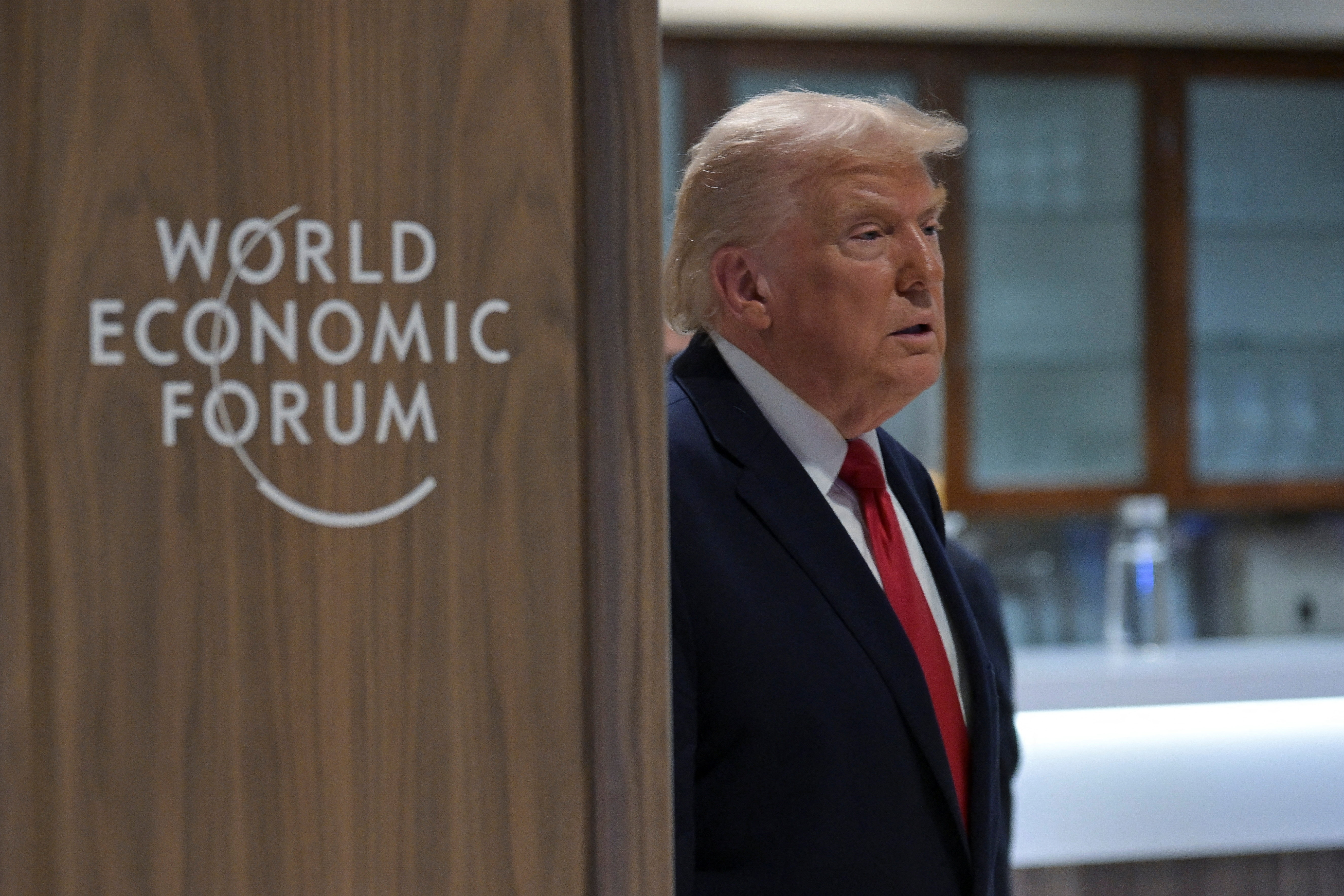
As global political and business leaders gathered in Switzerland for the annual World Economic Forum in Davos, criticism of globalization and elite economic consensus took center stage in a conversation with Indiana Governor Mike Braun, who argued that recent shifts in U.S. policy reflect a growing rejection of decades of offshoring and centralized economic control.
Braun praised remarks delivered at Davos by Trump administration officials who bluntly challenged the premise that globalization benefits workers in the United States and Europe. He said the emphasis on national sovereignty, domestic manufacturing, and supply chain independence reflects lessons learned from Main Street rather than international bureaucracies. Drawing on his own background as a business owner, Braun said policies that hollowed out American industry disproportionately harmed workers and small businesses while empowering multinational corporations and strategic competitors, particularly China.
Assessing President Trump’s second term after its first year, Braun pointed to border enforcement and industrial policy as evidence of a sharp course correction. He said the near-total reduction in illegal border crossings demonstrated how quickly federal policy could change outcomes when enforcement is prioritized. Braun also argued that resistance to these changes comes not only from Democrats but from entrenched interests within both parties that benefited from the old global economic order.
The discussion turned to state-level contrasts, with Braun highlighting recent developments in Virginia as an example of how quickly policy direction can shift when Democrats gain unified control. He cited proposals ranging from higher taxes and new regulations to changes in election administration and criminal sentencing as emblematic of a governing philosophy that expands government reach while discouraging private investment. Braun contrasted that approach with Indiana’s record of reducing regulations, maintaining lower taxes, and fostering population growth through what he described as a more predictable and business-friendly environment.
Braun said Indiana’s economic performance illustrates the results of that strategy, noting that the state’s economy has been growing significantly faster than those of neighboring Midwestern states, including Illinois. He attributed that growth to long-standing fiscal discipline, regulatory restraint, and a focus on making it easier to start businesses and raise families. He added that Indiana’s AAA credit rating gives the state flexibility that heavily indebted states lack.
That contrast has taken on added significance amid speculation that the Chicago Bears could relocate to northwest Indiana if stadium negotiations with Illinois stall. Braun confirmed that discussions with team leadership have been productive, emphasizing that Indiana is positioning itself as a cooperative partner rather than relying on heavy public subsidies. He said lower taxes, streamlined governance, and infrastructure readiness make Indiana an attractive alternative for large-scale investments, including professional sports facilities.
While Braun acknowledged that Illinois officials may attempt last-minute efforts to keep the team, he suggested the Bears’ interest in Indiana reflects more than leverage. He framed the situation as part of a broader trend of people and businesses leaving high-tax, heavily regulated states for neighboring jurisdictions offering greater stability and lower costs.
Braun concluded that debates over globalization, state governance, and economic policy are increasingly interconnected. Whether at international forums like Davos or in regional competition between Midwestern states, he said the central question remains the same: whether governments serve workers and communities first, or prioritize systems that concentrate power and decision-making far from those most affected by the consequences.