




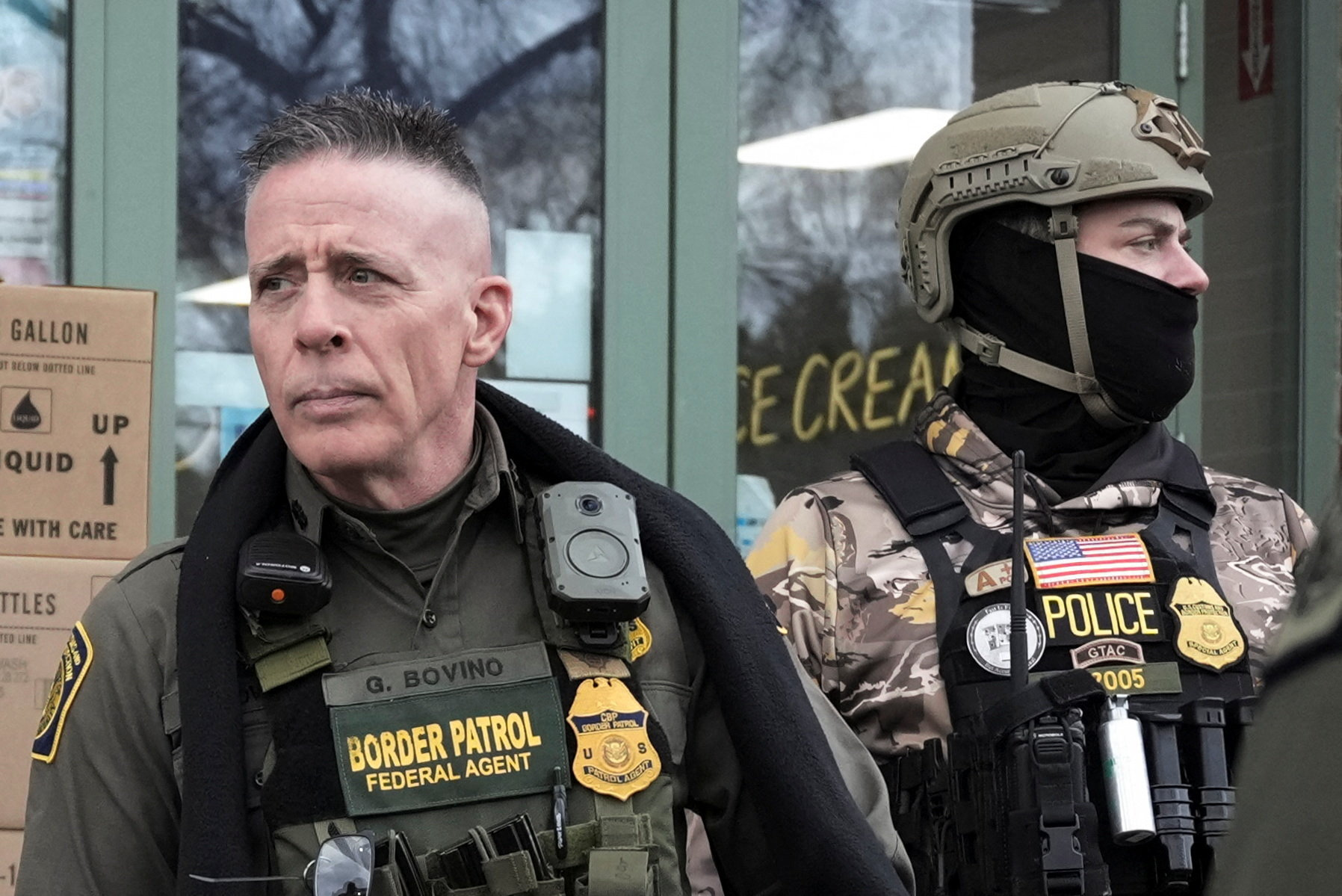
Federal immigration enforcement in Chicago returned to the center of political controversy this week as Greg Bovino, a senior Border Patrol and Immigration and Customs Enforcement commander, pushed back against sharp criticism from Illinois’ top Democratic officials and defended the results of recent operations in the city.
Bovino responded to accusations from Illinois Governor J.B. Pritzker and Chicago Mayor Brandon Johnson, who have described ICE enforcement actions during Operation Midway Blitz as excessive and dangerous. Both officials accused federal agents of suppressing peaceful protest and using force improperly, language Bovino said mischaracterizes what occurred on the ground and ignores the operation’s outcomes.
According to Bovino, the enforcement surge led to measurable reductions in crime across multiple neighborhoods, including areas long plagued by gang activity such as Little Village and parts of the South Side. He said local residents and rank-and-file police officers consistently told federal agents that conditions improved during and after the operation, even as city leadership publicly opposed ICE’s presence. Bovino added that many local officers privately expressed frustration that they were not permitted to take similar enforcement actions themselves under current city and state policies.
Bovino acknowledged that tensions peaked outside the Broadview ICE facility during protests, calling the situation dangerous given recent attacks on federal law enforcement facilities nationwide. While he said agents moved quickly to secure the area, Bovino noted that in hindsight he would have pushed to establish control even earlier to reduce risk to officers and the public.
The commander also addressed two ICE-involved shootings in the Chicago area that have drawn condemnation from state and city leaders. While deferring investigative authority to the Department of Justice, Bovino said the incidents involved premeditated attempts to obstruct or assault federal officers, including efforts to box agents in with vehicles. He described such actions as inherently dangerous and said agents used the minimum force necessary to stop threats and return home safely.
Responding to claims that ICE enforcement is indiscriminate, Bovino rejected the characterization, pointing to arrest data from Chicago and Minneapolis showing that a large majority of those apprehended had significant criminal or immigration histories. He said operations begin with targeted lists of known offenders but inevitably expand when agents encounter other individuals unlawfully present in the country, many of whom later prove to have serious criminal records. Allowing those individuals to walk away, he said, would violate federal law.
Bovino emphasized that sustained enforcement inside major cities is now a central component of border security, arguing that deterrence depends on the certainty of arrest nationwide, not just at the southern border. He said the sharp decline in illegal crossings over the past year reflects that shift, as migrants increasingly understand there are no guaranteed sanctuary jurisdictions.
Despite continued political opposition in Illinois, Bovino said ICE and Border Patrol officers remain active in Chicago and will continue working to remove what he described as dangerous individuals from the streets. He dismissed personal attacks from elected officials as rhetoric meant to deflect from the public safety impact of federal enforcement, adding that the results, not the insults, tell the real story.