




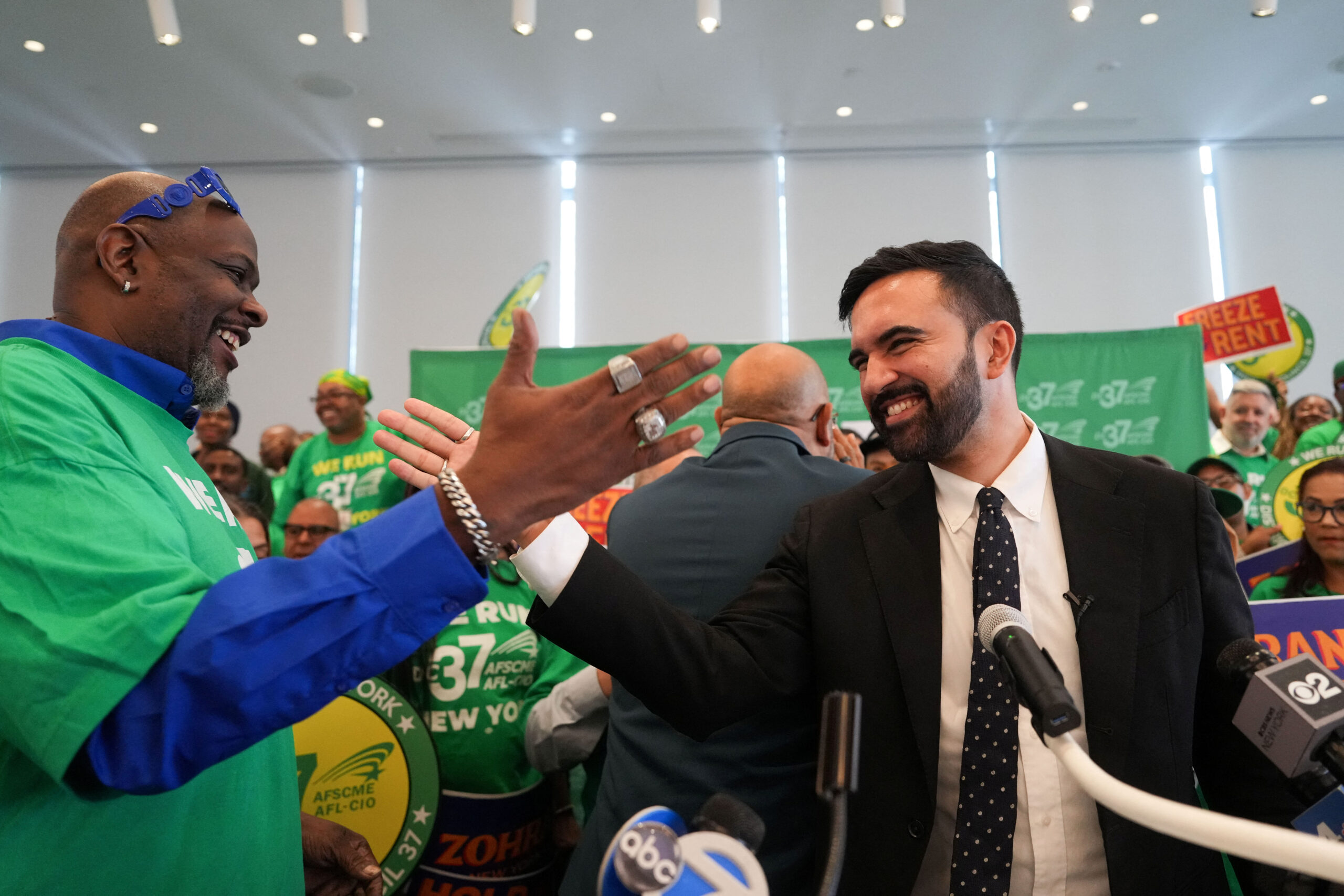
John Hinderaker, president of the Center of the American Experiment and contributor to Power Line, joined Chicago’s Morning Answer to discuss the week’s political landscape — from controversial remarks by New York gubernatorial candidate Zohran Mamdani to the lingering decay in Minneapolis following the George Floyd riots.
Hinderaker said Mamdani’s attempt to frame his campaign around identity politics, particularly his remarks invoking 9/11 through a personal anecdote about his aunt’s post-attack fears, showed how insulated the progressive left has become from mainstream sensibilities. “To a normal person, that’s crazy,” Hinderaker said. “But he knows his audience. He’s not stupid. There are a lot of people who nod along and think that’s right.” He predicted Mamdani would likely win in New York City despite the backlash, given the ideological uniformity of his voter base.
The conversation turned to key state races in Virginia and New Jersey, where Hinderaker said Democrats’ dominance has less to do with candidate quality and more with political inertia and demographics. He cited the example of Virginia attorney general candidate Jay Jones, whose violent private text messages became public but whose party has continued to stand by him. “It’s shocking,” Hinderaker said. “But in Virginia, there are so many government workers clustered around Washington, D.C., that running as a Republican has become almost impossible.”
In New Jersey, Hinderaker said Republican candidate Jack Ciattarelli faced similar structural disadvantages despite his appeal to independents. “Unless Republicans turn out every Trump voter and a big chunk of independents, they can’t overcome the habit of voting for whoever has a D next to their name,” he said. “That’s the challenge in any state that isn’t deep red.”
Hinderaker also discussed the state of Minneapolis five years after the 2020 riots, describing the city as a “time capsule” that has failed to recover economically or socially. “George Floyd Square looks exactly the same — businesses have closed, people have moved out, and it’s become a haven for drug dealers and addicts,” he said. “The third precinct police station that was burned down is still a hollowed-out shell. The only thing they’ve added is a sign calling it the future home of the ‘Minneapolis Democracy Center.’ It’s symbolic of the whole city.”
As for Minneapolis politics, Hinderaker said the city may soon elect an even more radical mayor. “The Democratic Socialists have backed Omar Fate, a Somali immigrant and self-proclaimed socialist,” he said. “He might win. Jacob Frey at least talks to business leaders, even if he hasn’t fixed much. But if Fate takes over, that’s another nail in the coffin for Minneapolis.”
Hinderaker concluded that the trends in New York, Virginia, and Minnesota all point to the same underlying problem: a deeply polarized electorate split between ideologically insulated urban voters and disillusioned moderates elsewhere. “Liberals live in a bubble,” he said. “They wouldn’t say these things if they didn’t know there was an audience ready to applaud.”