




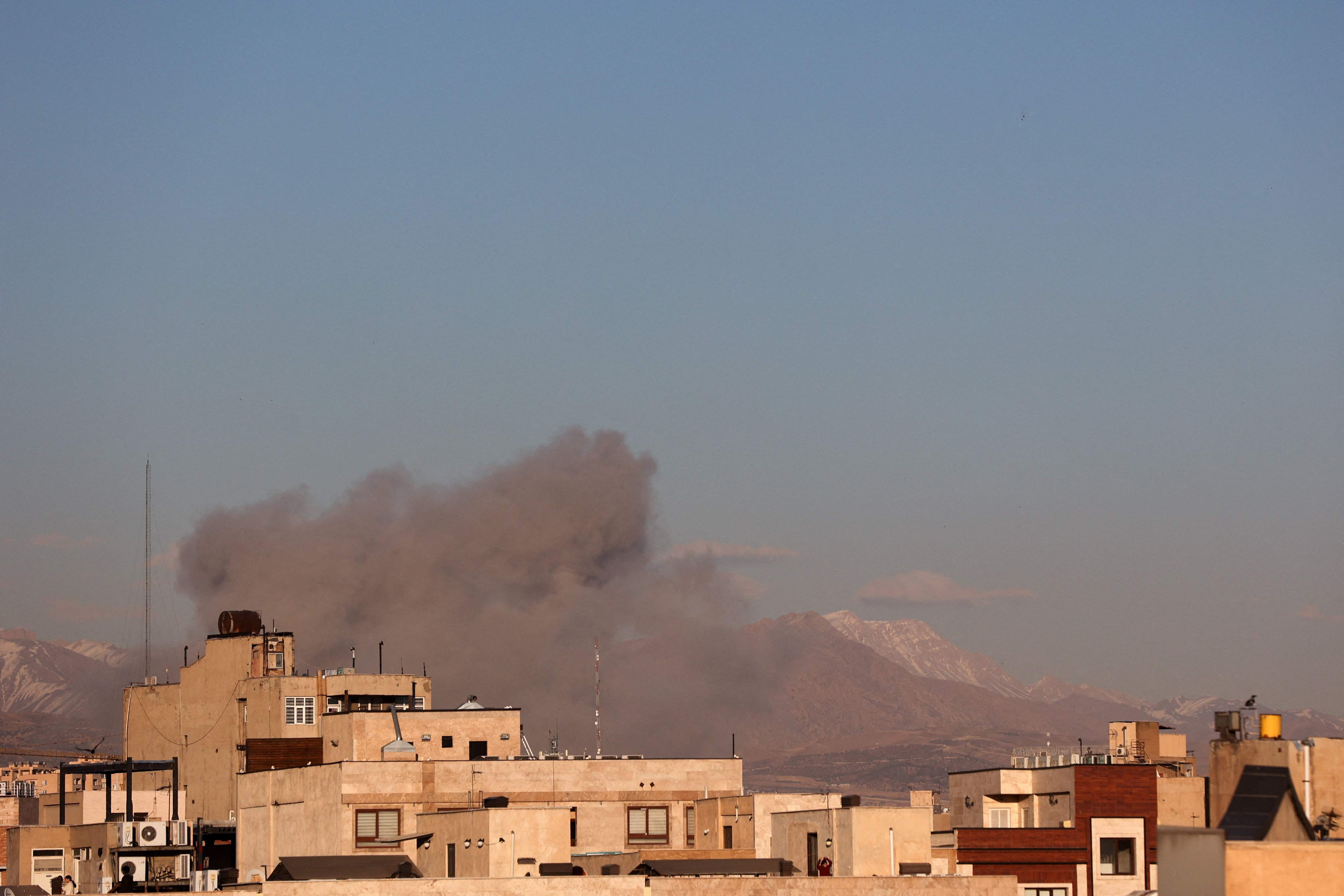
As international reactions continue to roll in following U.S. strikes on Iranian missile and nuclear infrastructure, author and Tablet editor-at-large Liel Leibovitz says the operation represents a decisive shift in American posture after decades of what he describes as tolerance for Iranian aggression.
Speaking on Chicago’s Morning Answer, Leibovitz argued that for more than 40 years the United States endured direct and proxy attacks from Iran with limited consequences. He cited the 1983 Beirut barracks bombing that killed 241 U.S. service members, attacks on American naval vessels, alleged assassination plots, and repeated threats against Israel and U.S. interests.
“Nobody does anything until Donald Trump comes along and says America is going to protect its interests,” Leibovitz said.
Israeli Prime Minister Benjamin Netanyahu publicly praised the coordination between Washington and Jerusalem, saying regional allies have privately expressed relief that the United States acted. NATO Secretary General Mark Rutte also voiced support, commending the effort to degrade Iran’s ballistic missile and nuclear capabilities and signaling that European leaders broadly back the move.
Leibovitz framed the strikes as more than retaliation, describing them as a strategic dismantling of what he called a “bizarro twilight zone reality” in which Iran openly threatened the West while expanding its military reach.
Critics, however, have warned of potential escalation or a prolonged conflict. Columnist Walter Russell Mead recently cautioned that President Trump must avoid both a repeat of the Obama-era nuclear deal and the prolonged instability that followed the Iraq War. Mead argued that the president must deliver a visibly different diplomatic or military outcome to preserve political cohesion at home.
Leibovitz acknowledged the risks but said Trump’s approach differs from past administrations. Rather than pursuing occupation or regime engineering, he characterized the objective as degrading Iran’s military capacity to the point where it can no longer threaten U.S. or allied interests.
“You don’t have to have some grand, abstract goal,” Leibovitz said, arguing that neutralizing hostile leadership and capabilities can itself achieve strategic deterrence.
Secretary of State Marco Rubio addressed concerns about timing, saying intelligence indicated that waiting could have resulted in higher U.S. casualties if Iranian retaliation followed Israeli action. Rubio said coordination with Israel was designed to preempt such risks and minimize American losses.
Leibovitz said that interpretation aligns with a broader strategy of strengthening capable regional allies to shoulder much of the operational burden. He described Israel’s advanced military and intelligence capabilities as an example of what effective partnership looks like.
Beyond the immediate battlefield, Leibovitz argued that removing Iran as a destabilizing force weakens the so-called “axis of resistance,” which he said functions in alignment with broader Chinese geopolitical interests. In his view, diminishing Tehran’s influence carries implications beyond the Middle East and into global strategic competition.
The strikes also appear to be reshaping regional dynamics. Iran has launched attacks not only against Israel but toward Gulf states, prompting greater security alignment among Saudi Arabia, Bahrain, Qatar, and others. Leibovitz said this convergence suggests a realignment of interests that could outlast the current conflict.
He further suggested that weakening Tehran may open space for longer-term diplomatic developments, including potential stabilization efforts in Gaza and renewed regional cooperation.
Inside Iran, reports of unrest and opposition to clerical rule have circulated in recent years. Leibovitz noted demonstrations and statements from Iranian cultural and political figures condemning the regime. He described the public mood as distinct from the ruling leadership, arguing that many Iranians seek normalization and integration with the broader world.
At the same time, he criticized segments of Western media for what he sees as sympathetic portrayals of Iranian leaders. He pointed to obituaries and commentary that he believes downplay Tehran’s record of repression and violence.
The domestic political response in the United States remains mixed, with critics on both the left and right questioning the scope and duration of the campaign. Supporters argue that the operation is narrowly tailored and strategically necessary.
As the conflict unfolds, the central question remains whether the strikes will achieve lasting deterrence without expanding into a broader regional war. For now, Leibovitz views the campaign as a clarifying moment, one that reasserts American willingness to respond decisively to threats.
Whether that posture reshapes Middle Eastern geopolitics in a durable way will depend on developments in Tehran, the resilience of regional alliances, and the administration’s ability to maintain both military and political momentum in the weeks ahead.