




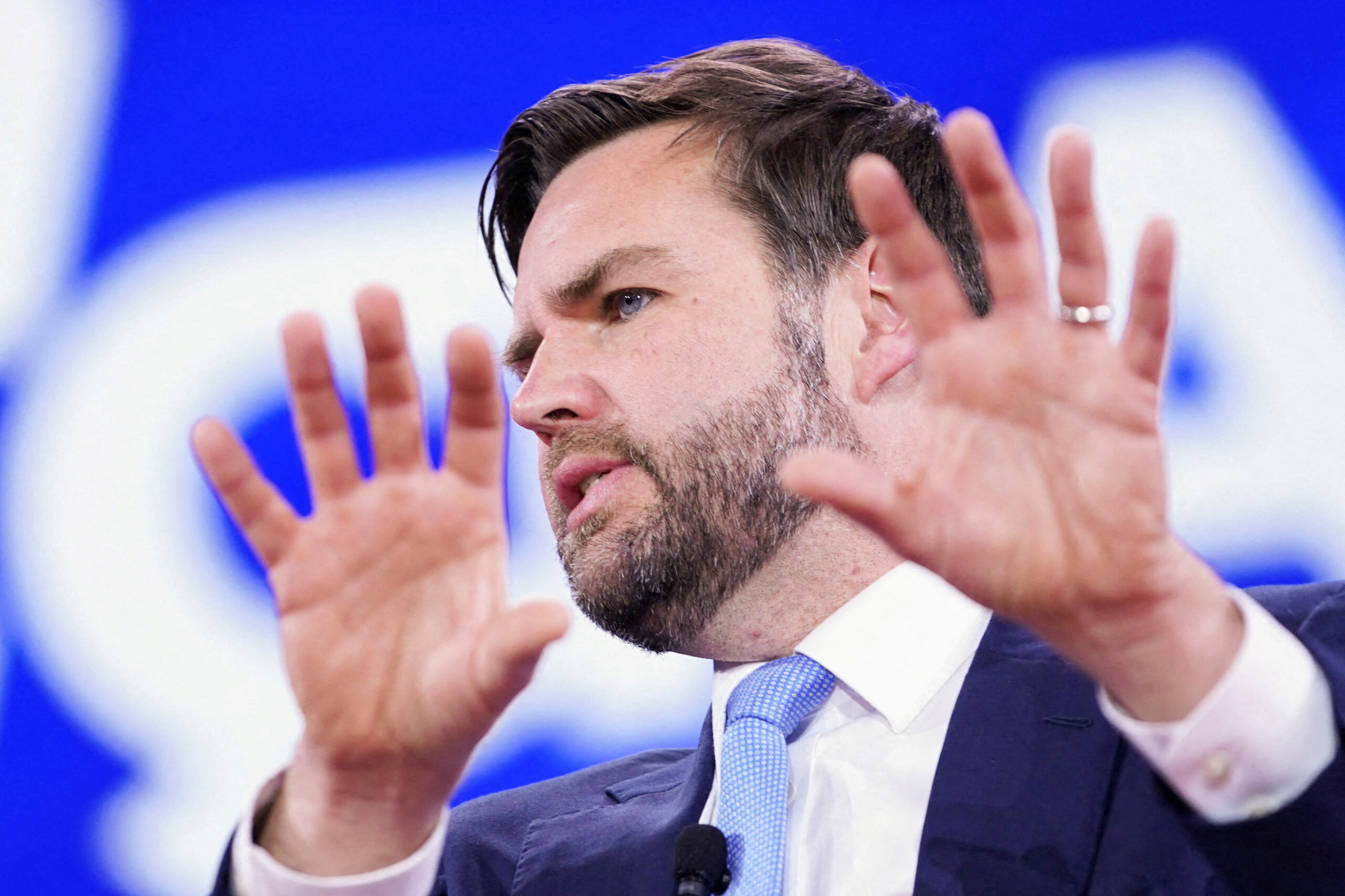
As Republicans look ahead to the 2026 midterm elections, Vice President J.D. Vance is signaling that affordability and take-home pay will anchor the party’s message, even as foreign policy tensions with Iran threaten to dominate headlines.
In a recent interview, Vance downplayed polling that shows Democrats holding an early advantage in generic congressional ballot tests, arguing that the fundamental question for voters will be economic recovery. He contended that Americans lost roughly $3,000 in take-home pay during the Biden administration and have regained about $1,200 during the first year of President Trump’s return to office. The pitch is straightforward: voters must decide whether to “double down” on Trump’s leadership or return power to Democrats, whom Republicans blame for inflation and declining purchasing power.
Noah Rothman, a senior writer at National Review and author of the forthcoming book Blood and Progress: A Century of Left-wing Violence in America, said the economic argument is politically sound but may have been underemphasized.
Rothman argued that the administration’s messaging has often been diffuse, allowing headline-grabbing controversies to overshadow a sustained economic narrative. In his view, the president has at times struggled to remain focused on a single theme long enough for it to resonate deeply with voters. Rather than consistently reinforcing the affordability message, he said, the White House has been sidetracked by issues ranging from tariffs to high-profile foreign policy disputes.
Rothman suggested that while the president’s instinct to dominate the broader cultural conversation may help him personally, it does not necessarily translate into gains for the Republican Party as a whole. He compared the dynamic to the Obama era, when former President Barack Obama excelled at injecting himself into popular culture but saw significant down-ballot losses for Democrats during his tenure.
Still, Rothman acknowledged that policy outcomes under Trump, particularly in the pre-pandemic economy, remain a potent political asset. He said voters’ favorable memories of 2019 played a role in Trump’s electoral success and could again prove decisive if the administration can deliver measurable improvements in wages and inflation before November 2026.
Even as Republicans attempt to sharpen their domestic message, escalating tensions with Iran present a far more volatile variable.
Reports indicate that negotiations between the United States and Iran may have stalled, with Israel preparing contingency plans amid fears of renewed Iranian aggression. The administration has repositioned military assets in the region, and analysts speculate that the White House could face a decision about whether to escalate pressure on Tehran.
Rothman described Iran as significantly weakened compared to prior years, citing Israel’s military actions against Iranian proxy forces and internal unrest within the Islamic Republic. He argued that successive administrations have tightened constraints on Tehran, leaving the regime facing diminished regional influence and eroding domestic legitimacy.
In Rothman’s view, the United States now stands at a potential inflection point. He said the president could either continue applying pressure to push the regime toward collapse or opt for a more limited strategy that avoids full-scale confrontation. He acknowledged the risks of direct military action, including threats to American personnel, but argued that Iran has long been engaged in hostile activity against U.S. forces and interests.
Rothman dismissed the notion that confrontation with Iran would simply represent “fighting Israel’s war,” calling that framing historically inaccurate. He pointed to decades of Iranian-backed attacks on American targets and personnel as evidence that the regime’s conflict with the United States predates current tensions.
While Rothman conceded that regime change is fraught with uncertainty and that history offers few clean examples of successful government collapse through air power alone, he maintained that the status quo carries its own dangers. The question, he suggested, is whether Washington pursues decisive action or settles for incremental measures that leave core power structures intact.
For Republicans, the intersection of economic messaging and geopolitical risk may define the coming year. If the administration can demonstrate tangible gains in wages and affordability while avoiding a protracted regional conflict, the GOP could strengthen its midterm standing. If, however, foreign crises overshadow pocketbook concerns, the political landscape may shift in unpredictable ways.
With more than a year before voters cast ballots, both the economic recovery narrative and the trajectory of U.S.-Iran relations remain fluid. The challenge for the White House will be maintaining focus on domestic priorities while navigating an increasingly unstable international environment.