




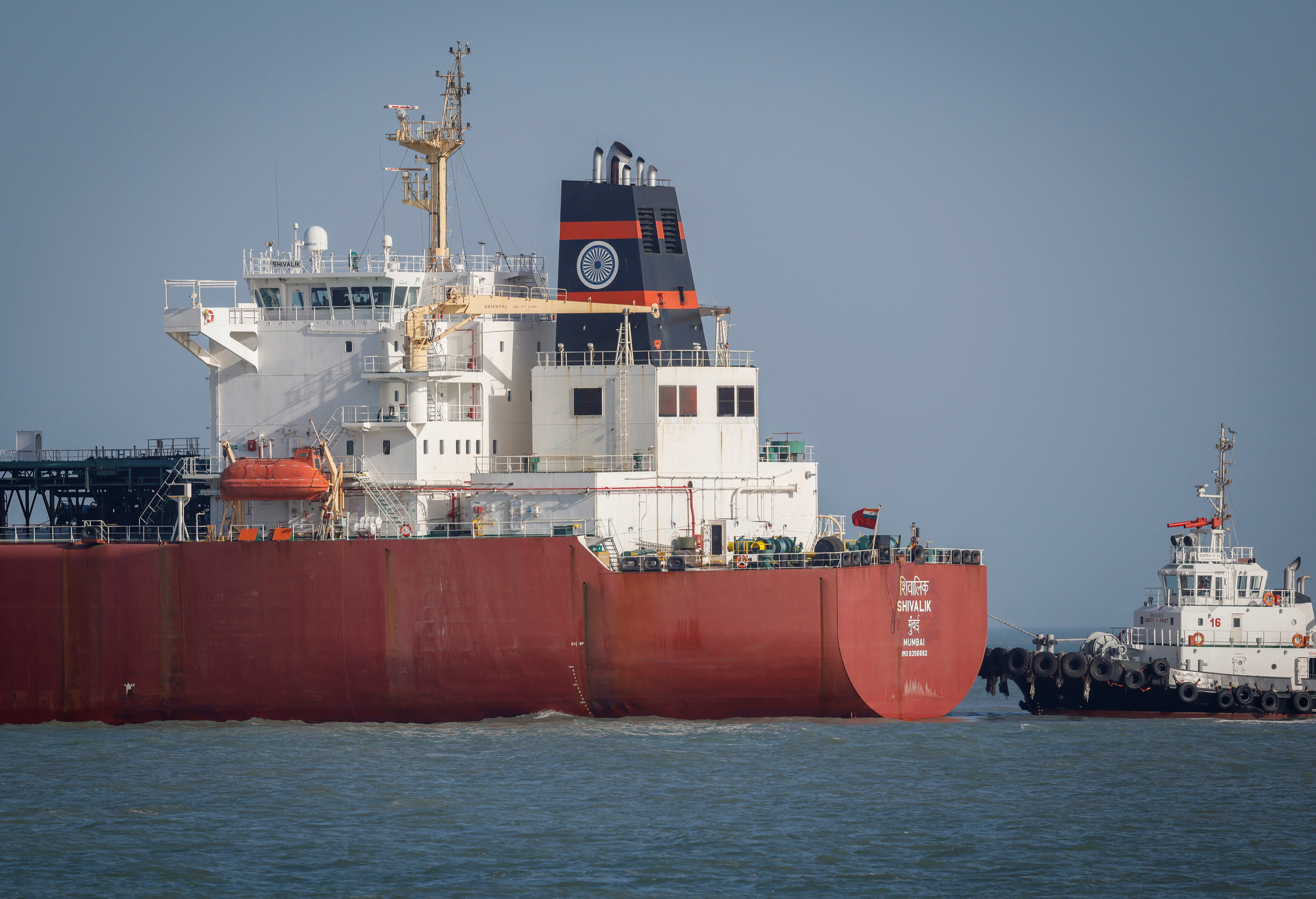
U.S. military operations against Iran are steadily degrading the country’s ability to disrupt global oil shipments through the Strait of Hormuz, according to national security analyst Steven Bucci, who says the campaign is unfolding largely as military planners expected.
Bucci, a retired Army Special Forces officer and former Pentagon official now serving as a visiting fellow at the Heritage Foundation, said recent strikes against Iranian military assets are part of a broader strategy designed to eliminate Tehran’s ability to threaten one of the world’s most important shipping routes.
“The campaign is moving through its target list,” Bucci said. “They are systematically removing Iran’s ability to launch missiles, drones, and mines that could threaten ships in the strait.”
The Strait of Hormuz is one of the most critical energy chokepoints in the world, with roughly a fifth of global oil shipments passing through the narrow waterway connecting the Persian Gulf to international shipping lanes. Iranian forces have historically used the threat of disruption in the strait as leverage during regional tensions.
Recent U.S. strikes have focused on Iran’s naval capabilities, missile launch systems, and drone infrastructure, along with facilities tied to its defense industrial base and nuclear program.
Bucci said such operations require time to achieve their full effect, particularly because Iran retains limited capabilities even after significant losses.
“They still have some drones, some small explosive boats disguised as fishing vessels, and other ways to harass ships moving through the strait,” he said. “Their capacity has been reduced significantly, but it’s not zero yet.”
Those remaining threats are one reason commercial shipping traffic through the waterway has not fully resumed. Ships traveling through the strait must slow down in narrow sections, making them more vulnerable to attack from drones, missiles, or explosive boats.
Military planners are therefore working toward a point where naval escorts for commercial vessels become viable, a strategy that has been rehearsed during multinational naval exercises conducted in the region.
Bucci said those convoy operations could begin once Iran’s remaining strike capabilities are further diminished.
“Once we reduce their capacity a little more, escorting ships through the strait becomes much more practical,” he said.
The United States has also deployed additional military forces to the region, including an amphibious readiness group and a Marine expeditionary unit consisting of several warships and thousands of Marines.
Bucci said the deployment is not necessarily a sign of escalation but rather an effort to provide additional options for U.S. commanders and increase pressure on Iran’s leadership.
“It brings additional aircraft, missile systems, and personnel into the region,” he said. “It also signals to Iran that the United States has more capabilities ready if needed.”
The forces could also be used to secure key strategic locations if the conflict expands, although Bucci said the deployment does not indicate plans for a ground invasion of Iran itself.
A Marine expeditionary unit, he noted, is capable of limited operations such as securing a strategic island or facility but would not be large enough to conduct a full-scale invasion.
At the same time, the United States has targeted strategic economic assets tied to Iran’s military funding. One recent strike focused on military targets on Kharg Island, which serves as the main export hub for roughly 90 percent of Iran’s crude oil shipments.
Although the strikes avoided oil infrastructure itself, analysts say the move sends a clear message that the United States could cripple Iran’s revenue stream if necessary.
Bucci said such pressure is intended to force Iran’s leadership to reconsider its position.
“The goal is to increase the pressure until they decide they’re not going to win and it’s time to cut their losses,” he said.
Despite the disruption in the Strait of Hormuz, Bucci said global energy markets are far better positioned today than during past crises such as the 1970s oil embargo.
Increased U.S. oil production and energy exports have reduced the country’s dependence on Middle Eastern energy supplies, allowing the United States to weather temporary disruptions more easily.
“Europe and China actually depend more on that oil than we do,” Bucci said. “We’re in a much stronger position than we were decades ago.”
The situation could also influence broader geopolitical negotiations, including an upcoming meeting between President Donald Trump and Chinese President Xi Jinping.
Because China relies heavily on oil shipments passing through the Strait of Hormuz, Bucci said Beijing has a strong incentive to see stability restored in the region.
“If the oil stops flowing to China, their economy stops,” he said.
Bucci suggested that the United States may use that leverage in diplomatic discussions with Beijing, encouraging China to cooperate in maintaining regional stability.
Ultimately, he said the timeline for ending the conflict will depend on conditions on the ground rather than a predetermined schedule.
“The key question isn’t the calendar,” Bucci said. “It’s whether the military objectives have been achieved and whether the threat from Iran has been reduced enough to meet those goals.”