




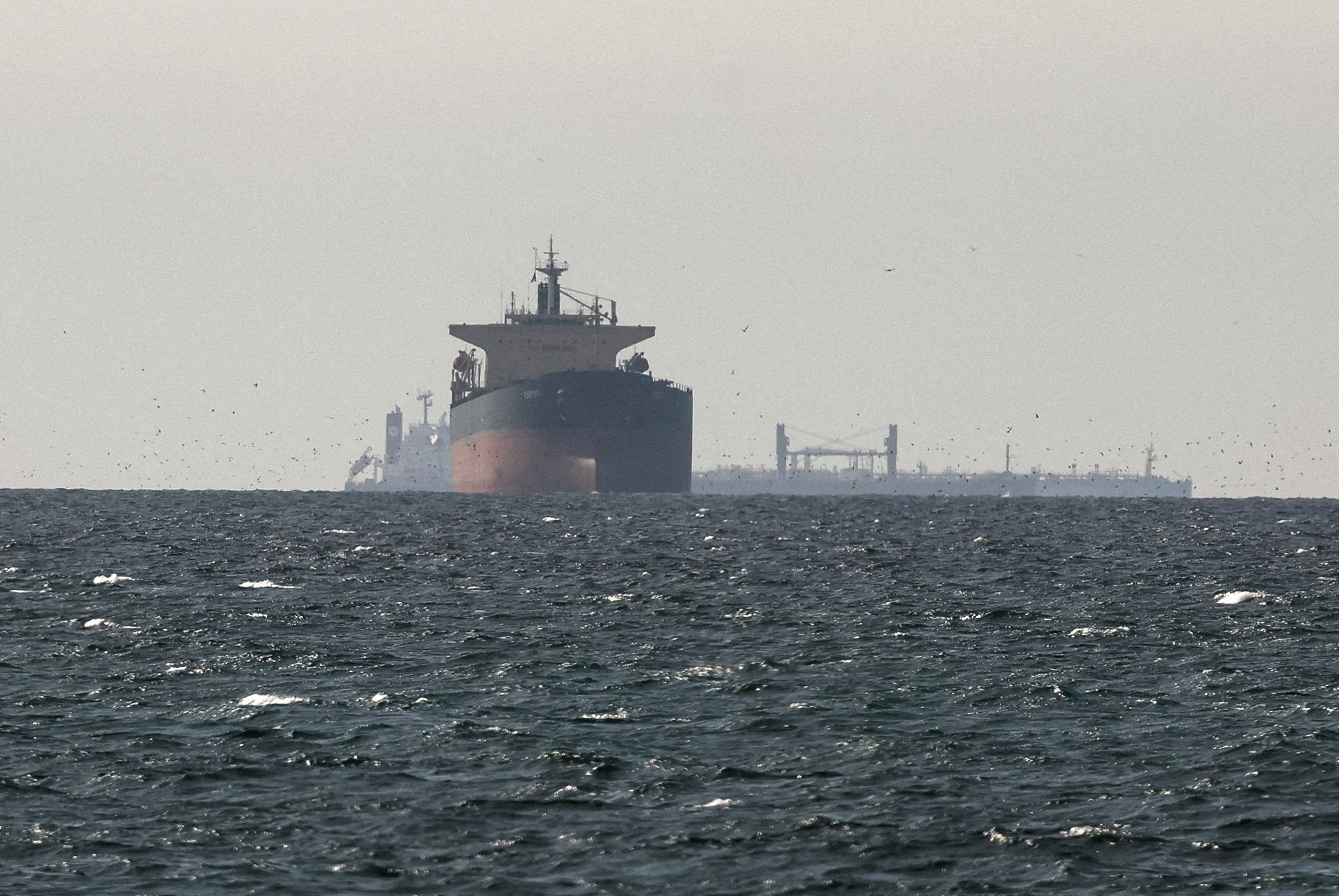
Tensions among Western allies are coming into sharper focus as debate intensifies over how to respond to the disruption of maritime traffic through the Strait of Hormuz, a critical global energy chokepoint, with NATO’s role in the crisis increasingly under scrutiny.
Eliot Wilson, a contributing editor at Defense on the Brink and senior fellow for national security at the Coalition for Global Prosperity, described a growing divide between the United States and its European partners—not necessarily over the seriousness of the threat, but over how to address it and under what framework.
Wilson noted that NATO Secretary General Mark Rutte faces a delicate balancing act, attempting to coordinate allied responses without overstepping the alliance’s core mission as a defensive organization. While NATO has not traditionally been tasked with offensive or economic security operations, Wilson emphasized that the stakes in the Strait of Hormuz extend far beyond military definitions.
The waterway is responsible for a significant portion of the world’s oil and liquefied natural gas shipments, making any prolonged disruption unsustainable for both Europe and the global economy. Wilson argued that European nations, particularly major economies such as the United Kingdom, France, and Germany, cannot afford to treat the situation as a distant or purely American concern.
Despite this shared vulnerability, disagreements persist over how to respond. Wilson suggested that some European leaders may be hesitant not only because of military or economic limitations, but also due to domestic political considerations. Distancing themselves from U.S. policy, particularly under a more assertive American posture toward Iran, can carry political advantages at home.
“There are moments when European governments find it useful to create space between themselves and Washington,” Wilson said, pointing to recent rhetoric from leaders seeking to avoid being seen as aligned with what critics characterize as unilateral U.S. action.
The debate has also exposed a broader issue of burden-sharing among Western allies. While the United States has called for greater participation from its partners, Wilson stressed that any coordinated effort must reflect a fair distribution of responsibility, both financially and operationally. At the same time, he acknowledged the practical challenges of reopening the Strait through military means, describing such an effort as complex and potentially dangerous.
Complicating the geopolitical landscape is the ongoing confrontation with Iran, which Wilson characterized as a destabilizing force whose leadership has inflicted significant harm both domestically and internationally. He argued that there is broad agreement among Western nations on the ultimate goal of weakening or replacing the current Iranian regime, even if there is less consensus on the methods to achieve it.
Recent developments, including targeted strikes against senior Iranian officials, have fueled speculation about the possibility of internal unrest within Iran. Wilson said that while a popular uprising is not guaranteed, the systematic weakening of the regime’s leadership could create conditions in which such a movement becomes more likely.
At the same time, some European concerns—such as the potential for a new migration crisis stemming from instability in the region—have drawn skepticism. Wilson suggested that such arguments may serve as convenient political cover rather than reflecting immediate strategic priorities, noting that while refugee flows are always a risk in Middle Eastern conflicts, they are unlikely to be the primary factor shaping policy decisions in the current crisis.
Ultimately, Wilson emphasized that despite the visible disagreements, Western nations remain aligned on fundamental objectives, including ensuring the free flow of global trade and reducing the threat posed by Iran. The challenge, he said, lies in translating that shared vision into coordinated action.
As the situation in the Strait of Hormuz continues to evolve, the response from NATO members and broader Western allies may serve as a defining test of unity at a moment when economic security and geopolitical stability are increasingly intertwined.