




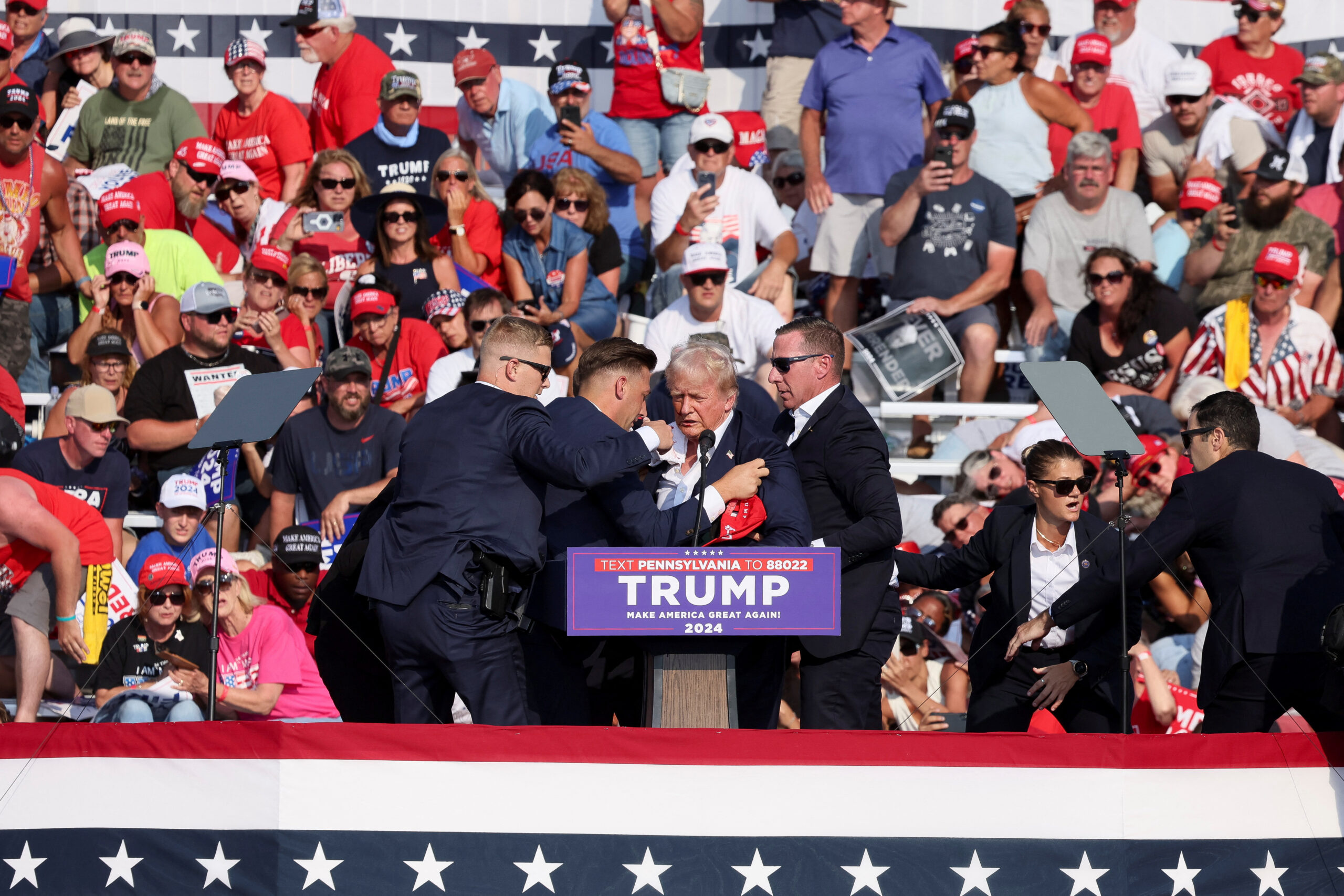
A year after the failed assassination attempt on former President Donald Trump in Butler, Pennsylvania, questions about accountability, competence, and internal culture within the U.S. Secret Service remain largely unanswered. In an interview on Chicago’s Morning Answer, national political correspondent Susan Crabtree of RealClearPolitics detailed what she described as a bureaucratic cover-up and an agency that punished low-level staff while protecting top brass.
Despite promises last year from acting Secret Service Director Ron Rowe to conduct a full investigation and hold individuals accountable, Crabtree said the agency has failed to deliver any real consequences to the senior officials who oversaw security for Trump’s campaign event.
Six agents have received brief unpaid suspensions ranging from 10 to 42 days, but according to Crabtree, all of them are junior staff. Meanwhile, senior agents and supervisors who oversaw the planning and failed to act on known threats have either been promoted or moved on to lucrative private-sector positions. Rowe himself has since taken a role at the Chertoff Group, and Secret Service Director Kimberly Cheatle remains in her post, reportedly benefiting from connections that helped her secure a previous executive job at PepsiCo.
At the heart of the scandal is a classified “mission assurance” report that, Crabtree says, is being hidden from the public to shield the agency from scrutiny. According to her sources, the report outlines numerous missteps, including the failure to secure a rooftop (the AGR building) that had a direct line of sight to the stage where Trump was speaking. That unsecured roof allowed Thomas Crooks, the would-be assassin, to open fire, killing one rallygoer and injuring others before being shot and killed by a counter-sniper.
Crabtree revealed that the sniper who fired the kill shot was also the supervisor responsible for ensuring rooftop coverage—an extraordinary conflict of interest that has been buried in official statements.
Among the most controversial figures is site agent Mios Perez, a relatively inexperienced officer with a reputation for being unserious, according to internal sources. Despite being placed in charge of overall site security, Perez was supported by multiple layers of supervisors who failed to act on intelligence that an Iranian threat to Trump’s life had emerged just 10 days before the rally. Counter-sniper teams were only deployed two days before the event, a process that typically takes up to six days to implement.
Crabtree also confirmed reports that security planning for the rally was downgraded due to outdated Secret Service protocols that treat former presidents as lower-priority protectees than sitting officeholders. In a striking example of the consequences, Jill Biden’s event on the same night received three to four times the number of protective posts as Trump’s rally.
When Crabtree pressed the Secret Service for comment ahead of the anniversary of the shooting, the agency declined to speak with her, instead handing an exclusive—without any identifying names—to CBS News. She then published the names herself, along with the structure of responsibility, drawing on both her own reporting and new documents released by Senate investigators Chuck Grassley and Rand Paul.
Crabtree also indicated that Trump himself has taken some personal action, reportedly removing at least one of the agents involved from his security detail after learning of their role in the security failure.
As for the broader response, she characterized it as the classic Washington playbook: “everyone is responsible, so no one is responsible.” Senior supervisors, including those directly involved in the failed planning and intelligence breakdowns, have since landed high-ranking roles. One, Nick Olszewski, now leads the Secret Service’s inspections division—ironically responsible for internal accountability and oversight.
The classified nature of the investigative findings and the internal finger-pointing, Crabtree said, suggest an unwillingness to grapple with the deeper failures that nearly resulted in a presidential assassination on U.S. soil.
“This was our Texas School Book Depository moment,” Proft noted during the interview, referring to the location of JFK’s assassination. But unlike in 1963, many of those responsible for security planning in Butler have faced no public consequences—at least not yet.
Crabtree’s reporting suggests that unless public pressure builds or further leaks emerge, the real story behind the Butler shooting may remain buried behind classified reports, internal back-scratching, and bureaucratic damage control.