




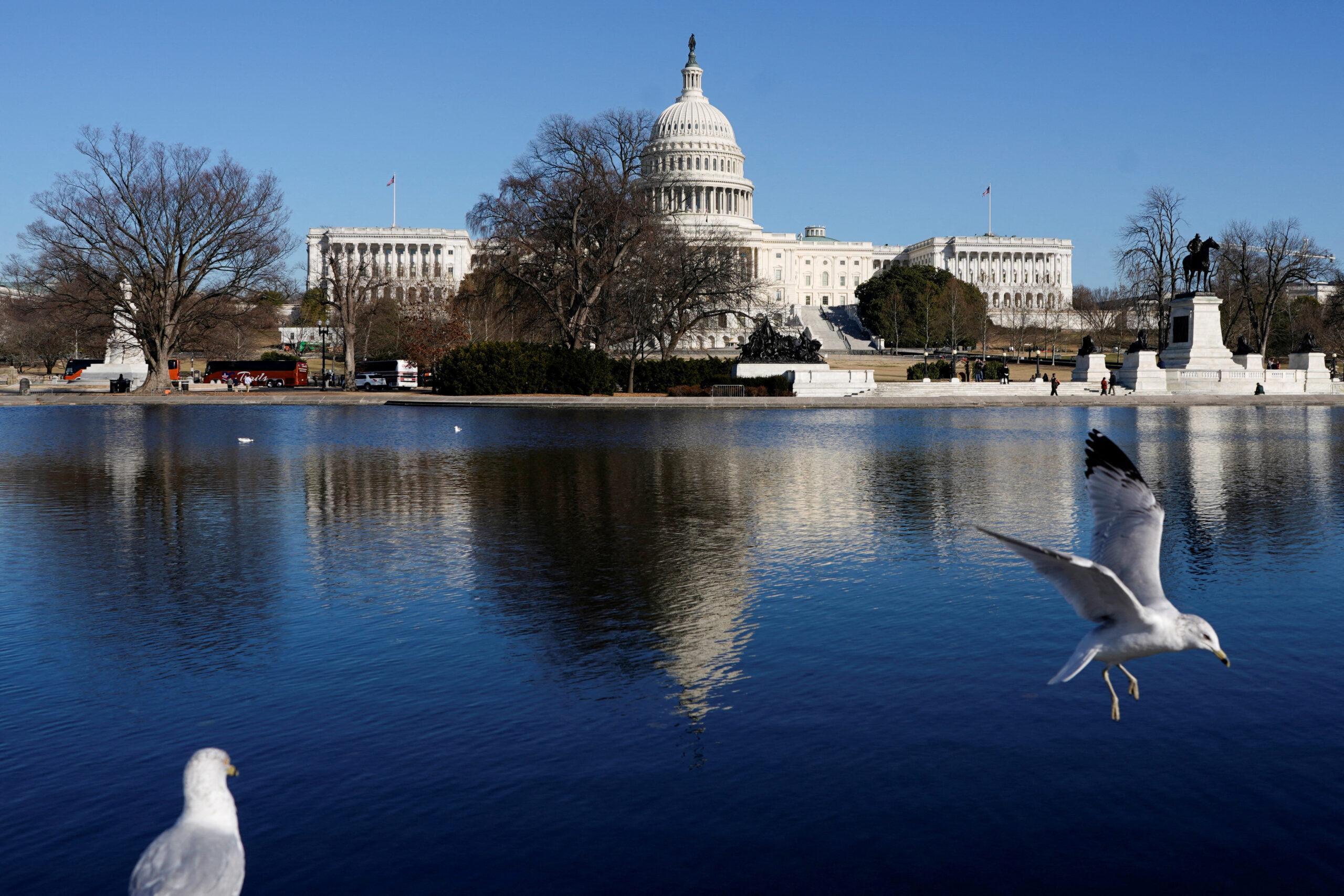
A political standoff in Washington over funding for the Department of Homeland Security is raising concerns about national security, disaster response, and election integrity, according to Rep. Darin LaHood of Illinois.
LaHood, who represents Illinois’ 16th Congressional District and serves on both the House Ways and Means Committee and the House Permanent Select Committee on Intelligence, said the ongoing funding dispute comes at a time when the United States faces increasing security threats at home and abroad.
The funding conflict centers on a disagreement between Republicans and Democrats over several immigration enforcement policies tied to the Department of Homeland Security, including the use of face coverings by Immigration and Customs Enforcement agents. Critics of the masks argue they reduce transparency, while supporters say the coverings protect officers and their families from harassment or retaliation.
LaHood said the broader consequences of withholding DHS funding go far beyond immigration enforcement.
“The Department of Homeland Security was created after 9/11 to protect the safety and security of the American people,” LaHood said. “Now is not the time to be playing politics with national security.”
The department oversees a wide range of federal agencies and programs, including FEMA, cybersecurity operations, and the Transportation Security Administration. A prolonged funding lapse could affect disaster response efforts, airport security operations, and cyber defense initiatives.
LaHood warned that cybersecurity risks are particularly concerning given the increasing frequency of cyberattacks on American companies and infrastructure.
“We are one disaster or one terrorist attack away from serious harm if we don’t have these agencies operating at full strength,” he said.
The funding dispute has also become tied to a separate legislative effort known as the SAVE Act, which would require proof of U.S. citizenship to vote in federal elections. Republicans argue the measure is necessary to strengthen election integrity, while Democrats have raised concerns about potential barriers to voter participation.
The House of Representatives has already passed the SAVE Act multiple times, LaHood said, but the legislation faces obstacles in the Senate because it would need to overcome a filibuster requiring 60 votes.
“If it were a simple majority vote, it would pass,” LaHood said.
Supporters of the bill argue it is needed to ensure that only U.S. citizens vote in federal elections, particularly after the surge in illegal immigration over the past several years.
Opponents say existing laws already prohibit noncitizens from voting and warn that additional documentation requirements could create unnecessary complications for eligible voters.
The stalemate has left DHS funding unresolved several months into the federal fiscal year, despite lawmakers completing most other appropriations measures.
LaHood said Congress has already approved the vast majority of federal spending through appropriations bills, leaving DHS as one of the final major funding pieces still under dispute.
“We funded 96 percent of the government,” he said. “The remaining portion involves DHS.”
The funding impasse could also affect disaster relief programs administered by FEMA. Recent severe weather across several states, including damaging tornadoes in parts of Illinois and neighboring Indiana, has highlighted the importance of federal disaster assistance.
LaHood said communities recovering from the storms will likely require federal disaster declarations and support.
“Those communities need FEMA to be fully operational so they can get the assistance they need,” he said.
Beyond the domestic policy debate, LaHood also pointed to broader global security challenges, particularly rising tensions with China.
As a member of the House Select Committee on the Chinese Communist Party, LaHood said the United States must remain focused on what he described as a long-term strategic competition with Beijing.
“China has a plan to replace the United States as the world’s leading power,” he said. “They’re working at it technologically, economically, militarily, and diplomatically.”
LaHood said U.S. policymakers must remain vigilant as the two countries compete for leadership in advanced technology, global supply chains, and national defense.
President Donald Trump is expected to meet with Chinese President Xi Jinping later this year, a summit that could shape the next phase of U.S.-China relations.
LaHood said maintaining economic strength and national security readiness will be key to the United States remaining competitive.
“The sooner we wake up to the fact that this is a strategic competition, the better prepared we’ll be,” he said.
For now, lawmakers continue negotiating both the DHS funding measure and election legislation as Congress moves deeper into the fiscal year. LaHood said he believes both issues will remain major priorities in the coming months as policymakers balance security concerns with broader political disagreements.
“We have a responsibility to fund the agencies that protect the American people,” he said. “That should never be used as a political bargaining chip.”