




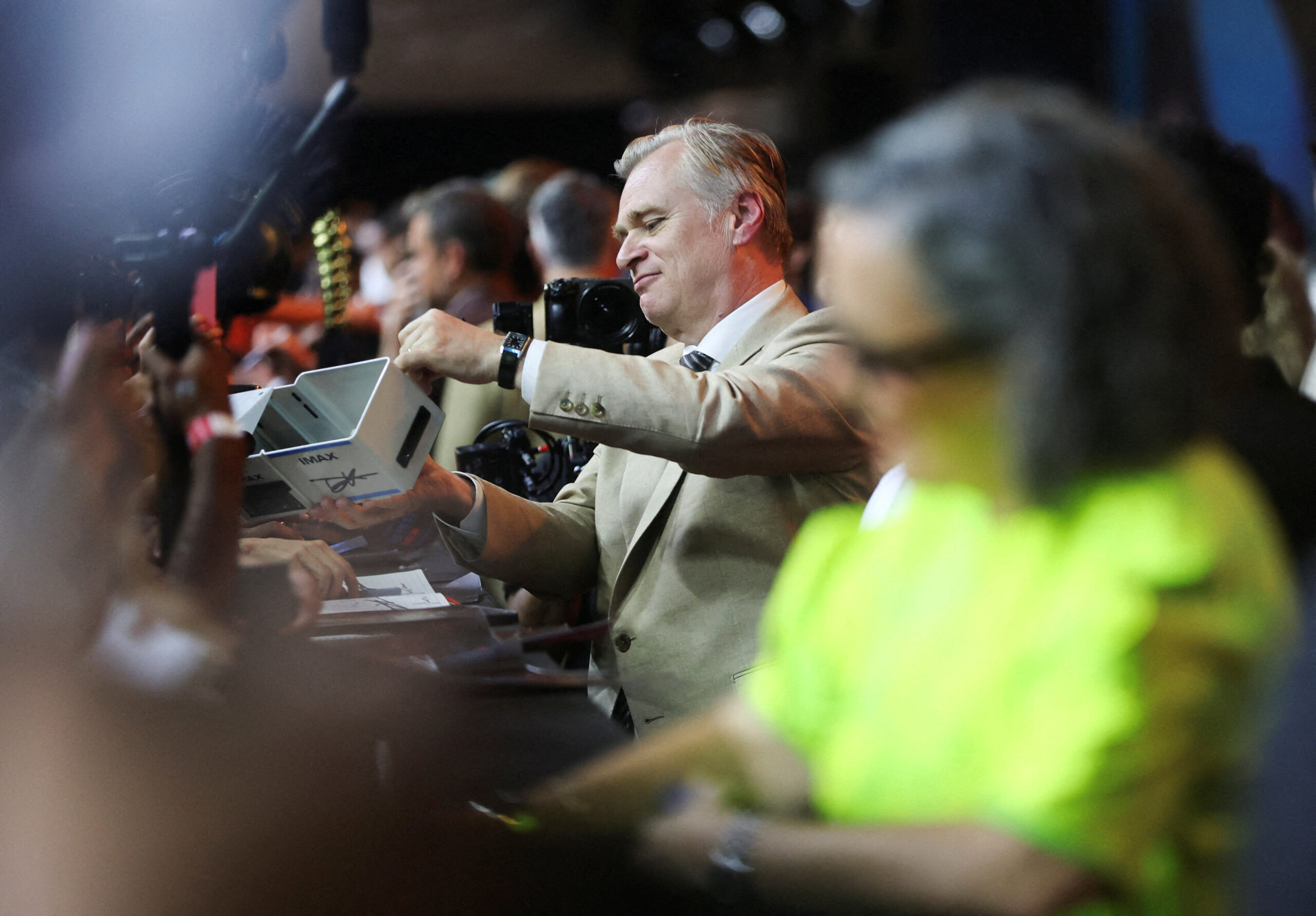
Dan Proft unpacked the polarized reception to Christopher Nolan’s new film adaptation of Homer’s Odyssey, playing commentary from Nolan himself explaining his interpretive approach to the ancient poem. Nolan described building the film around the Greek concept of xenia, or sacred hospitality toward strangers, framing it as an ethical foundation binding ancient society together given how dependent travelers were on the goodwill of those they encountered. Proft pushed back against readings of this framing as a veiled commentary on modern immigration policy, arguing the concept of xenia is fundamentally reciprocal rather than one-directional.
Proft also played comments from classicist Emily Wilson, whose acclaimed translation of the Odyssey reportedly informed aspects of Nolan’s approach, expressing some ambivalence about the film’s psychologically burdened, guilt-ridden portrayal of Odysseus, and questioning whether the film fully captures the poem’s themes of glory and heroism rather than shame alone. Proft also cited sharp criticism from commentator Matt Walsh regarding the film’s casting choices and modern sensibility, while suggesting some backlash, particularly surrounding actress Lupita Nyong’o’s promotional comments about Helen of Troy’s limited screen time, may have colored public reception before the film was even widely seen.
Proft welcomed Spencer Klavan, associate editor of the Claremont Review of Books and host of the Young Heretics podcast, to assess the film’s fidelity to its source material. Klavan agreed that Nolan’s decision to portray Odysseus as remorseful over the sacking of Troy, particularly regarding the Trojan Horse deception, represents a meaningful departure from the poem’s original characterization of Odysseus as primarily motivated by glory and reputation. However, Klavan noted the poem does contain moments of genuine sorrow, including a scene in which Odysseus weeps upon hearing his own exploits sung by a bard, as well as commentary from the ghost of Achilles in the underworld expressing regret over choosing a life of war. Klavan suggested Nolan’s more explicitly guilt-driven interpretation likely reflects modern, possibly Christian-influenced sensibilities rather than a wholesale invention unsupported by the text.
On casting controversies, Klavan agreed that some actors’ public comments framing the film through a modern identity-politics lens likely did the production a disservice, arguing that such commentary invited disproportionate scrutiny of relatively brief scenes while distracting from more substantive critiques. He noted that Homer’s poem actually contains numerous compelling female characters that were largely cut from the film, suggesting critics upset about limited screen time for certain characters might direct that critique at Nolan’s script rather than at any inherent limitation of the source material.
Klavan praised Nolan’s handling of the poem’s mythological and supernatural elements, including the Cyclops, Circe, and Scylla and Charybdis sequences, arguing that many modern adaptations shy away from fully embracing such fantastical material. He offered a mixed assessment of Matt Damon’s performance as Odysseus, arguing the character’s complexity, as a warrior, father, husband, and trickster all at once, is exceptionally difficult to capture on screen, though he felt the film underplayed some of the character’s wit and playfulness present in the original text.
Addressing broader concerns about Hollywood adaptations drifting from canonical texts, Klavan acknowledged sympathy for that critique in principle, citing recent controversies over Disney’s live-action remakes, but argued Nolan’s film does not reflect outright hostility to its source material so much as the unavoidable compromises inherent in any adaptation. He noted with some satisfaction that renewed public interest in the film has driven translations of the Odyssey onto bestseller lists, suggesting the broader cultural conversation, whatever one thinks of Nolan’s specific choices, has succeeded in returning attention to the original poem itself.