




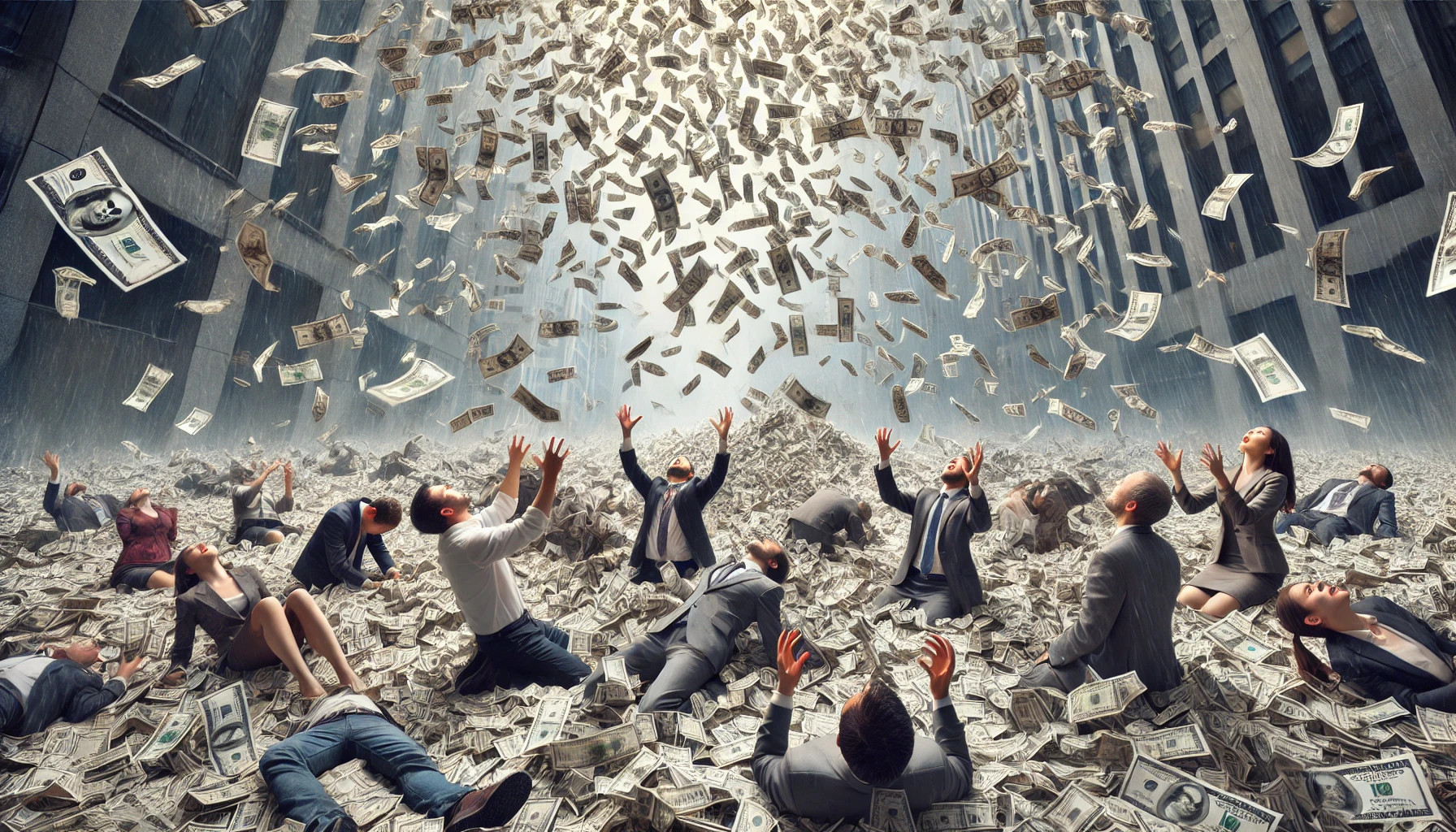
As tax season enters full swing and new trade agreements take shape, economist Stephen Moore says the American economy is positioned for a significant boost driven by capital investment, rising wages, and the full implementation of recent tax reforms.
Moore, an economist and co-author of The Trump Economic Miracle and the Plan to Unleash Prosperity Again, pointed to Treasury Secretary Scott Bessent’s recent remarks forecasting a “gigantic refund year” and an accelerating capital expenditure boom in 2026. According to Bessent, provisions in the recently enacted tax package—including immediate expensing for equipment and a multi-year window for factory investments—are already spurring increased corporate investment.
Moore said early indicators support that optimism.
“We’ve gotten very positive economic news over the last few weeks,” he said, citing a strong employment report, rising real wages, and increased workforce participation. Inflation, which peaked near 9 percent under the previous administration, has fallen to roughly 2.4 percent and is trending toward the Federal Reserve’s 2 percent target.
Moore also praised the anticipated nomination of Kevin Warsh to lead the Federal Reserve, arguing that Warsh understands that economic growth itself is not inherently inflationary and that monetary policy should prioritize a stable dollar and maintain the dollar’s role as the world’s reserve currency.
The discussion comes as the administration touts new trade deals, including a recently inked $550 billion agreement with Japan that is expected to support energy projects, manufacturing facilities, and critical mineral development in multiple states. A groundbreaking in San Antonio for a Japanese plastics manufacturer expanding into the United States was cited as one example of renewed foreign investment.
Moore characterized the United States as the “alpha male” of the global economy at the moment, arguing that lower taxes and regulatory reforms are drawing capital and production back to American soil.
At the same time, Moore sharply criticized economic policy directions in major blue cities, singling out New York City Mayor Zohran Mamdani’s recent budget remarks. Mamdani framed the city’s $5.4 billion budget gap as requiring either a 2 percent income tax hike on high earners and increased corporate taxes or, failing that, property tax increases and reserve drawdowns.
Moore argued the mayor’s formulation presented a false binary.
“He didn’t mention anything about shaving spending,” Moore said, noting that New York City spends nearly twice as much per capita as the average American city. He suggested that the city’s fiscal challenges stem more from structural spending patterns than revenue shortfalls.
Drawing a broader contrast, Moore lamented what he described as a pattern of progressive governance in major urban centers leading to higher costs and declining services. He pointed to steep drops in commercial real estate values in cities like Chicago and ongoing struggles with public safety, municipal debt, and population loss in places such as New York, San Francisco, and Los Angeles.
By contrast, Moore said cities in states like Texas and Florida continue to experience population growth, construction booms, and comparatively lower housing costs, attributing the divergence in part to fewer land-use regulations and a more business-friendly environment.
“The Democrats’ line right now is affordability,” Moore said. “But in the cities they control, they make everything more expensive.”
While acknowledging the political volatility ahead of the midterm elections, Moore maintained that economic fundamentals—particularly if refunds materialize as projected and investment continues to accelerate—could reshape voter sentiment in the coming year.
With tax changes retroactive to the start of the year for individuals and expanded incentives for businesses already influencing corporate spending decisions, Moore said he remains “pretty bullish” about the direction of the economy heading into 2026.
Whether that optimism translates into sustained growth—and political dividends—will depend in part on inflation’s continued decline and the durability of the current investment surge. For now, Moore argues, the economic momentum is real and measurable.