




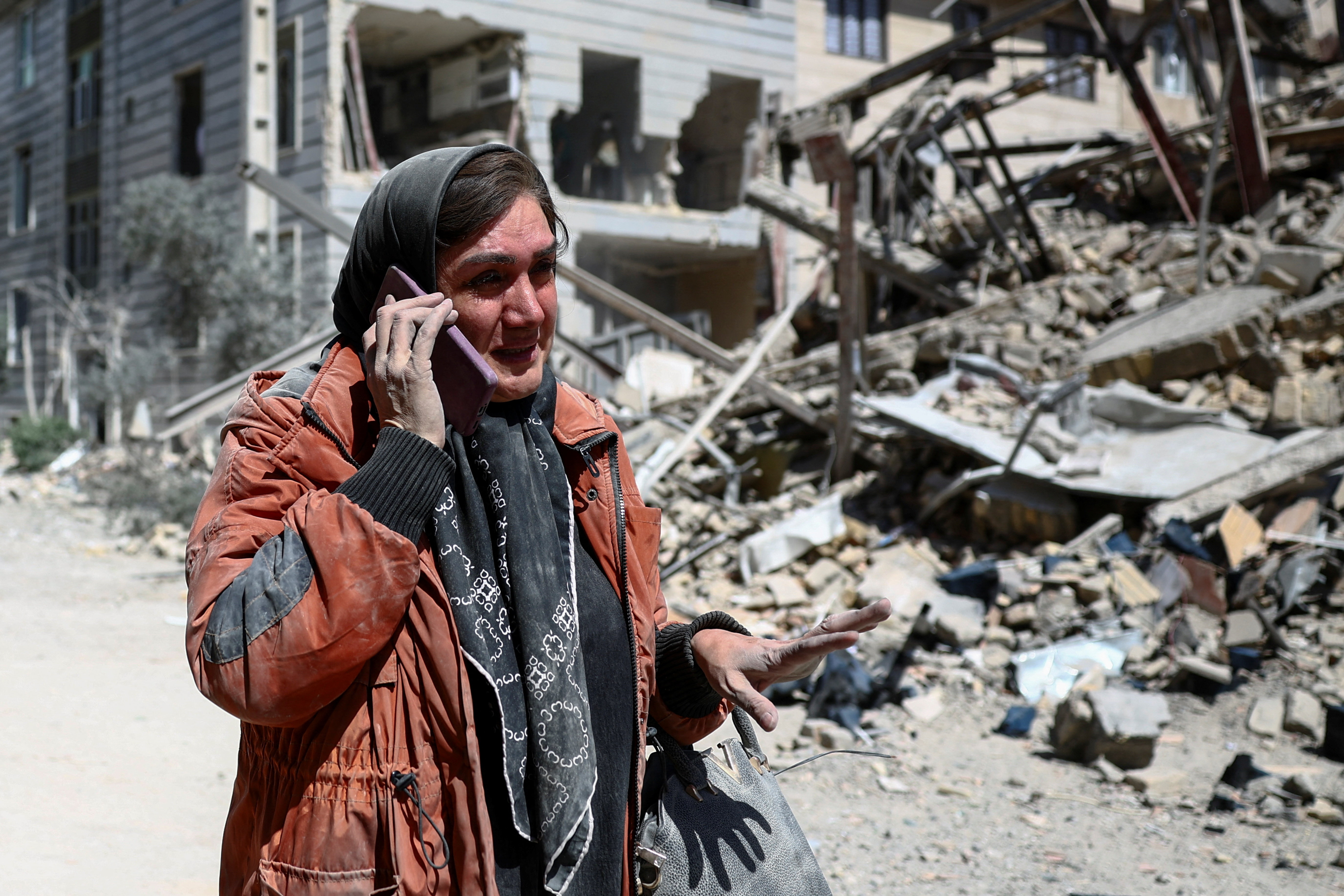
Thirty days into Operation Epic Fury, President Trump addressed the Future Investment Initiative conference declaring the United States closer than ever to a Middle East free from Iranian terror, nuclear blackmail, and regional aggression, while negotiations through intermediaries continue and military operations show no signs of slowing.
Steven Bucci, a thirty-year Army Special Forces veteran and former top Pentagon official now serving as a visiting fellow at the Heritage Foundation’s Allison Center for Foreign Policy Studies, returned to Chicago’s Morning Answer to assess where the campaign stands and push back on what he described as a Democratic Party critique built almost entirely on misrepresentation.
Proft framed the discussion partly around a segment from ABC’s This Week in which correspondent Jonathan Karl invoked Sun Tzu to characterize Trump’s shifting public statements on the conflict as either strategic chaos or genuine incoherence, cataloguing a ten-day period in which Trump appeared to move from winding down operations to threatening to obliterate Iranian power plants to announcing productive talks to granting successive deadline extensions. Bucci said the framing misses the basic nature of negotiation and military pressure, noting that Sun Tzu and Clausewitz are not as contradictory as people like to suggest, and that creating uncertainty in an adversary’s mind while maintaining credible military threat is not chaos but strategy. The enemy gets a vote, he said, and friction is inherent to any military operation, but neither of those things means the campaign has failed or lost direction.
He was considerably sharper in his response to Representative Madeleine Dean of Pennsylvania, who argued on MSNBC that Trump’s legacy would be rubble around the globe, that the original Iran nuclear deal had provided meaningful oversight of both enrichment and missile development, and that the war had made America less safe while driving up costs. Bucci called her characterization of the JCPOA a lie, noting that the original agreement contained no provisions whatsoever restricting Iranian missile development or production. On the strike that hit a building being used as a school, he said the responsibility lies with the IRGC for repurposing an old structure as a school inside a military facility, drawing a direct parallel to Hamas embedding military infrastructure inside hospitals and then accusing Israel of bombing hospitals when those sites are struck.
On the military situation itself, Bucci said reports that Secretary of State Marco Rubio told allies the campaign could conclude within two to four more weeks suggest the administration is still pursuing regime change as the primary objective rather than simply degrading Iranian capabilities to a generational setback. He said the Iranian leadership is showing signs of genuine desperation, including attempts to shanghai civilians into a new reserve force under a campaign called Martyr, meaning sacrifice your life, and reports of significant internal disagreement between what remains of the civilian leadership and IRGC commanders. He noted that Israeli forces had again struck a senior IRGC figure during the reporting period, further disrupting the chain of command. Domestic Iranian resistance is also growing, he said, with Baluchi fighters and other groups ambushing IRGC forces in ways that signal the Iranian population reads the American commitment as genuine and is beginning to act accordingly.
The USS Tripoli’s movement toward the theater, Bucci said, remains primarily a pressure tool rather than a definitive signal of imminent ground operations, though he did not rule out that Trump could ultimately order those forces in. He argued that the administration’s preference is clearly to achieve regime change through air power, economic pressure, and internal Iranian resistance rather than through a large ground presence, and that the infrastructure destruction already achieved gives a successor government considerably less to rebuild than the old regime would have needed. If a cooperative new government emerges, he said, the United States should be willing to help it rebuild civilian infrastructure as part of stabilizing whatever follows the Islamic Republic.
On the broader regional picture, Bucci described Israel’s expansion of operations against Hezbollah in Lebanon as an inevitable consequence of Iran pressuring its proxy to join the fight after the group had initially stayed out of the conflict. He said the Lebanese government’s response, including the expulsion of the Iranian ambassador, suggests ordinary Lebanese see Hezbollah rather than Israel as the source of their country’s current problems. The Houthis’ renewed missile launches toward Israel, he said, will likely draw a severe response and play into Saudi Arabia’s long-standing desire to finish what it was talked out of pursuing against the group several years ago.
Bucci addressed two additional concerns raised by Proft. On the question of al-Qaeda reconstituting itself inside Iran, as reported by Washington Post columnist Marc Thiessen, Bucci said the prospect of ideologically distinct terrorist organizations making common cause against the United States is a real concern that American intelligence services monitor continuously, even when, as with Sunni al-Qaeda and Shia Iran, the theological differences would seem to preclude cooperation. On the incident at Barksdale Air Force Base in Louisiana, where unidentified drones loitered over the headquarters of the Air Force’s Global Strike Command for approximately a week earlier this month, Bucci said no complete public explanation has emerged about who operated the drones or what their purpose was, and that the episode reflects a persistent American tendency to relax vigilance quickly after an initial threat perception fades. He said he believes protective measures around military installations are now tightening, but that the broader homeland security apparatus is being hamstrung by the ongoing congressional standoff over DHS funding, which he described as precisely the wrong time to leave that agency in a weakened state.