




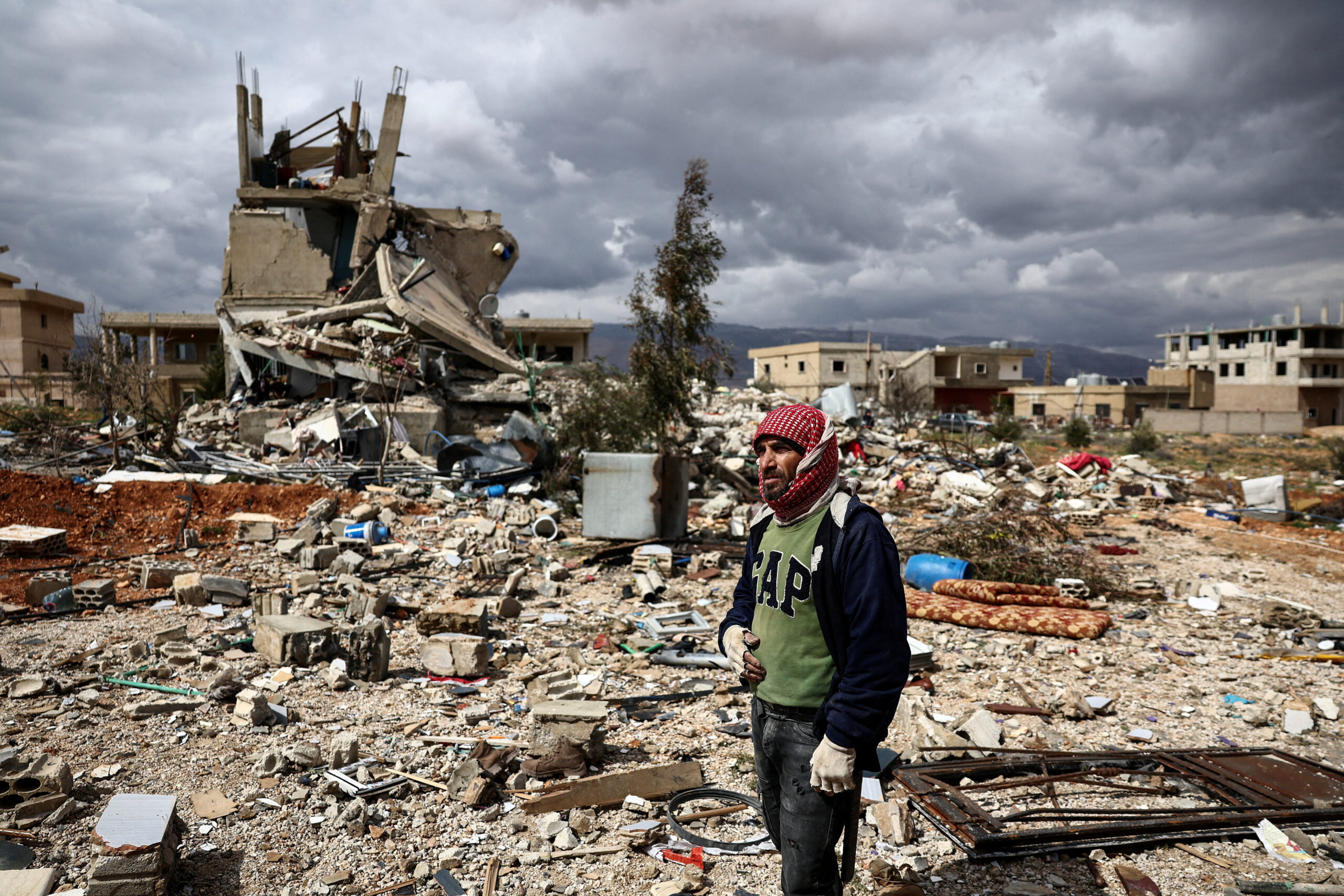
With U.S. strikes against Iran on hold following what the Trump administration described as productive diplomatic talks over the weekend, competing assessments of the conflict’s trajectory are dividing analysts and commentators. Dan Proft brought in Steven Bucci, a thirty-year Army Special Forces veteran and former top Pentagon official now serving as a visiting fellow at the Heritage Foundation’s Allison Center for Foreign Policy Studies, to sort through the competing arguments on Chicago’s Morning Answer Monday morning.
The debate Proft laid out centered on two sharply divergent readings of the situation. Treasury Secretary Scott Bessant, appearing on Meet the Press, compared the state of the Iranian regime to Hitler’s bunker — describing its command and control structure as being in total chaos, with recent missile launches reflecting desperation rather than strength. Historian Victor Davis Hanson, speaking with Sean Hannity, similarly assessed the regime as teetering on the edge of collapse, pointing to European diplomatic engagement, Gulf state condemnations of Iran, and even favorable coverage from Al Jazeera as indicators that regional and western powers believe the United States is winning and intends to finish the job. Hanson suggested the Iranian strategy of outlasting American public opinion through the midterm elections depends entirely on Trump being called off before the campaign concludes, and that the regime likely knows it.
University of Chicago political scientist John Mearsheimer offered a starkly different view, arguing that the failure to achieve a rapid, decisive military victory has left the United States mired in a war of attrition that Iran prepared for and is well-positioned to win. Mearsheimer contended that Iran retains the ability to match American escalation at every rung of the ladder and could inflict catastrophic damage on the international economy, leaving Trump with no clean exit strategy and no path to a result that doesn’t look like a humiliating defeat.
Bucci dismissed Mearsheimer’s analysis in direct terms, calling his characterization of Iranian military capabilities laughable and arguing that Iran has never demonstrated the ability to go toe-to-toe with a serious adversary, citing the country’s performance against Iraq as a historical baseline. He also challenged Mearsheimer’s framing of the timeline, pushing back on the notion that anything short of a surrender within days constitutes a failed campaign. Bucci sided firmly with Hansen, noting that the Iranian supreme leader has not been seen publicly and describing the regime as a cornered and desperate force still capable of inflicting some damage but nowhere near the strategic threat Mearsheimer portrayed.
On the question of Iran’s intermediate-range ballistic missile test, which demonstrated a potential reach into at least the eastern half of Europe and prompted fresh concern in western capitals, Bucci said the capability itself came as no surprise to most serious analysts. He argued that Iran had ample time and funding, particularly during the Obama years, to develop this kind of capacity, and that the intelligence community is now focused on locating and targeting those missile facilities.
Bucci also addressed concerns about potential Iranian false flag operations targeting Muslim holy sites in Jerusalem to inflame regional opinion, calling the window for that strategy largely closed. He argued that Sunni Arab states have long viewed Iran as a far greater existential threat than Israel, that the recent missile strike already saw debris land near the relevant district without triggering the desired response, and that a confirmed false flag would likely accelerate rather than deter Sunni military involvement — with considerably less precision than what the United States and Israel are currently employing.
On the domestic threat picture, Bucci was measured. He said drone incursions into the United States are a manageable concern given heightened awareness and existing defensive layers, and that while Iranian cyber capabilities pose a real if limited risk to American companies, they fall well short of anything approaching an existential threat to critical infrastructure. He was somewhat more cautious about Russian cyber capacity but said he does not expect Moscow to take actions costly enough to draw a serious American response, given Putin’s interest in appearing defiant without paying a real price.
The conversation closed on the state of the American defense industrial base, where Bucci largely validated concerns raised in a recent Wall Street Journal analysis warning that U.S. munitions stockpiles and manufacturing capacity are inadequate for a potential confrontation with China. He noted that the country has a single tank-producing factory and that precision munitions are consumed at a rate that outpaces current production, arguing that while no immediate crisis is at hand, the time to rebuild that industrial capacity is now rather than after a shortage becomes acute.