




A wide-ranging discussion on constitutional law unfolded on Chicago’s Morning Answer as host Dan Proft spoke with legal scholar Richard Epstein about two issues now converging in the national spotlight: a pending Supreme Court challenge to restrictive gun-carry laws and the legal fallout from former special counsel Jack Smith’s testimony before Congress.
The immediate legal backdrop was the U.S. Supreme Court’s decision to hear a challenge to a Hawaii statute that requires gun owners to obtain explicit permission before carrying a firearm onto private property that is otherwise open to the public. Critics have labeled the policy a de facto ban, arguing that it conflicts with the Supreme Court’s 2022 ruling in New York State Rifle & Pistol Association v. Bruen, which held that firearm regulations must be consistent with the nation’s historical tradition of gun regulation. Oral arguments in the Hawaii case drew attention for an exchange in which Justice Ketanji Brown Jackson questioned whether post–Civil War “Black Codes” could be considered relevant historical analogues under the Bruen framework.
Epstein rejected that line of reasoning, arguing that such laws were unconstitutional from their inception and therefore could not serve as legitimate historical benchmarks. He contended that the Hawaii statute upends basic principles of property and criminal law by effectively requiring gun owners to secure advance consent from potentially countless property owners, a standard he described as unworkable and inconsistent with ordinary legal expectations. In Epstein’s view, the law operates less as a neutral property rule and more as an indirect means of banning public carry altogether.
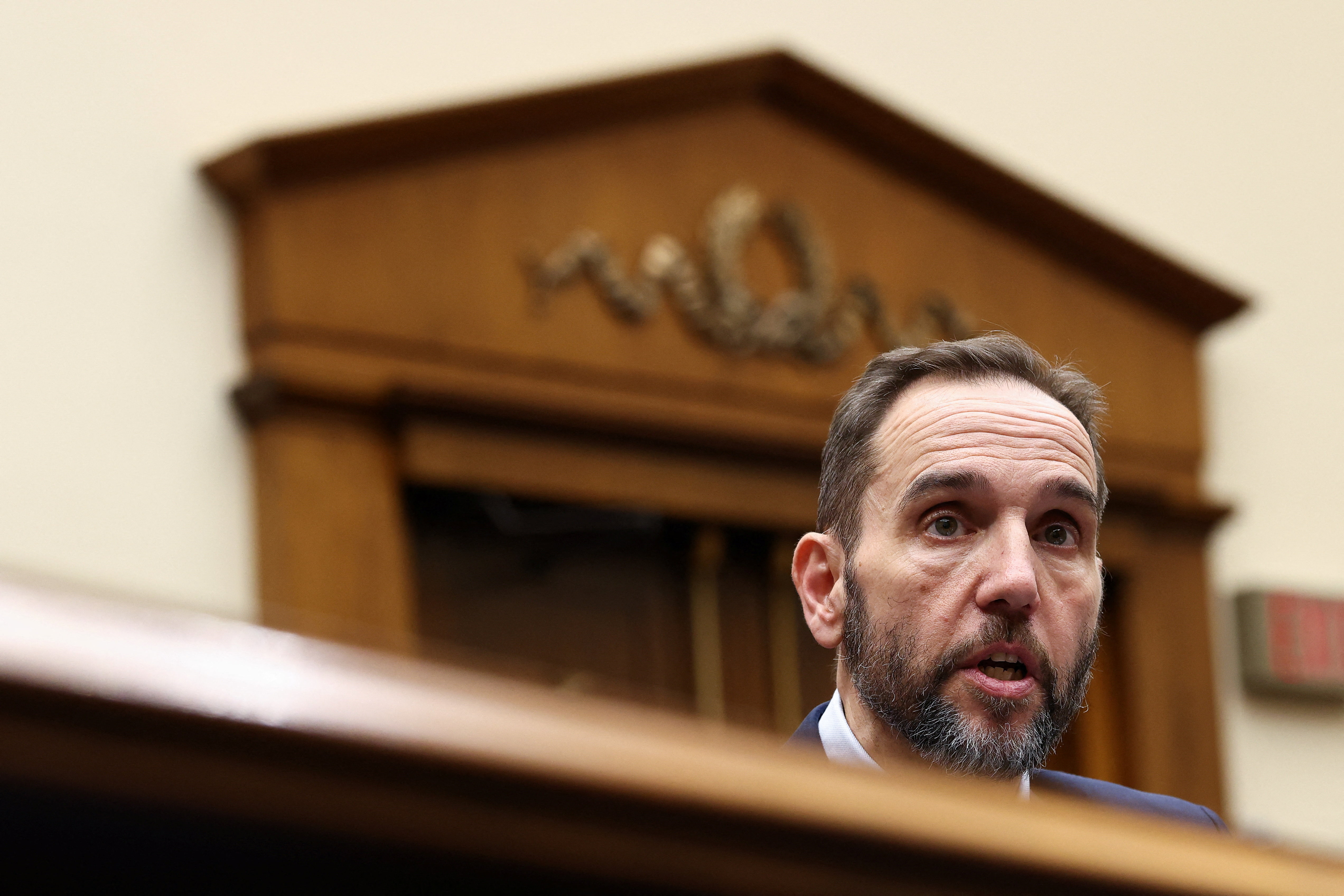
The conversation then turned to Jack Smith’s recent testimony before the House Judiciary Committee, particularly revelations that his office subpoenaed phone records of members of Congress while obtaining non-disclosure orders that prevented notification. Lawmakers have questioned whether those actions violated the Constitution’s Speech or Debate Clause, which protects legislative activities from executive branch interference. Epstein argued that the clause extends beyond floor speeches to cover a wide range of legislative work and said Smith’s approach showed a troubling disregard for due process and prosecutorial restraint.
According to Epstein, even when prosecutors believe they are acting within technical legal authority, secrecy and lack of notice can itself amount to a constitutional violation by depriving targets of the opportunity to challenge subpoenas before damage is done. He also warned that the cumulative effect of aggressive, politically charged prosecutions by both parties has eroded public confidence in the Justice Department, creating a cycle of retaliation that threatens the rule of law.
While Proft pressed the question of whether Smith’s actions could warrant criminal investigation, Epstein expressed skepticism about using prosecutorial power to settle political scores, arguing that the deeper problem lies in the absence of meaningful independence between the attorney general and the president, regardless of party. Without that separation, he said, each new administration risks escalating the same tactics it once condemned.
Taken together, the Supreme Court gun case and the controversy surrounding Smith’s testimony reflect a broader struggle over constitutional boundaries, prosecutorial discretion, and the long-term consequences of politicizing law enforcement. As the Court weighs the limits of state power over the Second Amendment and Congress continues to probe executive overreach, the debates raised underscore how questions of history, due process, and institutional trust remain central to America’s legal and political moment.