




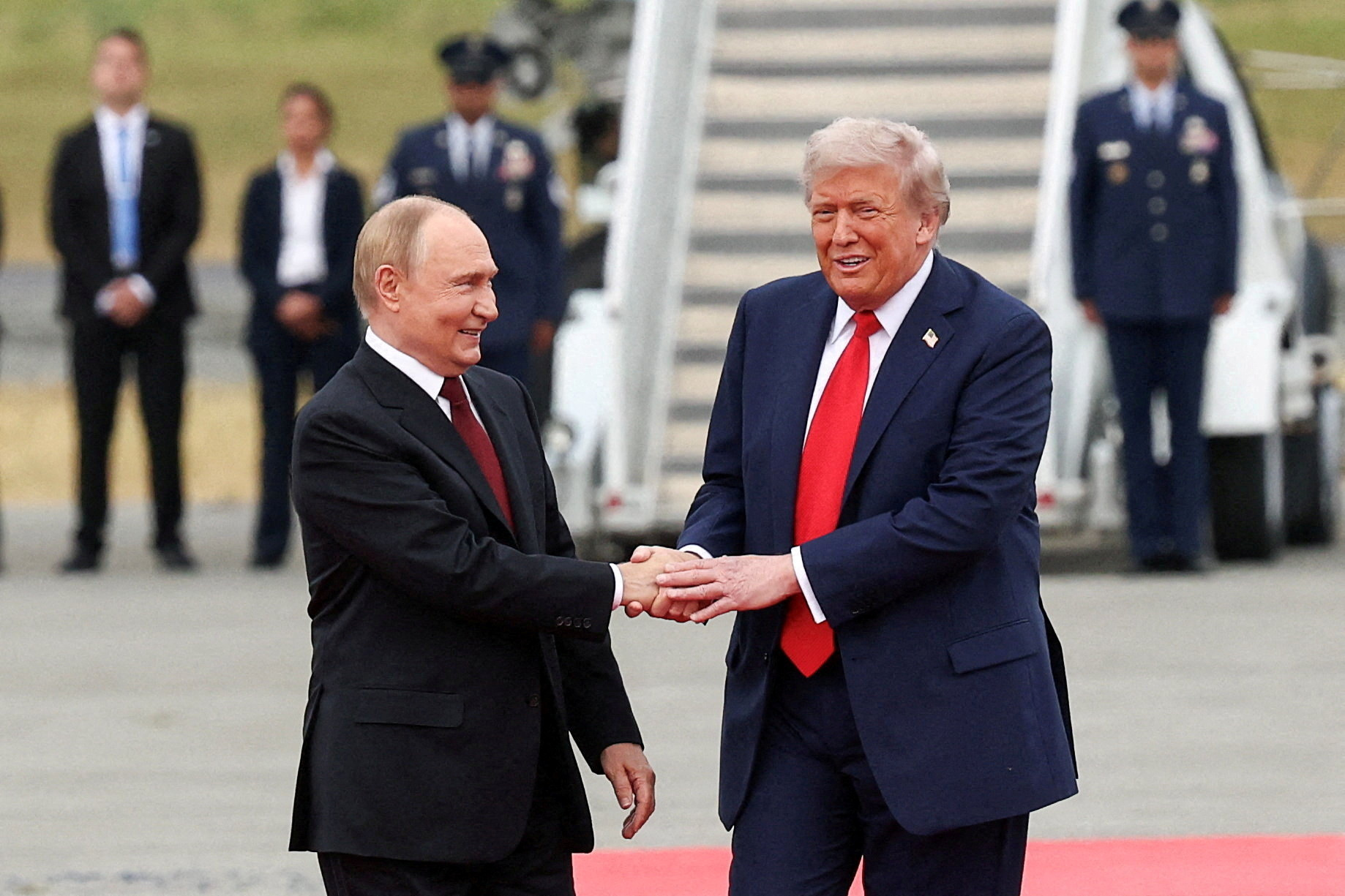
President Donald Trump’s weekend summit with Russian President Vladimir Putin drew mixed reactions, with critics blasting the optics and supporters pointing to new avenues for negotiation.
Speaking on Chicago’s Morning Answer on AM560, host Dan Proft and Heritage Foundation fellow Steven Bucci examined both the pre-summit expectations and the fallout. Trump entered the meeting encouraged after a call with Belarusian President Alexander Lukashenko, a close Putin ally, who suggested the Russian leader was ready to deal. Following the summit, Trump said he and Putin spent nearly three hours together, agreeing on “a lot of points” while acknowledging that major differences remained.
In a post-summit press conference, Trump emphasized that the next steps would depend on Ukraine’s leadership, particularly President Volodymyr Zelensky. Plans are underway for direct talks between Zelensky and Putin, potentially with Trump present as a facilitator.
Criticism came quickly from Washington and the media, with commentators labeling the meeting a failure. They argued Trump offered legitimacy to Putin without securing a ceasefire or concessions. Senator Marco Rubio, however, urged patience, describing diplomacy as a process rather than an instant fix.
Bucci, a former Pentagon official, echoed that view. “No one with any brains thought Putin would agree to a complete withdrawal this weekend,” he said. “But the door is open for further negotiations, and that’s progress.”
Speculation about the framework of a potential deal includes Russia retaining control of the Donbas region while Ukraine receives stronger security guarantees short of NATO membership. Bucci cautioned against rewarding Russia for military failures, but acknowledged that compromise is likely. “There’s going to have to be some settling for less than 100 percent of desires on both sides,” he said.
Debate also swirled around the pageantry of the summit, including a red-carpet welcome and a U.S. military flyover. Former National Security Advisor Susan Rice called it a “big victory for Putin.” Bucci dismissed the criticism as political posturing. “This was normal diplomatic protocol for a head of state,” he argued, adding that the flyover served as a show of American strength, not deference.
Looking ahead, Bucci suggested sanctions should be tightened if Putin stalls. “If there’s no movement, the sanctions should go on immediately,” he said, underscoring the stakes as negotiations continue.
The summit may not have produced a breakthrough, but it set the stage for direct Russia–Ukraine talks with international involvement. Whether those talks deliver results remains an open question.