




As President Trump laid out a two to three week timeline for completing American military objectives in Iran and described the new leadership emerging from the wreckage of the Khamenei regime as less radical and more reasonable, Jason Brodsky, policy director of United Against Nuclear Iran and non-resident scholar at the Middle East Institute’s Iran program, offered a sobering counter-assessment on Chicago’s Morning Answer, arguing that the men now running Iran are committed to the same grand strategy as their predecessors and that durable diplomacy with the Islamic Republic in its current form is simply not on the menu.
Brodsky said the figures who have stepped forward following the deaths of Khamenei and the senior revolutionary leadership represent a continuation of the regime’s foundational ideology rather than a genuine break from it. Their commitment to pushing the United States out of the Middle East, encircling and ultimately destroying Israel, and sustaining the export of the Islamic Revolution is not incidental to their identity but central to it. The Islamic Republic, he argued, requires enmity with the United States to survive as a political system, which structurally forecloses any authentic diplomatic breakthrough regardless of who is nominally in charge. New faces doubling down on the same grand strategy is not regime change in any meaningful sense.
Proft noted the apparent tension in Trump’s Wednesday address between describing the new Iranian leadership as more professional and reasonable and simultaneously threatening to bomb them back to the Stone Age if no deal is reached in the next two to three weeks. Brodsky said the contradiction reflects a real problem: if the people now running Iran are genuinely more reasonable, the case for continued military escalation becomes harder to make publicly, but if they are ideologically committed to the same objectives as their predecessors, the case for expecting a durable negotiated settlement within two to three weeks collapses. His own view is closer to the latter, though he acknowledged that the United States has achieved substantial military results in degrading Iran’s capacity to project power beyond its borders, gains that will pay dividends for American national security in the years ahead regardless of how the current diplomatic situation resolves.
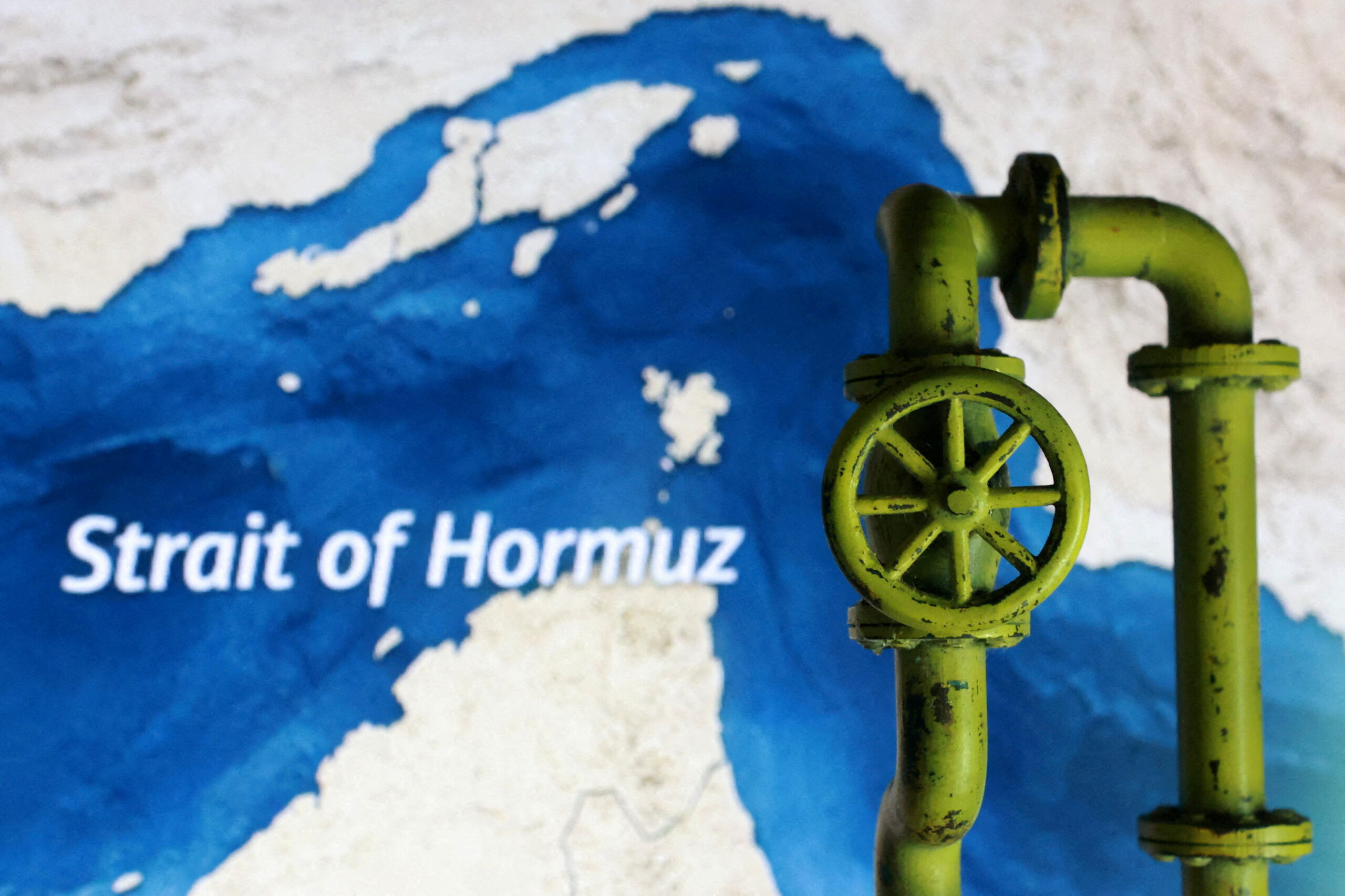
On the Strait of Hormuz, Brodsky said Tehran views it as its primary trump card, the instrument by which it holds the global economy hostage and convinces itself that it is winning despite the military devastation of the past month. Changing that perception is likely to require escalation rather than the threat of it, which is why he said the recent American strikes on bridges connecting Tehran to nearby cities and the threats against power infrastructure are pointed in the right direction. Seizing or neutralizing Iranian-held islands in the Persian Gulf, including potentially Kharg Island, the main hub of Iranian oil export infrastructure, might be what is ultimately required to change the Iranian leadership’s calculation that it can hold out until American public opinion or the economic pressure of elevated gas prices forces a withdrawal.
He addressed the state of Iran’s nuclear program, saying that while Iran’s technical enrichment capacity has been badly damaged, including by the strikes during what he called Operation Midnight Hammer last year, a stockpile of enriched uranium remains in Iranian hands that could form the basis of a weapon if a decision were made to proceed. He said the enrichment infrastructure will take considerable time to rebuild, but that the stockpile issue needs to be resolved as part of any agreement because it represents a latent capability that the current framework of degrading delivery systems and production facilities does not fully neutralize. In terms of current Iranian leverage, however, he said the regime is more focused on the strait than on the nuclear file, viewing the former as the more immediate source of power in the present conflict.
Brodsky was asked about Trump’s two to three week timeline and what it means for Israeli decision-making. He said Israel will follow Trump’s lead because it is dependent on American military support and political backing and cannot sustain major independent operations without that foundation. He noted that the American clock is driven by a wider array of variables including economic pressures, domestic political timelines, and diplomatic considerations that Israel does not have to weigh in the same way, but that if Trump unilaterally declares a ceasefire and ends American operations, Israel will in all likelihood have to stand down as well regardless of its own assessment of what remains to be done.
He was asked about the UAE’s capacity to lead a strait-reopening coalition without robust American participation, and said that while the UAE has meaningful military capability, reopening the strait decisively requires American involvement. He said he believes Trump’s threats to walk away without resolving the strait issue are primarily aimed at pressuring European allies to take more responsibility rather than reflecting a genuine intention to leave the passage closed, and that it would be very difficult to conceive of any scenario in which the United States simply accepts a closed Strait of Hormuz as a final outcome.
The conversation closed on a story NBC News reported about Master Sergeant Tyler Simmons from Ohio, one of thirteen American servicemen killed when a refueling aircraft crashed in Iraq. His father said that before volunteering for the mission, Simmons told him that if civilians knew what he knew, much of the criticism of the war would cease. Brodsky said the story underscores an argument he has been making about the need for creative declassification of intelligence to help the American public understand the full scope of the Iranian threat. He noted that the Biden administration used selective declassification effectively to build public support around Russia’s invasion of Ukraine, and that the Trump administration should consider a similar approach with Operation Epic Fury. His core argument is that many Americans may not appreciate that the Islamic Republic has viewed itself as at war with the United States since 1979, and that what Trump is attempting is not the start of another Middle Eastern conflict but an effort to end one the other side started nearly five decades ago.