




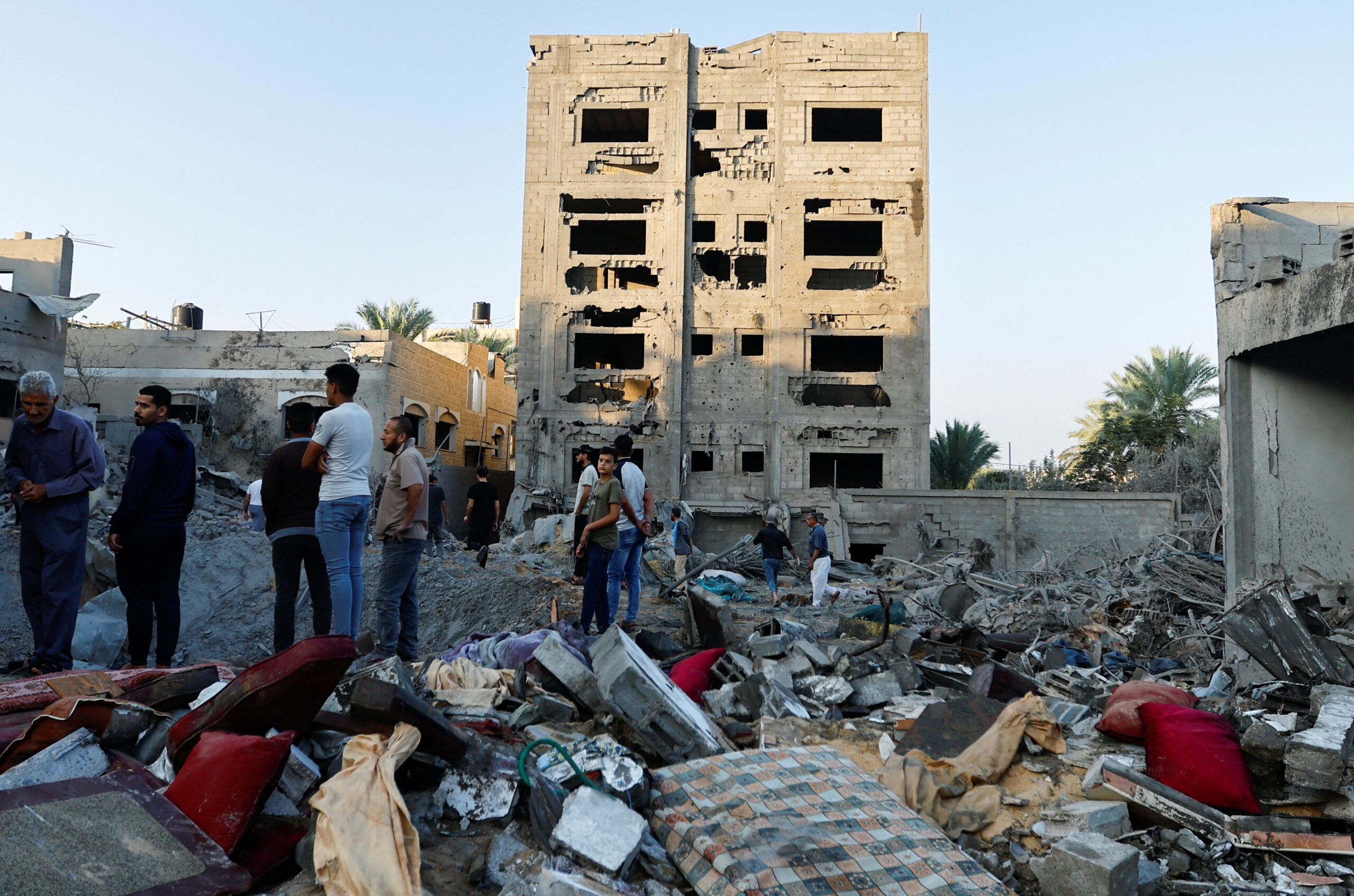
Dan Proft sat down with national security expert Steven Bucci to discuss serious allegations made by a whistleblower working in Gaza—and the broader implications for U.S. foreign policy, aid operations, and military accountability.
The controversy began with a series of explosive claims from Tony Aguilar, a retired Green Beret working with a contractor supporting the Gaza Humanitarian Foundation (GHF), a U.S.-backed aid initiative operating in the war-torn region. Aguilar alleged that Israeli Defense Forces (IDF) were firing into aid distribution centers, endangering civilians seeking food and water. In interviews with multiple outlets, including Tucker Carlson and the BBC, Aguilar painted a grim picture of chaotic scenes and deliberate indifference to human life.
Among his most dramatic claims was the story of Amir, a barefoot child allegedly killed by IDF fire after walking miles to collect food scraps. Aguilar described the aid sites themselves as “death traps,” accusing the United States of complicity due to its financial support for the operation.
However, those claims have not gone uncontested. A source with firsthand knowledge of the operation in Gaza, described as a reserve officer involved in the deployment, strongly disputed Aguilar’s narrative. According to this source, Aguilar was an unreliable and disruptive figure during his time on site, more focused on personal attention than effective humanitarian work. He served primarily as a radio operator and left the project after only a few weeks. The source called Aguilar’s claims “absolute nonsense,” affirming that the IDF maintained strict rules of engagement and that force was never used unless a clear threat was present.
Dan Proft noted that Aguilar’s accusations seem to contradict themselves—calling IDF actions inhumane while also saying he didn’t believe they were intentionally targeting civilians. That ambiguity, combined with reports about Aguilar’s conduct and potential legal troubles back home, has raised serious questions about his credibility.
Joining the conversation, Steven Bucci, a former Army Special Forces officer and Pentagon official, said the claims simply don’t match what is known about Israeli conduct. “They are over the top in trying to minimize collateral damage,” Bucci said of the IDF. While acknowledging that isolated incidents and mistakes happen in conflict zones, he emphasized that Israel generally acts swiftly to investigate and rectify problems.
Bucci also addressed the broader context of humanitarian aid in Gaza, pointing to Hamas as the main obstacle to effective relief. He noted that under President Trump’s direction, the GHF reported that over 100 million meals have been delivered without a single truck being hijacked by Hamas—an unprecedented achievement compared to the UN’s far less successful record.
The conversation expanded to include recent developments in international diplomacy, including threats by France and Britain to recognize a Palestinian state. Bucci criticized those moves as ill-timed and counterproductive, arguing they embolden Hamas and undermine peace prospects by rewarding violence.
Bucci also weighed in on Trump’s recent decision to reposition U.S. nuclear submarines in response to threats from former Russian President Dmitry Medvedev. Bucci interpreted the move not as a step toward conflict, but as a strategic bluff aimed at deterring Russian escalation.
Finally, Proft and Bucci discussed the ongoing effort to declassify intelligence related to the origins of the Russia investigation. Bucci praised Tulsi Gabbard’s efforts to expose political manipulation within the intelligence community and said he expects mid-level operatives—rather than top officials like Brennan or Comey—to face consequences. While full accountability may be elusive, he expressed hope that those who weaponized intelligence for political ends would be permanently removed from government service.
As questions continue to swirl around the situation in Gaza, aid oversight, and international diplomacy, voices like Bucci’s underscore the importance of measured analysis—and a healthy skepticism toward dramatic headlines unsupported by evidence.