




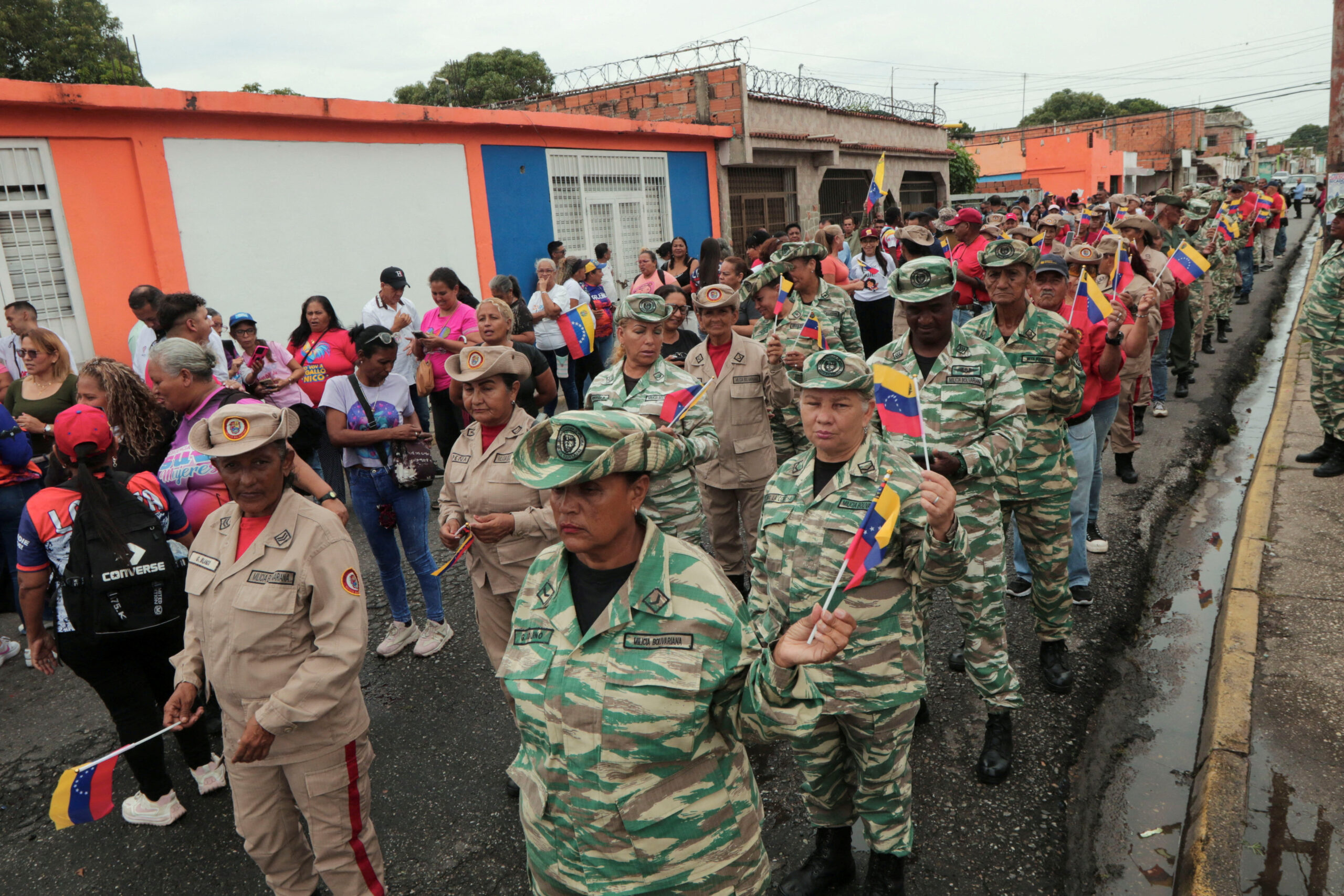
A recent U.S. military strike on a Venezuelan boat suspected of transporting narcotics has reignited debate in Washington over the scope of presidential authority, international law, and how to deal with drug cartels operating in the hemisphere.
The incident, which gained wider attention after video footage of the strike circulated online, was defended by Secretary of State Marco Rubio as part of a broader Trump administration campaign to target drug cartels designated as terrorist organizations. Rubio argued that Venezuelan President Nicolás Maduro, indicted by a U.S. grand jury on drug trafficking charges, is a fugitive of American justice and that cartel activity represents a direct threat to U.S. security.
Not all lawmakers agree. Senator Rand Paul criticized the strike as an extrajudicial killing, questioning whether the president has unilateral authority to conduct such operations outside U.S. territory. Senator JD Vance pushed back, stating that defending American citizens from drug traffickers takes precedence. Senator Bernie Moreno also weighed in, accusing Paul of defending foreign criminals responsible for overdose deaths in states like Ohio and Kentucky.
Legal scholars, particularly from the libertarian camp, have raised concerns that the strike may violate international law. They note that transporting narcotics in international waters is not inherently illegal unless destined for the U.S., and that officials admitted the boat could have been interdicted rather than destroyed.
Steven Bucci, a former Army Special Forces officer and top Pentagon official, joined Chicago’s Morning Answer to provide perspective. He argued that designating cartels as terrorist organizations gives the president grounds to treat them as combatants, comparing the action to piracy interdictions that have long been permitted in international waters. “You can shoot pirates in international water,” Bucci said, adding that the strike sends a deterrent message to traffickers that they risk losing everything, not just their cargo.
Bucci acknowledged the tension between law enforcement and national security frameworks. Under President Clinton, terrorism was treated as a police issue requiring arrests and trials. After 9/11, President George W. Bush reframed terrorism as a national security issue, leading to the use of targeted strikes. He suggested the current debate mirrors that same divide.
Beyond Latin America, Bucci also addressed concerns about free speech in Europe. Senator JD Vance recently confronted UK Prime Minister Keir Starmer over arrests tied to online speech, including the detention of comedian Graham Linehan. While Bucci said the U.S. should call out allies for inconsistent democratic practices, he cautioned against proposals to withdraw from NATO.
On Russia and Ukraine, Bucci echoed calls for tougher economic pressure, including U.S. liquefied natural gas exports to Europe to reduce reliance on Moscow. He argued that Russia remains economically fragile, describing it as “a third world country that’s just a giant gas station with nukes.”
Finally, Bucci addressed President Trump’s symbolic rebranding of the Department of Defense as the Department of War. While the change would not alter authorities or policies, Bucci said it sends a message that America’s military exists primarily to fight wars and defend the nation, not for social engineering.
The strike on the Venezuelan boat, and the political controversy surrounding it, underscores a broader struggle over how the U.S. balances legal norms, international relations, and domestic security. Whether the courts or Congress will weigh in on the scope of presidential power remains an open question.