




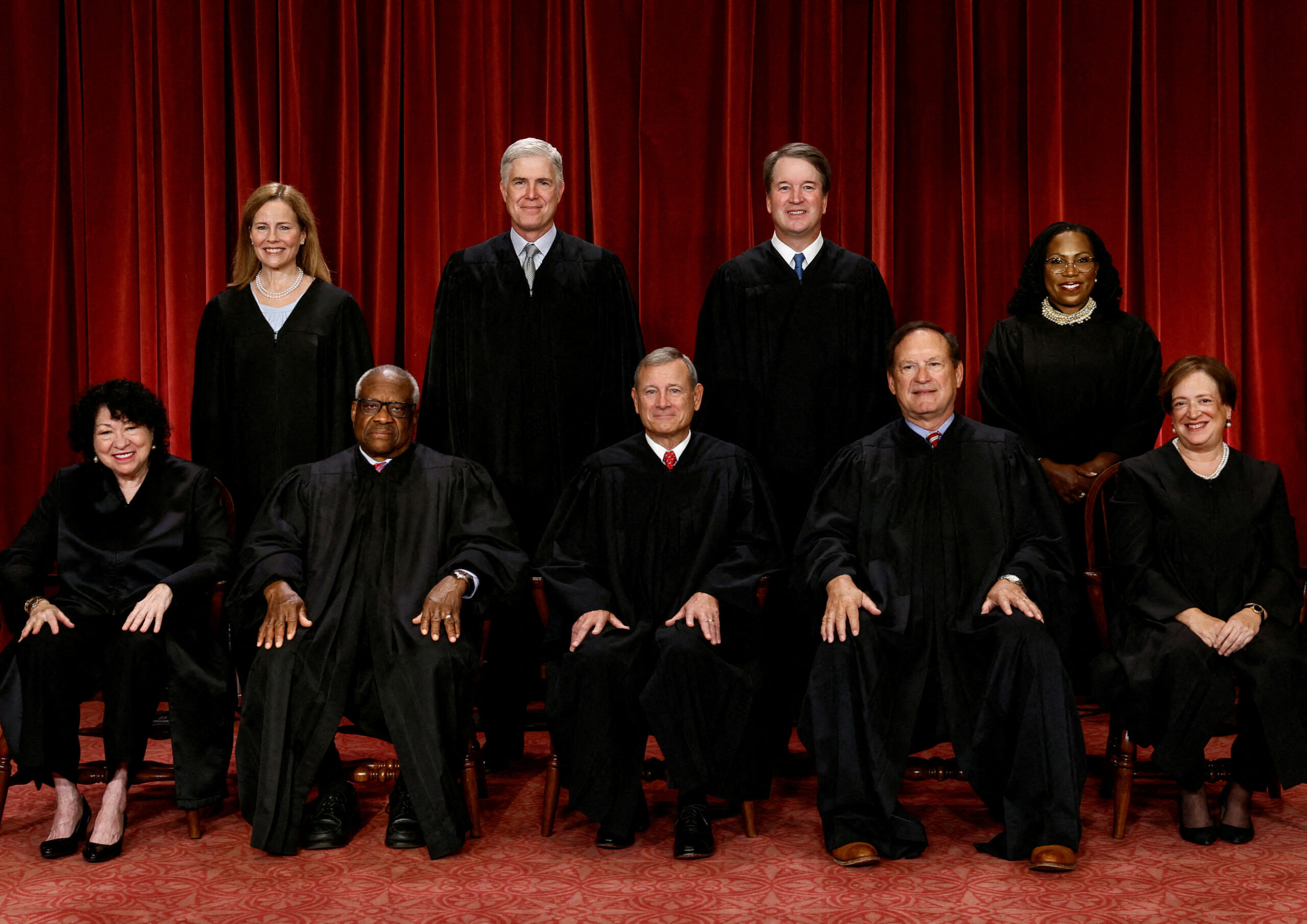
The third major Supreme Court leak in four years, this one delivering a shadow docket memo to the New York Times, prompted a wide-ranging conversation about the institutional culture of the court with Molly Hemingway, editor-in-chief of The Federalist, senior journalism fellow at Hillsdale College, Fox News contributor, and author of the new book Alito: The Justice Who Reshaped the Supreme Court and Restored the Constitution. Hemingway’s assessment was direct: Chief Justice John Roberts failed to conduct a serious investigation after the Dobbs leak, the liberal minority on the court has shown itself willing to engage in deliberate sabotage when it cannot win through legal reasoning, and the pattern of leaks will continue until someone is actually held accountable.
She said the failure after Dobbs was fundamental and structural. The investigation Roberts commissioned looked serious from the outside but was, by her account, highly inadequate in practice. The most basic problem was the investigation’s methodology, which amounted to asking clerks and staff whether they had leaked the decision. She compared this to police investigating a bank robbery by asking suspects whether they robbed the bank and accepting their denials as resolution. A real investigation would have asked questions designed to establish relationships, asking whether staff knew specific reporters, whether spouses or family members had connections to people at particular news organizations, whether anyone had attended events where those reporters were present. Questions designed to actually resolve the matter, as she put it, rather than questions designed to allow easy denial and move on.
The most consequential revelation in her book, which she described as the most explosive story she was able to tell, concerns the conduct of the liberal justices in the weeks following the Dobbs leak. According to her reporting, the majority had completed all the difficult work on the decision months before it was released. After the leak prompted death threats against conservative justices, protests at their homes, and ultimately an attempted assassination of Justice Brett Kavanaugh, the majority asked the liberal justices to please complete their dissent so the decision could be published and the immediate crisis could be defused. Justice Elena Kagan reportedly went to Justice Stephen Breyer’s chambers and shouted at him not to accommodate that request. The liberal justices then took their time, finally agreeing to have the dissent ready in June, at which point they inserted a footnote referencing a separate case that had not yet been publicly decided. Court protocol prevents the release of any decision until all related writings, including dissents, are complete. By embedding a reference to an undecided case into their dissent, the liberal justices ensured the Dobbs decision could not be released for an additional three to four weeks. During that extended period, an armed man was found outside Justice Kavanaugh’s home having obtained the address from a progressive organization that publicly posted it alongside encouragement to confront the justices in person.
Hemingway said the same pattern, liberal justices deliberately slowing the release of decisions with outcomes they oppose, has reportedly recurred in a recent racial gerrymandering case, where the three liberal justices are said to be slow-walking their dissent because earlier publication would give state legislatures time to respond in ways that might benefit Republicans. She said this pattern of conduct represents a fundamental breakdown in the collegial norms that make the court function.
Her book’s central subject, Justice Samuel Alito, she argued is both more consequential and more broadly misunderstood than his public profile suggests. She said liberal antagonism toward the court tends to focus on Clarence Thomas or on the memory of Antonin Scalia, but that Alito’s own colleagues have described him as the smartest and most strategically effective justice on the current court. His clerks describe him in ways that capture his independence, saying he needs them the way a mother needs a toddler to help bake cookies, meaning their contributions are genuinely welcome but he could do the work without them. He reads the full factual record in every case before the court, including going back to trial transcripts, an unusual practice that gives him a depth of command over the particulars that frequently shapes the questions he asks at oral argument, questions that often find their way into the eventual opinion or dissent even when he does not write it.
She said the distinguishing characteristic of Alito’s jurisprudence is the combination of principled constitutional fidelity and practical strategic effectiveness, a balance that conservatives sometimes treat as being in tension but which she argues Alito demonstrates are complementary. He is, she said, less likely to attract attention for what he is doing than Thomas or Scalia, but more likely to achieve durable results because of that orientation. She noted that she closes the book with a speech Alito gave more than a decade ago that closely mirrors the themes Justice Thomas addressed in his recent remarks at the University of Texas, emphasizing that the American founding’s ideals cannot be sustained through law alone but require the hearts of the American people to embrace them, and that Alito has been watching the erosion of that civic commitment for decades with genuine alarm.
On his relationships with colleagues, Hemingway said Alito is described as extremely reserved compared to the more outgoing personalities on the court, deeply funny in small settings once people get to know him, and considered alongside Justice Kagan to be the most effective questioner at oral argument. His closest relationships on the court have been with Thomas and with the late Justice Scalia, whose death affected him profoundly. She recounted a story about the fierce written disagreements between Scalia and Thomas, in which Scalia once accused Thomas of crafting a freedom-destroying cocktail in a published opinion, after which Thomas arrived at their next social gathering and ordered a liberty-destroying cocktail, illustrating the way the conservative justices have historically been able to fight hard in writing and remain friends in person, a norm the current liberal bloc has shown far less interest in maintaining.