




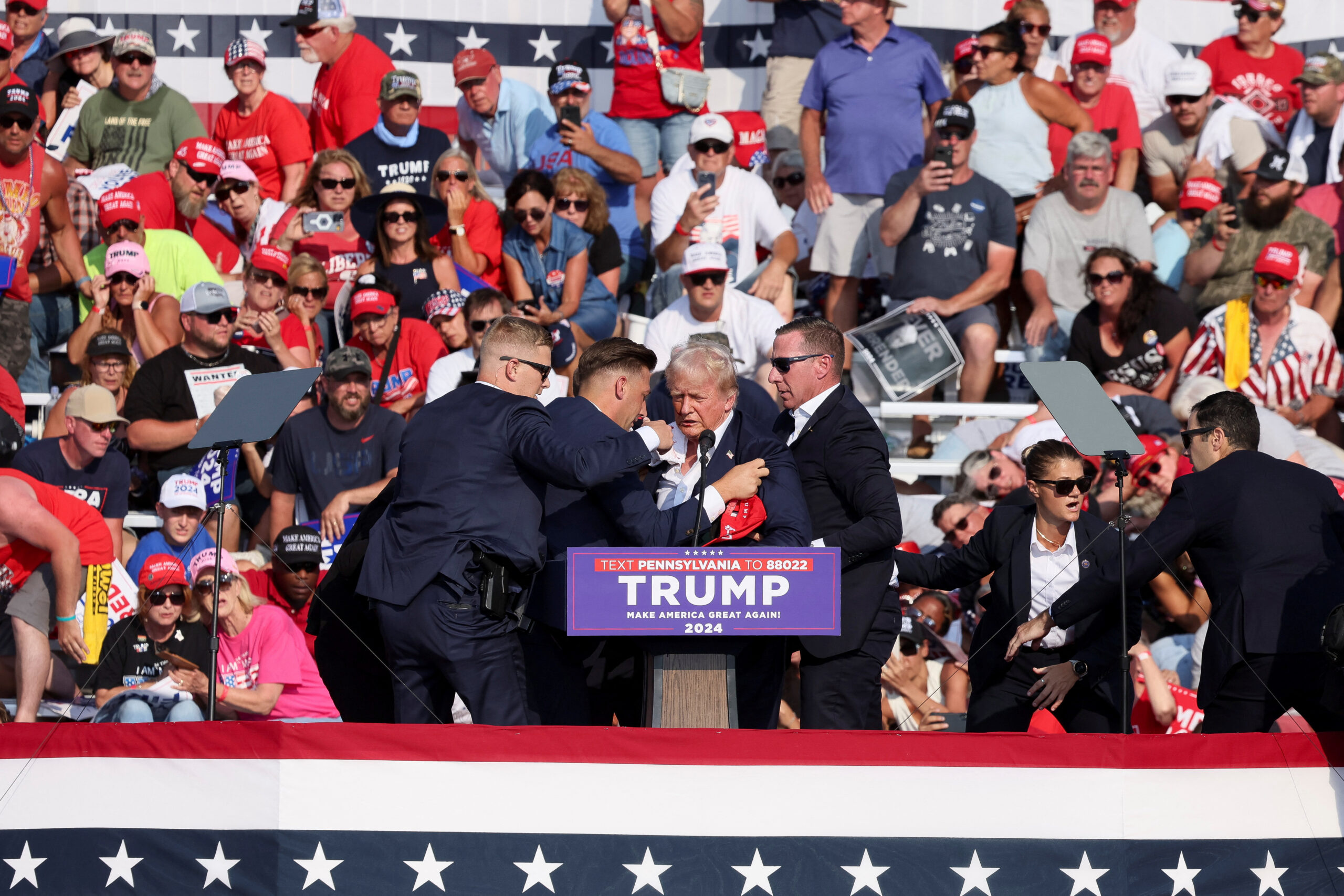
National security expert Steve Bucci, a former Army Special Forces officer and top Pentagon official, joined host Dan Proft on Chicago’s Morning Answer to discuss escalating instability in Mexico, the increasingly blurred lines between cartels and government officials, and the lingering questions surrounding the attempted assassination of President Donald Trump in Butler, Pennsylvania.
Bucci, now a visiting fellow at the Heritage Foundation’s Allison Center for Foreign Policy Studies, reacted to recent mass protests in Mexico following high-profile cartel assassinations of local officials. Proft played audio from Texas Sheriff Rob Boyd, who argued that cartels now operate with such deep ties to Mexican political structures that punitive pressure—not cooperative agreements—is the only viable U.S. strategy. Boyd also alleged that previous American funding to combat major cartels was instead used by Mexican authorities to eliminate rival groups.
Bucci said the sheriff’s assessment aligns with on-the-ground realities and should be taken far more seriously by federal policymakers. “We need to listen a little more to sheriffs like that gentleman before we make decisions,” Bucci said, noting their firsthand exposure to cartel operations along the border. He agreed corruption is so entrenched that U.S. financial support risks being diverted to cartel interests. “You can’t ignore embedded corruption. If you send assets south of the border, they’ll be used to benefit the cartels,” he said.
Regarding Mexico’s new president, Claudia Sheinbaum, Bucci stopped short of declaring her aligned with criminal organizations but argued she does not yet appear committed to the kind of serious enforcement effort the situation demands. “She’s not coming across as a huge law-and-order candidate,” he observed, noting the lethal pressure political leaders face when confronting cartels directly.
The second half of the interview focused on the long-unresolved questions surrounding the attempted assassination of Trump at a rally in Butler, Pennsylvania. Proft highlighted a recent Tucker Carlson report suggesting the shooter, Thomas Crooks, exhibited a long trail of alarming online behavior and communications, including exchanges with a mysterious individual called “Willie Tempus.” This, Carlson argued, contrasts sharply with what he says has been limited public disclosure from investigators.
Bucci cautioned that major federal investigations often take longer than the public expects, particularly when multiple devices, encrypted accounts, and possible foreign contacts are involved. He also said the FBI rarely releases interim findings if counterintelligence considerations are in play.
However, he agreed with Proft that the FBI and Justice Department mishandled public communication. “They clearly had information they were willing to disclose, because they disclosed it,” Bucci said, referring to the FBI’s public rebuttal to Carlson. “When you don’t do so preemptively, it breeds mistrust.”
Proft noted that investigators leading the probe into the Reagan assassination attempt released an extensive preliminary assessment within months, a stark contrast to the current case, which remains vague more than a year later. Bucci responded that modern investigations are far more technologically complex due to digital footprints, social media, and encrypted messaging platforms. Still, he acknowledged that this doesn’t excuse silence when key facts are already established—especially given the enormity of the event.
“They’ve drawn conclusions,” Bucci said, referencing a statement from former Trump official Kash Patel saying the FBI determined Crooks acted alone. “But that doesn’t necessarily mean the investigation is finished.”
Bucci said it is appropriate for Americans to demand answers but warned against filling the information void with speculation. “Pressure them, yes,” he said. “But don’t start assuming conspiracies just because they haven’t told us everything yet.”
As cartel violence intensifies in Mexico and domestic political violence remains at the forefront of public concern, Bucci stressed that national security demands both clear-eyed assessment and trustworthy communication. “I would like to know the details, and most Americans would,” he said. “But investigations must be completed properly before all the facts come out.”
Bucci closed by warning that the U.S. must avoid both complacency and political theatrics: “We need action that’s serious, informed, and grounded in reality—not clickbait, and not wishful thinking.”