




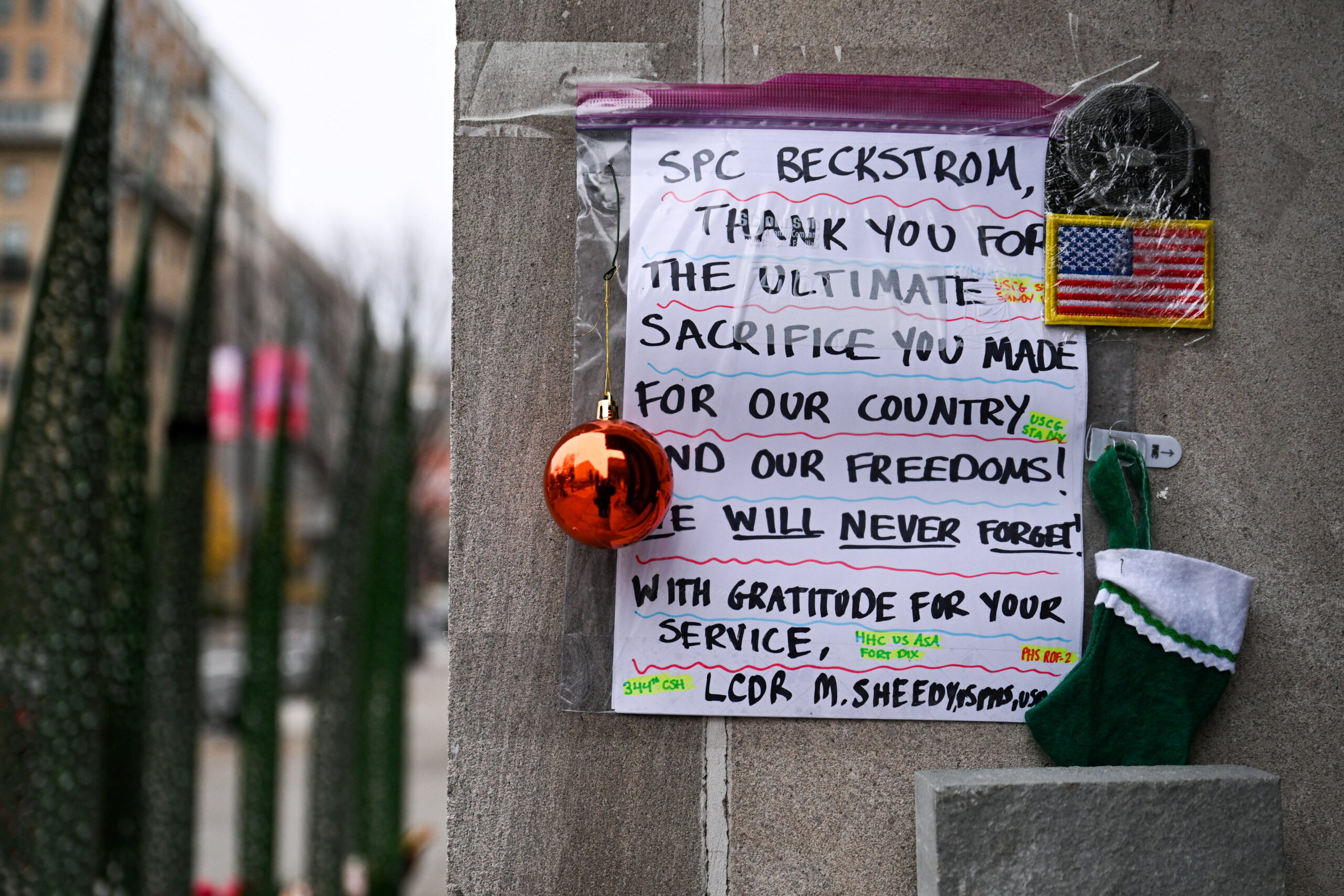
In the aftermath of the targeted shooting of two National Guardsmen—one killed, the other critically wounded—questions over America’s vetting of asylum seekers surged to the forefront of Chicago’s Morning Answer. Host Dan Proft dedicated the hour to the security failures at the heart of the attack, connecting them to longstanding concerns over the Biden administration’s massive influx of unvetted arrivals from Afghanistan and other unstable regions.
To unpack the national security implications, Proft turned to Steven Bucci, a former Army Special Forces officer and senior Pentagon official, now a visiting fellow at The Heritage Foundation. Bucci offered a sobering reality check: when it comes to vetting individuals from failed or hostile states, there is no system—current or conceivable—that can deliver rapid, large-scale, reliable screening.
“There really isn’t a viable way to do it”
Bucci was unequivocal. While intelligence agencies can vet an isolated defector or small cohort using deep, labor-intensive investigations, no such process exists for the 70,000-plus Afghans brought to the U.S. during the chaotic 2021 withdrawal—or the 1.5 million asylum applications currently backlogged.
“You don’t let them into America and turn them loose while you’re vetting,” Bucci said. “That’s nuts.”
His comments echoed those of former FBI Director James Comey, who admitted during the Obama years that Syrian refugees could not be meaningfully screened due to nonexistent records. Proft also highlighted reporting that roughly 7,000 Afghans evacuated in 2021 were flagged with “derogatory information,” including thousands tied to potential national security concerns.
The risk of radicalization after arrival
Beyond initial vetting failures, Bucci warned of a second danger: disillusionment and radicalization after arrival in the U.S. Proft referenced Marine veteran Chad Robichaux, who recently described how unmet expectations and feelings of betrayal can fuel extremism—particularly among individuals already steeped in volatile environments.
Bucci agreed, pointing to the Boston Marathon bombers as a cautionary tale. Both entered the U.S. legally, received public assistance, and still chose violence.
“It’s a mindset we are not good at detecting,” Bucci said. “That’s not the person you want someone doing temporary duty as a screener to approve.”
A safer alternative: third-country processing
Proft pressed the larger dilemma: America must remain a haven for those facing political or religious persecution—Christians in Nigeria, dissidents fleeing oppressive regimes—but cannot absorb individuals who cannot be meaningfully vetted.
Bucci said the solution likely requires a network of “safe third countries,” where asylum seekers can be held securely while extensive screening occurs. The system, he noted, does not exist today.
“We can’t just hand-wave like the Biden administration and say, ‘Let them in—we’ll deal with it later,’” Bucci said. “That is suicidal on a societal level.”
Trump, Maduro, and the Venezuela flashpoint
The interview also touched on breaking foreign policy news: former President Trump confirming a private call with Venezuelan dictator Nicolás Maduro. Trump declined details but hinted at firm demands. U.S. reporting suggests Trump issued an ultimatum for Maduro to flee the country, warning that land operations remain on the table as part of pressure over Venezuela’s aggression toward neighboring Guyana.
Bucci described the situation bluntly: “Maduro is a hardhead—a committed Marxist who thinks he can win this. That’s a bad calculation.”
Sen. Tim Kaine and others have already pushed legislation requiring congressional approval for military action in Venezuela, anticipating heightened tensions. Bucci noted that while military operations would require approval under the War Powers Act, covert intelligence operations would not—though congressional leaders must be notified.
“We’re seeing the results now”
Ultimately, Bucci tied both domestic and foreign crises back to a central theme: the consequences of poor strategic decision-making.
From the rapid, unvetted Afghan evacuation to the hands-off asylum processing that has continued since, Bucci said Americans are now living with the predictable outcome.
“We are seeing the results, and they are not good.”
As Proft summarized, the debate now turns to whether the next administration can restructure asylum and refugee policy in a way that protects Americans without abandoning those in genuine danger—an undertaking that grows more urgent after each new security failure.