




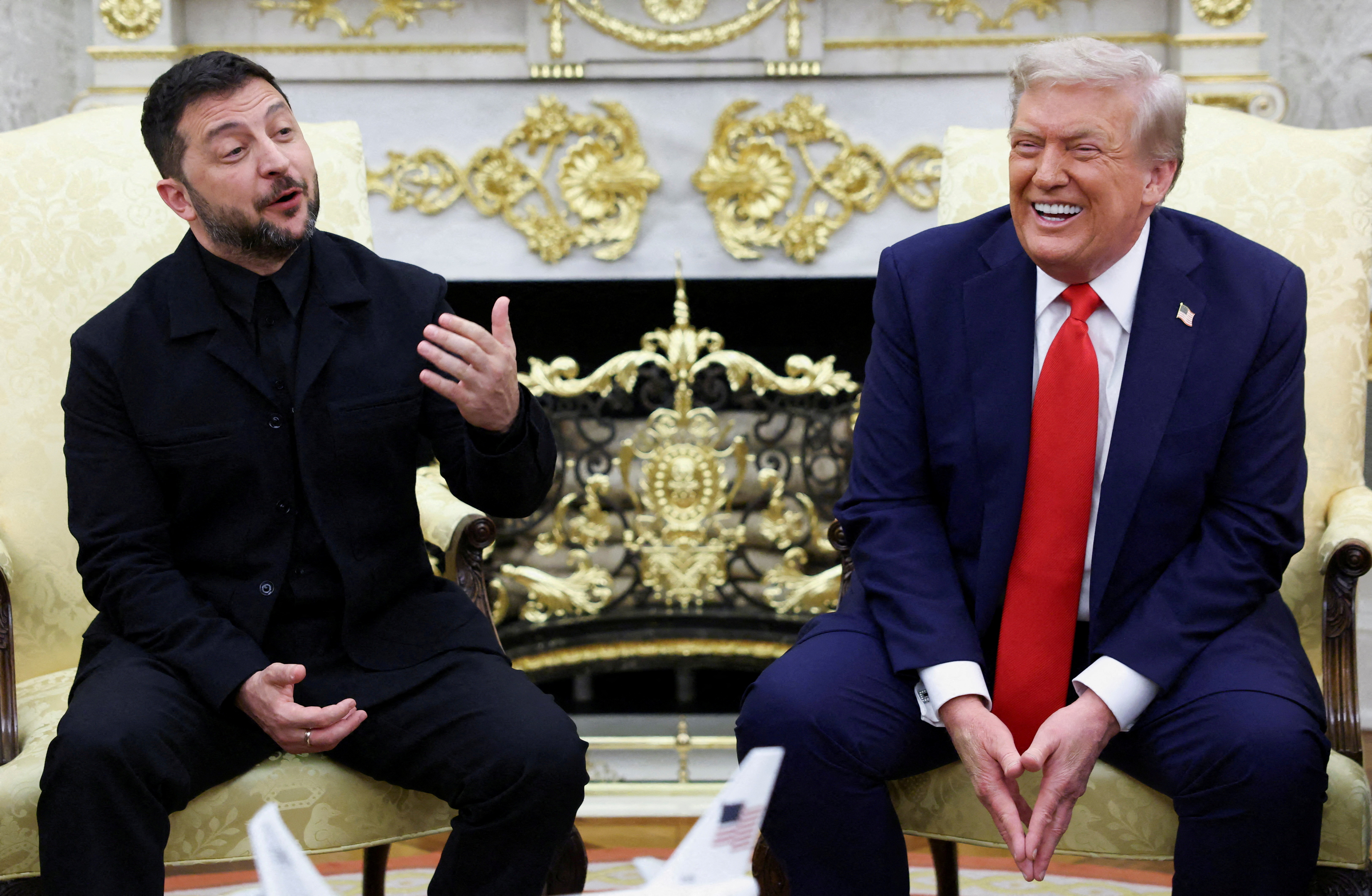
As reports of intensified battlefield pressure and deepening political strain emerge from Kyiv, the debate over Donald Trump’s proposed 28-point peace plan for Ukraine is moving rapidly from theoretical to urgent. On Chicago’s Morning Answer, Dan Proft discussed the latest developments with Justin Logan, director of defense and foreign policy studies at the Cato Institute, who offered a stark assessment of Ukraine’s narrowing options.
The backdrop includes a dramatic resignation in Ukraine: President Volodymyr Zelensky’s top aide, Andriy Yermak, stepped down following a corruption probe involving raids on his home and office. At the same time, Ukrainian forces face manpower shortages, dwindling ammunition supplies, and new warnings from U.S. defense officials that Russia’s expanding missile stockpile could deal Kyiv a “knockout blow.”
Into this environment comes a peace proposal that critics on the left dismiss as capitulation—but that some foreign-policy analysts say reflects the realities Ukraine now faces.
A Constrained Ukraine Confronts Harsh Realities
Logan agreed with the analysis published this week by British journalist Anatol Lieven, who argued that the proposed plan—while painful—could still be considered a “qualified victory” for Ukraine if it preserves its sovereignty over nearly 80 percent of its territory and secures a path toward the European Union.
According to Logan, Kyiv is running into a strategic dead end.
“Ukraine needs more of everything at a time when there is less of everything,” he said. U.S. stockpiles of Patriot missiles are depleted, Europe still lacks a plan to seize frozen Russian assets for Ukrainian aid, and Congress remains unwilling to pass another emergency funding package.
On top of its material shortages, Zelensky faces tightening political constraints at home. “There’s a confluence of things driving Zelensky to consider outcomes he would have rejected out of hand even a year ago,” Logan noted.
The Nord Stream Complication
Making matters worse, a German court has issued an arrest warrant for a Ukrainian man in connection with the 2022 Nord Stream pipeline explosions. The Biden administration had signaled for more than a year that Russia sabotaged its own critical infrastructure—a claim that always strained credulity and now appears more unlikely.
Proft emphasized the political fallout if the new evidence holds up: “That’s not going to excite Republicans to do any more for Zelensky than they already are.”
Logan called Europe’s handling of the Nord Stream investigation “cynical,” noting that Poland in particular has shown no interest in pursuing accountability for the attack, despite it being an assault on NATO-member infrastructure.
“The hubris is stunning,” Logan said. “There’s real tension between maintaining NATO unity and the ambitions—or even aggression—of people who are supposed to be on the same side.”
Escalation in the Caribbean Raises New Risks
The conversation shifted to another geopolitical flashpoint: U.S. strikes on narco-trafficking boats near Venezuela. Reports indicate that at least one strike involved a second “double-tap” attack intended to ensure no survivors—a detail the administration disputes.
White House spokesperson Karoline Leavitt defended the operation as lawful and conducted in self-defense. But Logan questioned the legal foundation of the broader campaign.
“The administration is saying at different times that the United States is at war with narco-traffickers—but then insists it is not bound by the law of armed conflict,” he said. “They’re making legal claims that strain credulity to the breaking point.”
He argued that the public debate is focusing too narrowly on whether the second strike was permissible rather than on the overarching strategy. “We need a political and legal explanation for why we’re doing what we’re doing and how it’s justified,” he added.
Is Regime Change in Venezuela the Real Goal?
Logan suggested the U.S. naval buildup in the Caribbean—including deployment of the Ford carrier strike group—signals that Washington’s ambitions may extend beyond interdicting drug boats.
Proft noted that the escalation appears to be aimed at pressuring Venezuelan dictator Nicolás Maduro into stepping down. Trump reportedly told Maduro during a recent call that he and his family could leave the country immediately—a proposal Maduro rejected.
Logan warned that even if regime change occurs, the challenges ahead would be enormous. Opposition figures such as María Corina Machado and Edmundo González could lead a transitional government, but “the institutions of the Venezuelan state have been hollowed out,” Logan said.
“If the U.S. puts regime change on the military’s punch list, then everything that happens next will be pinned on Washington. There’s a real risk of owning the aftermath.”
A World of Fractured Alliances and Shrinking Options
The interview painted a picture of an international order growing more unstable—and a U.S. foreign policy establishment struggling to define clear objectives.
From Ukraine’s deteriorating war position to legal gray zones in the Caribbean, Logan argued that U.S. policymakers are confronting the consequences of overextension and ad hoc decision-making.
And for Kyiv, he suggested, time may be running out.
“Wars usually end when leaders finally face realities they’ve spent years trying to ignore,” Logan said. For Ukraine—and for the U.S.—that reckoning may be closer than officials want to admit.
If you’d like a companion piece summarizing the peace plan itself, or a contrasting opinion article, I can prepare one.