




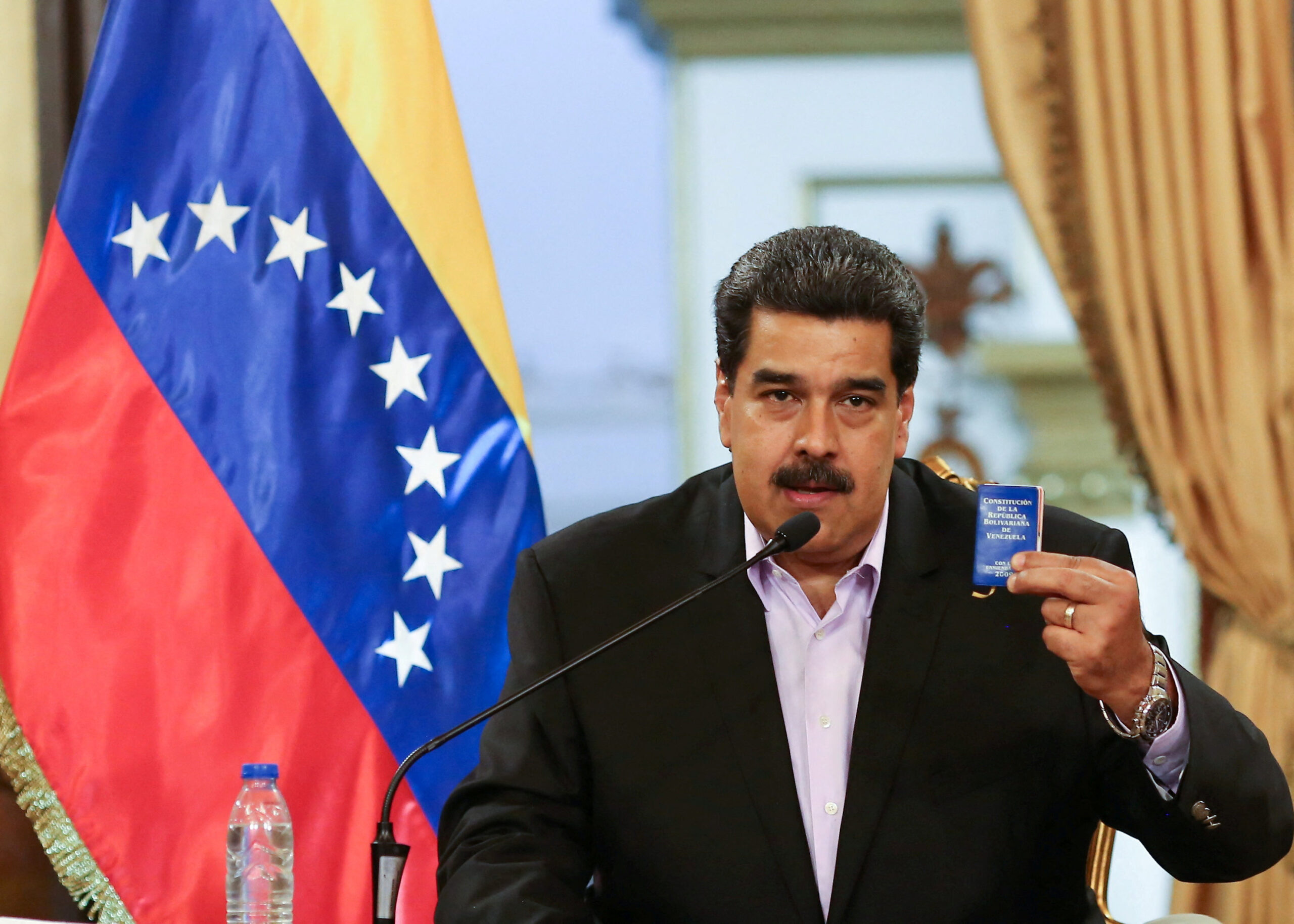
In an interview on Chicago’s Morning Answer, national security analyst Steven Bucci described the successful U.S. military operation that led to the capture of Venezuelan strongman Nicolás Maduro as both surgically executed and strategically consequential, while cautioning that the most difficult phase may now lie ahead.
Bucci, a retired Army Special Forces officer and former senior Pentagon official now affiliated with the Heritage Foundation, told host Dan Proft that Operation Absolute Resolve achieved its immediate objective with remarkable discipline. He emphasized that the absence of leaks and the speed of execution underscored a level of operational competence rarely seen in modern interventions, particularly given the geopolitical sensitivities involved.
With Maduro removed, attention has shifted rapidly to what follows in Caracas. Former U.S. envoy Elliott Abrams has warned against allowing remnants of the Maduro regime to remain in power, specifically opposing any accommodation with Vice President Delcy Rodríguez. Bucci acknowledged that Rodríguez is likely attempting to negotiate her own survival, but said it remains unclear what conversations Secretary of State Marco Rubio may be having behind the scenes. He suggested that while Washington may seek stability, the broader international community would prefer a clean break from the old regime, potentially elevating opposition figures such as Edmundo González or María Corina Machado, if they can command genuine popular support.
The discussion widened to the regional implications of the operation. Bucci argued that one of the most significant outcomes was the strategic signal sent to adversarial powers. By dismantling a regime closely aligned with Cuba, Iran, and China, the United States demonstrated it would not tolerate hostile actors using Venezuela as a platform in the Western Hemisphere. He said this effectively reinforced a modernized version of the Monroe Doctrine and put neighboring governments on notice.
President Donald Trump and Rubio have both pointed to Havana’s deep involvement in propping up Maduro’s security apparatus, describing Cuban intelligence and military personnel as integral to the dictatorship’s survival. Bucci said that severing those ties, along with curbing sanctioned oil flows, would be essential steps in allowing Venezuela to reclaim sovereignty and rebuild its institutions in partnership with, rather than in opposition to, the United States.
Beyond Venezuela, Bucci said the operation carried layered messages for other regional leaders accused of tolerating narcotics trafficking or serving as proxies for foreign adversaries, including officials in Colombia and Mexico. He argued that the administration’s willingness to act decisively, rather than rely on rhetorical condemnation, has altered calculations throughout the hemisphere.
Addressing criticism from the political left, Bucci contrasted Trump’s approach with that of previous administrations. He said the president has favored tightly defined missions with clear objectives, avoiding prolonged occupations or open-ended commitments. In Bucci’s view, this model distinguishes targeted action from the “endless war” framework often invoked by critics, and reflects a willingness to disengage once U.S. interests have been secured.
Bucci also pointed to other recent U.S. actions, including strikes against extremist groups targeting Christians in Nigeria, as evidence that the administration’s foreign policy is motivated not only by strategic competition but also by concerns over mass violence and human rights. He said Trump consistently frames conflicts in terms of lost lives and wasted human potential, an emphasis that does not fit the caricature often portrayed by opponents.
As the situation in Venezuela continues to evolve, Bucci cautioned that success is not guaranteed. He said the coming days would reveal whether Washington can help guide a transition toward a government that is both legitimate in the eyes of Venezuelans and constructive on the world stage. For now, he argued, the operation has reshaped the strategic landscape, leaving allies reassured, adversaries unsettled, and the region watching closely for what comes next.