




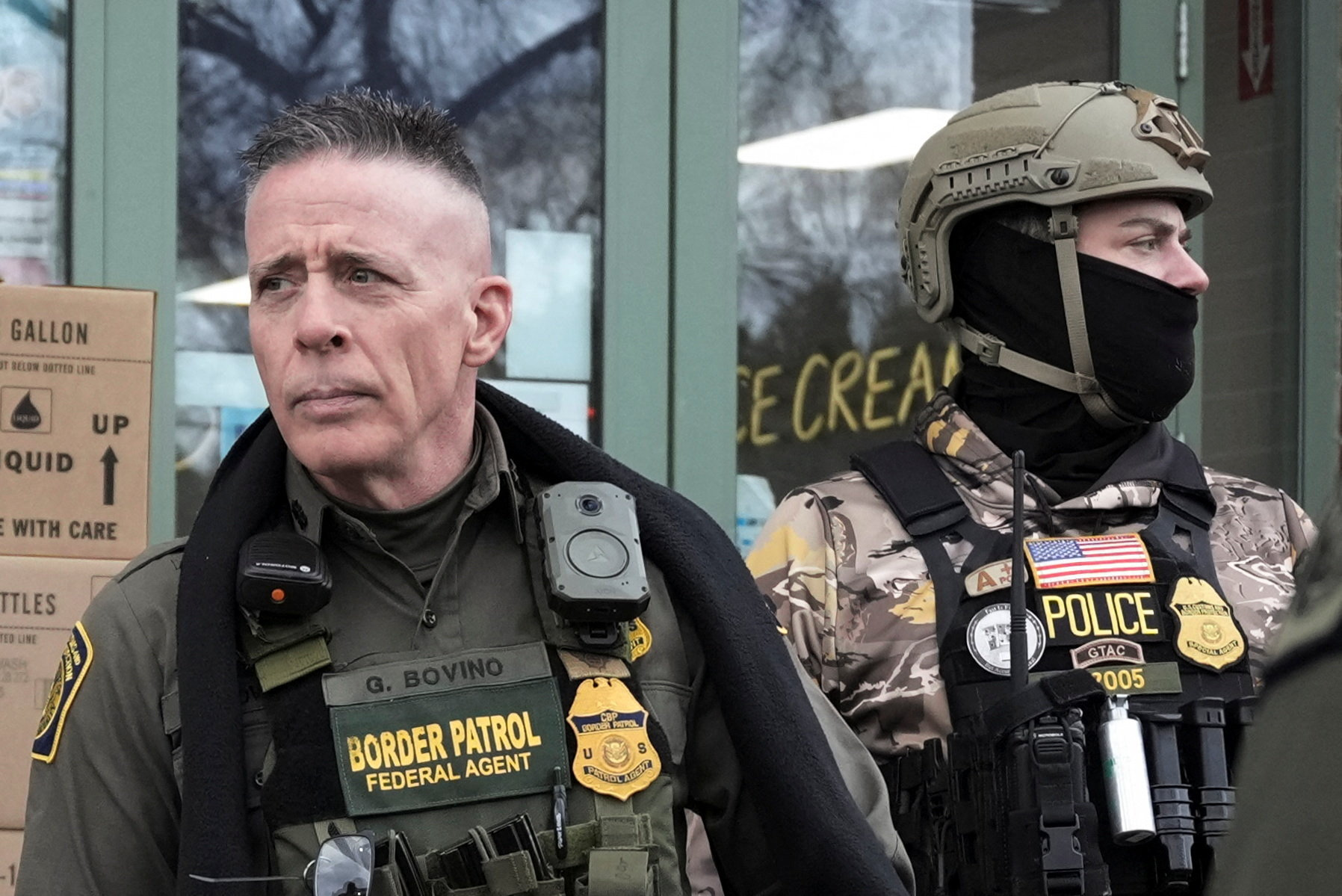
A legal and constitutional debate over immigration enforcement and sanctuary policies took center stage in a recent discussion between Dan Proft and constitutional scholar Ilan Wurman, as tensions continue to rise between federal authorities and state and local governments resistant to cooperating with immigration enforcement.
The conversation followed renewed controversy surrounding public statements by local and state officials criticizing federal immigration operations, particularly actions taken by Immigration and Customs Enforcement. Proft argued that such rhetoric, combined with sanctuary policies, has made meaningful debate over immigration law increasingly difficult, replacing legal analysis with emotionally charged messaging that blurs the distinction between asylum procedures and illegal entry into the country.
Wurman, a professor of law at the University of Minnesota, framed the issue within the broader structure of constitutional law, emphasizing that immigration enforcement is clearly within the authority of the federal government. He noted that recent legal challenges by states seeking to block federal enforcement efforts have been unsuccessful, reinforcing the principle that states cannot nullify or obstruct federal law, even if they are not required to actively assist in its enforcement.
At the same time, Wurman explained that constitutional doctrine in this area is complex. While the federal government cannot compel state officials to carry out federal law under the anti-commandeering doctrine, states also cannot take actions that actively interfere with federal enforcement. He suggested that sanctuary policies, rather than limiting the presence of federal officers, may actually have the opposite effect by necessitating larger federal operations when state and local cooperation is withdrawn.
The discussion also turned to the role of sanctuary policies in shaping public safety outcomes and political incentives. Proft argued that restricting information-sharing between local law enforcement and federal authorities prevents the collection of accurate data on crimes committed by individuals in the country illegally, making informed policymaking more difficult and shielding elected officials from accountability. Wurman agreed that these policies can distort enforcement outcomes, while cautioning that each situation must be evaluated within the bounds of existing constitutional limits.
Another major focus was the census and its implications for political representation. Wurman outlined ongoing legal arguments questioning whether individuals who are unlawfully or temporarily present in the United States should be included in population counts used for congressional apportionment. He described this as an unresolved constitutional question centered on the meaning of a state’s “respective numbers” and whether that term refers to the full physical population or the political community of a state.
The conversation extended to birthright citizenship, with Wurman explaining that historical interpretations of the Fourteenth Amendment hinge not solely on place of birth, but on whether a person was born under the protection and jurisdiction of the United States. He noted that while prevailing interpretations treat birth on U.S. soil as sufficient, historical common law sources suggest a more nuanced framework tied to lawful presence and allegiance, an argument currently facing significant debate within legal academia.
As disputes over immigration enforcement, sanctuary policies, and constitutional authority continue to play out in courts and legislatures, the discussion highlighted how unresolved legal questions are increasingly intersecting with political strategy. Both Proft and Wurman emphasized that the outcomes of these debates could have far-reaching consequences, shaping not only immigration policy but also representation in Congress and the balance of power between federal and state governments.