




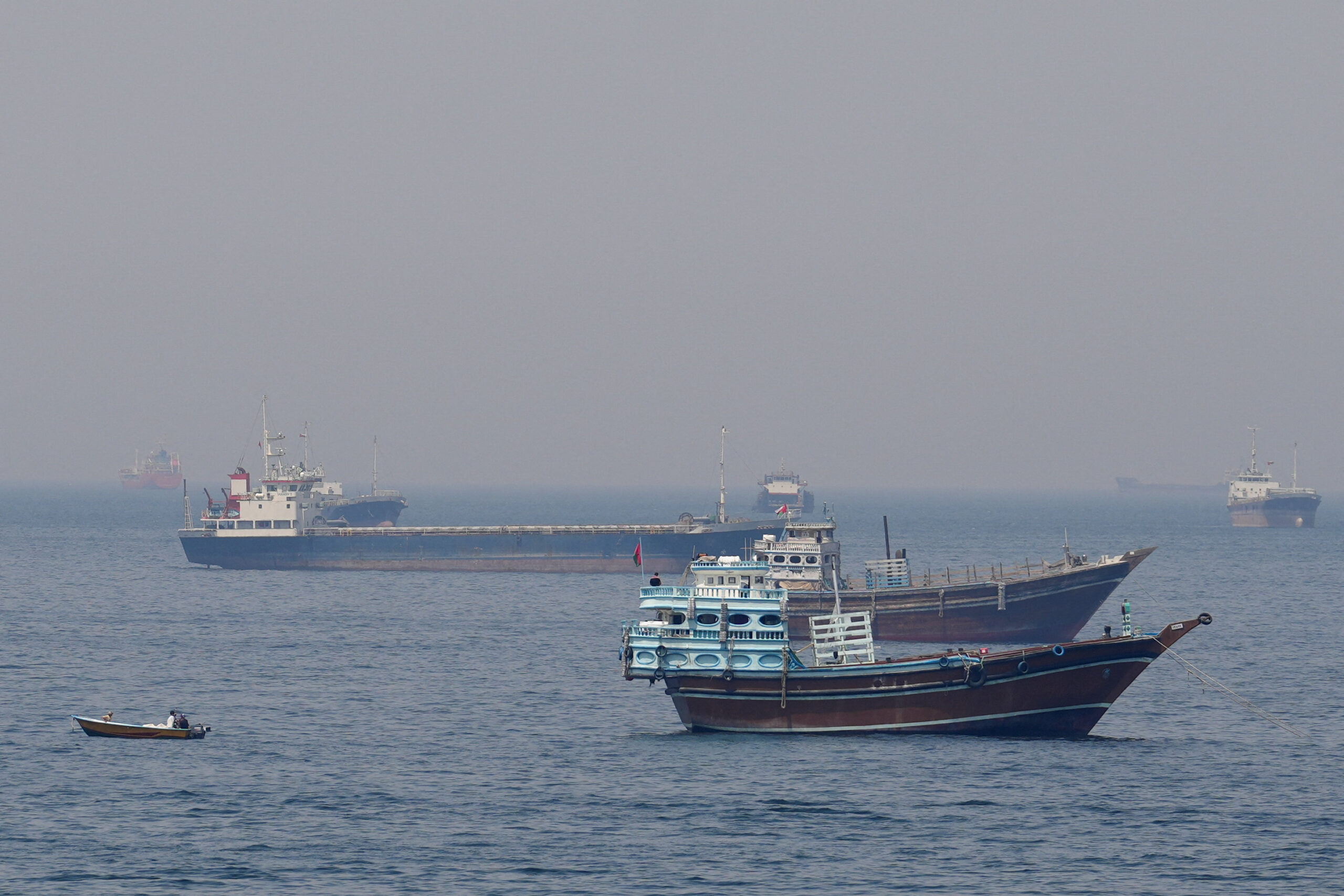
Friday’s apparent breakthrough on the Strait of Hormuz and Iran’s nuclear demands gave way this weekend to renewed hostilities after Iranian forces fired on a British-flagged freighter in the strait, which Trump described on Truth Social as a total violation of the ceasefire agreement and announced would be met with strikes on every power plant and bridge in Iran if a deal is not reached in the current round of talks in Islamabad.
Duncan Wood, fellow at the Wilson Center and CEO of Hurst International Consulting, joined Dan Proft on Chicago’s Morning Answer to argue that despite overwhelming American military and economic superiority, the conflict is nowhere near resolution and that both sides are misreading each other’s willingness to sustain pain.
Wood said the Iranian reversal over the weekend, in which the regime first appeared to agree to key American demands and then pulled back, is consistent with what international relations scholars call intermestic politics, the collision of domestic political pressures with international negotiating positions. Iran’s political system, despite appearing monolithic from the outside, contains multiple competing factions and vested interests that are simultaneously negotiating with each other and with whatever constitutes the formal leadership, creating exactly the kind of chaotic internal dynamic that UN Ambassador Mike Waltz described on ABC’s This Week when he suggested Iran may be too busy negotiating with itself to engage coherently with American demands. The same dynamic applies on the American side, where the administration is weighing international objectives against the domestic political costs of elevated gas prices, inflation, and the approach of midterm elections.
The deeper structural problem, Wood said, is a complete mutual breakdown of trust. The Iranians came out of the initial diplomatic contacts saying they do not believe the United States will follow through on any deal it agrees to, and the Americans are saying exactly the same thing about the Iranians. Building even a minimum level of trust between parties with forty-seven years of hostility and multiple broken agreements is not something that happens in a weekend of talks in Pakistan, and Wood said he believes the conflict has a considerable way still to run for precisely that reason.
He pushed back gently on the framing that Iran is simply a powerless bobber waiting to sink. The regime’s remaining military capacity consists largely of cheap asymmetric tools, aerial drones costing approximately thirty-five thousand dollars each and naval drones that are similarly inexpensive but capable of causing significant disruption and anxiety in the strait and surrounding waters. The ability to cause pain to the other side, even from a position of overwhelming conventional military inferiority, provides a certain amount of negotiating leverage regardless of the underlying balance of forces. The Iranian calculation, Wood said, is that continued disruption to global energy flows will eventually make the political cost to Trump high enough to force a softer negotiating position.
Proft raised the concern he said would weigh on him if he were advising the administration, which is not Iran’s retaliatory capacity but the risk of self-inflicted harm through how the United States chooses to prosecute the next phase of the campaign. Striking infrastructure targets on the scale Trump has threatened would significantly increase civilian casualties, potentially generate a refugee crisis, and create the kind of international sympathy for Iran that has been notably absent so far. More fundamentally, as both Iraq and Afghanistan demonstrated, you cannot kill your way out of a conflict with ideologically committed adversaries who produce new fighters as fast as the old ones are eliminated. Wood said he shares that concern and that the Iraq precedent is the relevant cautionary tale: removing Saddam Hussein, who was genuinely evil, created conditions for the emergence of ISIS and a regional chaos that proved far more damaging to American interests than the original target.
On what an acceptable negotiated outcome looks like at this point in the conflict, Wood said a complete suspension of Iranian uranium enrichment for a defined period is probably the realistic ceiling. The American opening position has been twenty years, which Trump himself has suggested is not enough. Wood said ten years would not be a bad outcome given where things stand, acknowledging that it essentially replicates the structure of the Obama-era JCPOA that Trump withdrew from, which makes it politically difficult to characterize as a victory. His honest assessment is that any deal that produces a meaningful pause, buys time, and creates the conditions for more constructive engagement with whoever eventually governs Iran would represent progress worth celebrating even if it falls short of the maximalist objectives the administration has publicly stated.
The conversation closed on Trump’s upcoming meeting with Xi Jinping and what leverage the Iran campaign gives the United States in those talks. Wood said China has been severely damaged economically by the Strait of Hormuz closure, which cuts off a large share of its Middle Eastern energy imports, and Xi will be pressing Trump to ensure the strait reopens. Trump’s leverage in that conversation, Wood said, extends to the South China Sea, where China has been systematically attempting to establish the kind of chokepoint control over regional shipping lanes that Iran tried to exercise in the Gulf. The message Wood said he would deliver to Xi is direct: we have just demonstrated what happens to a regime that tries to use a strategic waterway as a weapon. Do not imagine you can do the same in the South China Sea. He also noted that China has built a different category of leverage through its dominance of critical minerals and rare earth elements, concentrating global supply chains for the raw materials essential to Western industry in ways that give Beijing negotiating power that does not depend on any geographic chokepoint and that will require a separate and sustained American strategic response.