




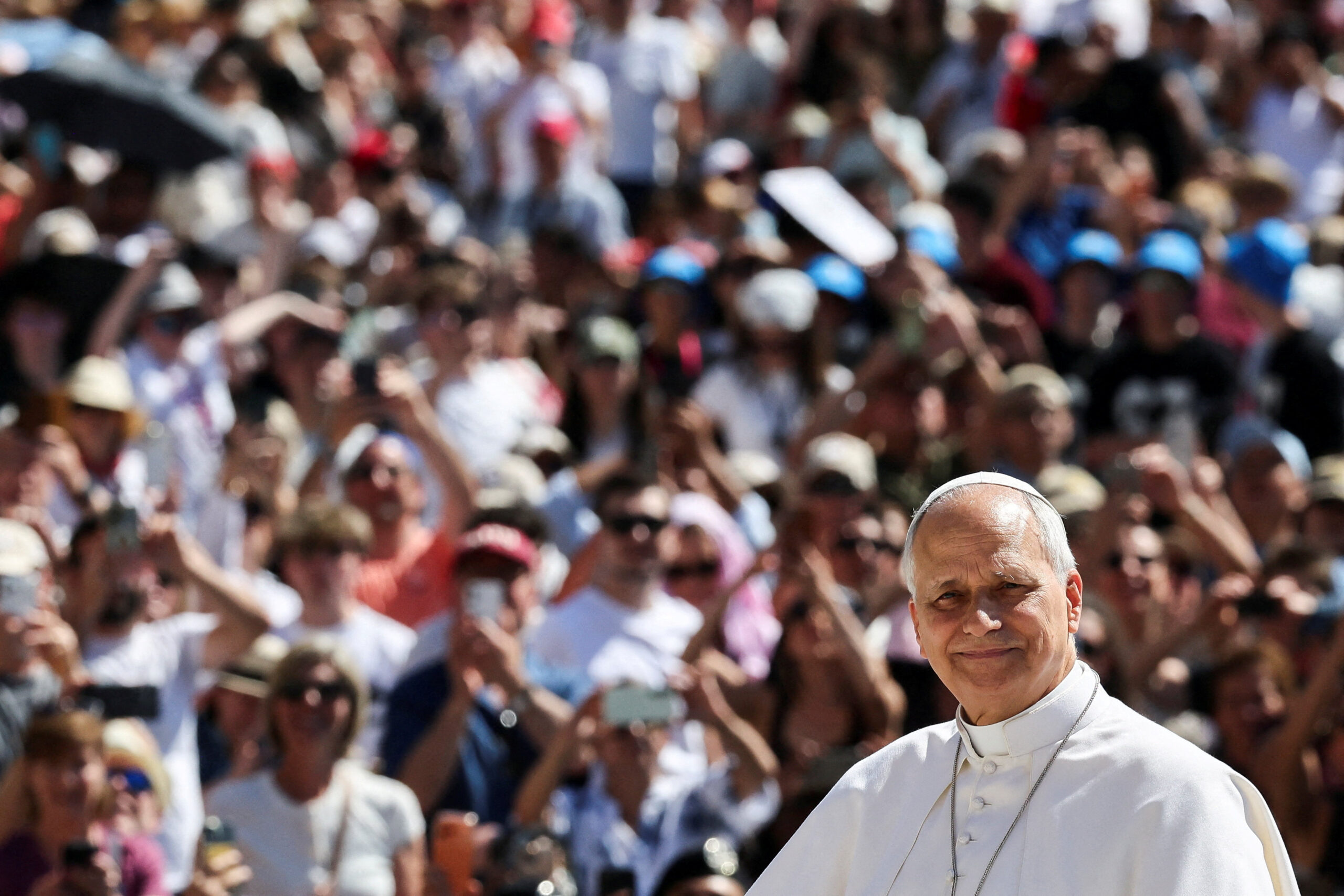
Pope Leo XIV’s encyclical on artificial intelligence drew a range of responses this week, from endorsement of its central concern about human dignity to criticism that it dodges the deeper questions about what AI actually is and where it is headed.
Rusty Reno, editor of First Things, joined Dan Proft on Chicago’s Morning Answer to offer his assessment of the document and to address the use of Christian scripture to justify abortion by newly announced Texas Senate candidate James Talarico.
Reno said he found the encyclical pretty modest in a good way. He said the document is primarily a cautionary document that urges humility before the pace of technological change, appeals to established Christian teaching about human dignity and genuine personal connection, and uses the Tower of Babel metaphor to warn against the kind of overreach that imagines technological mastery as the path to human flourishing. He said Pope Leo’s central theme, that AI will ruin us if it does not make us more human, is actually the most important thing anyone can say about the technology right now, and that the passage urging people to cherish places and times where physical presence remains crucial, shared meals, community gatherings, time spent with the lonely and the poor, is a direct and valuable corrective to the drift toward disembodied digital existence.
He did note a meaningful divide in how people approach AI, with some viewing it as an important but ultimately continuous development within the existing technological project, and others seeing it as a fundamentally transformative moment for human civilization and human self-understanding. He said the encyclical falls into the former camp, and that he is more inclined toward the latter, specifically regarding what he called the spiritual peril of AI that the document acknowledges but does not sufficiently emphasize. He said AI dramatically accelerates what he sees as the broader cultural tendency toward disembodiment, the progressive dissociation from the physical and material dimensions of human existence that is also visible in transgenderism, doctor-assisted suicide, and the general cultural drift toward treating the body as an obstacle to authentic selfhood rather than as constitutive of it.
He engaged with a critique by AI policy writer Dean Ball, who argued that the encyclical is too enamored of conventional academia-civil society talking points and actively harmful to global understanding of AI by endorsing the view that AI does not really think or really learn. Reno said he would not be as harshly critical as Ball but acknowledged the tension Ball is identifying. He said Ball is taking the transformationist view that AI represents a genuinely new kind of entity, while the encyclical treats it as more continuous with existing technology, and that disagreement reflects a real and important division in how thoughtful people are approaching the question.
On the practical dimensions of the spiritual peril he described, Reno pointed to the already-documented phenomenon of people committing suicide after receiving encouragement from AI companions, treating the bot as a counselor and friend whose guidance they follow. He said a scenario now entirely feasible with existing technology is the creation of AI simulations of deceased loved ones, systems that would mine a deceased person’s emails, social media history, and voice recordings to construct an interactive personality that surviving family members could continue to converse with as if the person were still alive. He said he fears this kind of application specifically because it represents a refusal of the reality of mortality, a way of evading the most fundamental human reckoning rather than passing through it.
On Ross Douthat’s New York Times column comparing the current era of tech philanthropy unfavorably to the Gilded Age philanthropists who built the Metropolitan Museum, Carnegie Hall, urban parks, college campuses, and churches, and asking whether AI might redirect the super-rich toward creating beautiful lasting physical institutions, Reno said one hopes but is not optimistic. He said if you follow Neil Postman’s analysis of how communication technology progressively dematerializes human experience and redirects attention toward the ethereal world of data rather than the physical world of things that can be touched and seen and inhabited, it is not surprising that tech fortunes are not invested in leaving physical marks on the world. He said AI may simply accelerate that tendency rather than reverse it.
On James Talarico’s argument that the Annunciation in Luke, in which the angel asks Mary’s consent before the incarnation, establishes consent as the foundational Christian principle that justifies abortion rights, Reno said the interpretation is ludicrous on its face. He said sexual intercourse itself constitutes consent to the possibility of new life, which is the reality that has been severed by the broader cultural separation of sex from fertility. He was notably measured in how he characterized the broader political phenomenon of appropriating scripture to justify progressive causes, calling it perennial in the political sphere and something that should be engaged and refuted rather than simply denounced. He said when people urging what he considers evil causes appeal to the scriptures to justify them, it actually provides an opportunity to educate the public about what God’s word actually says and about the moral truth of the matter. He said the misuse of scripture in public argument is in that sense a form of playing on the home field of those who take the Bible seriously, and should be met with serious engagement rather than dismissal.