




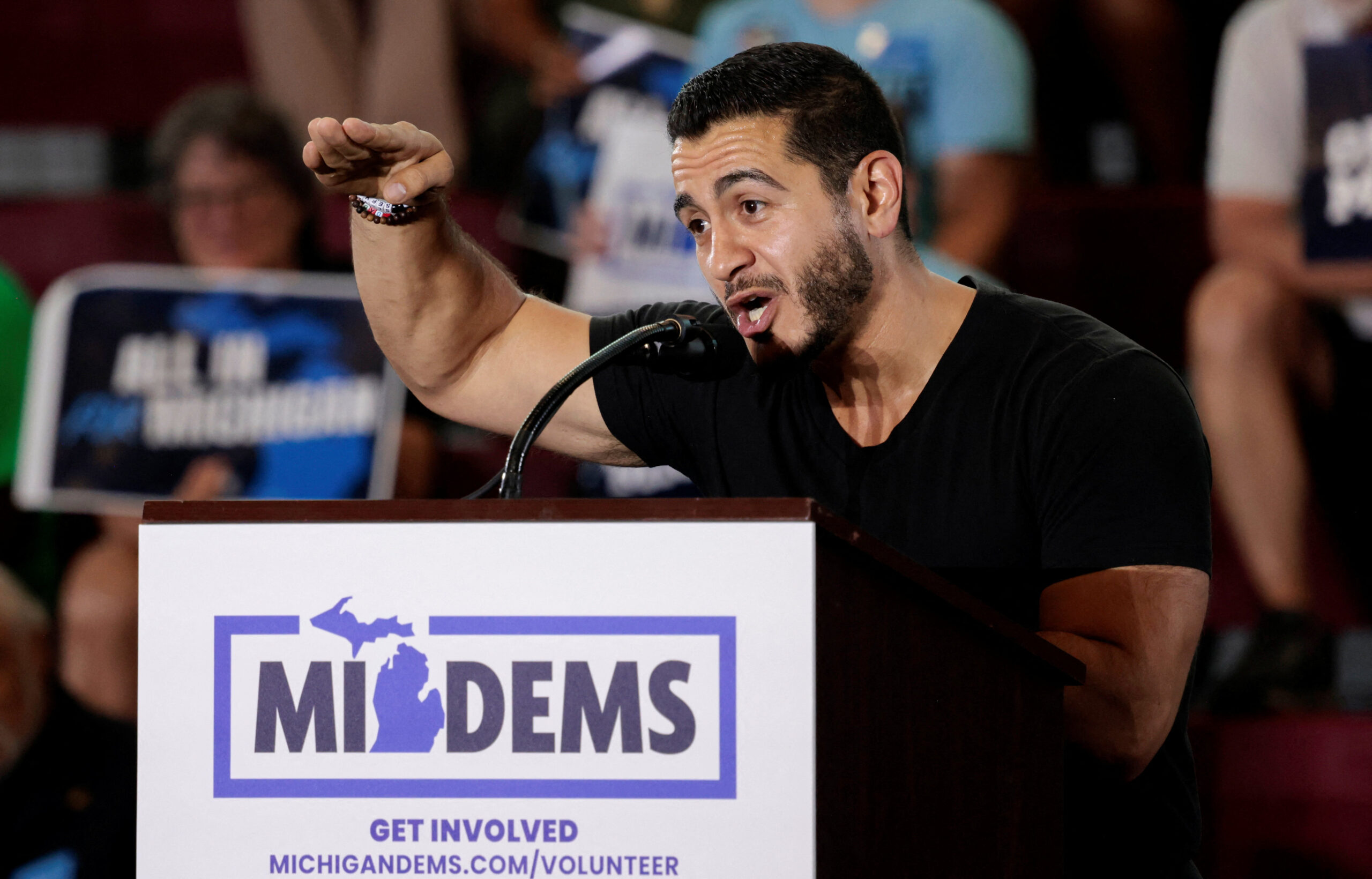
The Democratic Party’s reluctance to publicly rebuke its most provocative left-wing figures is allowing extremism to take root within the party, New York Post columnist Michael Goodwin said on Chicago’s Morning Answer on AM 560 The Answer.
Michigan gubernatorial candidate Abdul El-Sayed, who drew a sweeping comparison between the history of American football and the country’s record on slavery, westward expansion and the treatment of Native Americans. Proft also cited inflammatory remarks from streamer Hasan Piker, whom he described as an associate of El-Sayed, including comments dismissive of concerns about the September 11th attacks and supportive of Hezbollah. Proft invoked the history of 1990s activist Sister Souljah, whose comments about racial violence during the Los Angeles riots prompted Bill Clinton to publicly denounce her, a moment widely remembered as an example of a Democratic leader drawing a clear line against extremism within his own coalition. Proft asked Goodwin whether Republicans should try to make the midterm elections a referendum on Democratic Socialists of America-aligned candidates like El-Sayed.
Goodwin agreed that the absence of a comparable rebuke from today’s Democratic leadership, including Senate Minority Leader Chuck Schumer and House Minority Leader Hakeem Jeffries, reflects a party that has grown fearful of its own left flank rather than willing to confront it. He argued that leaders like New York Governor Kathy Hochul, who is seeking reelection, have particular incentive to stay silent given their reliance on votes from the party’s more radical wing. Goodwin pointed to the recent primary loss of a further-left candidate to Grace Hong in one race as evidence that voters can reject extremism when a viable alternative unites behind sane, mainstream positions, but said that outcome hasn’t yet translated into a broader willingness among national Democratic leaders to call out the party’s radical elements directly.
The conversation turned to New York City, where Goodwin discussed activist Tracy Rosenthal, who has drawn attention for advocating a general rent strike as a strategy to eliminate rent altogether. Goodwin characterized Rosenthal as part of a broader wave of far-left figures who have gained influence within city politics, alongside newly elected officials pushing steep tax increases on wealthy residents. He drew parallels to the economic collapse of Cuba, the Soviet Union and East Germany, arguing that the erosion of private property rights and free enterprise historically leads to broken economies rather than the equity such movements promise. Goodwin said the United States’ decades-long record of a high standard of living and its outsized share of global medical innovation reflect the strength of its regulated capitalist system, not chance, and argued Republicans need to make that case forcefully rather than assume it’s self-evident.
Asked about reports suggesting New York City Mayor Zohran Mamdani’s early honeymoon period may already be ending following a rocky rollout of a proposed tax on pieds-à-terre, Goodwin was skeptical, saying he saw little substance behind the headlines. He noted Mamdani continues to associate with figures like Rosenthal without distancing himself from their positions and has largely spoken only to his existing base rather than reaching out to the majority of New Yorkers who didn’t vote for him. Goodwin said that shift, from campaigning to governing for the whole city, is typically what separates a lasting political leader from one still running a campaign, and suggested Mamdani has yet to make that transition.