




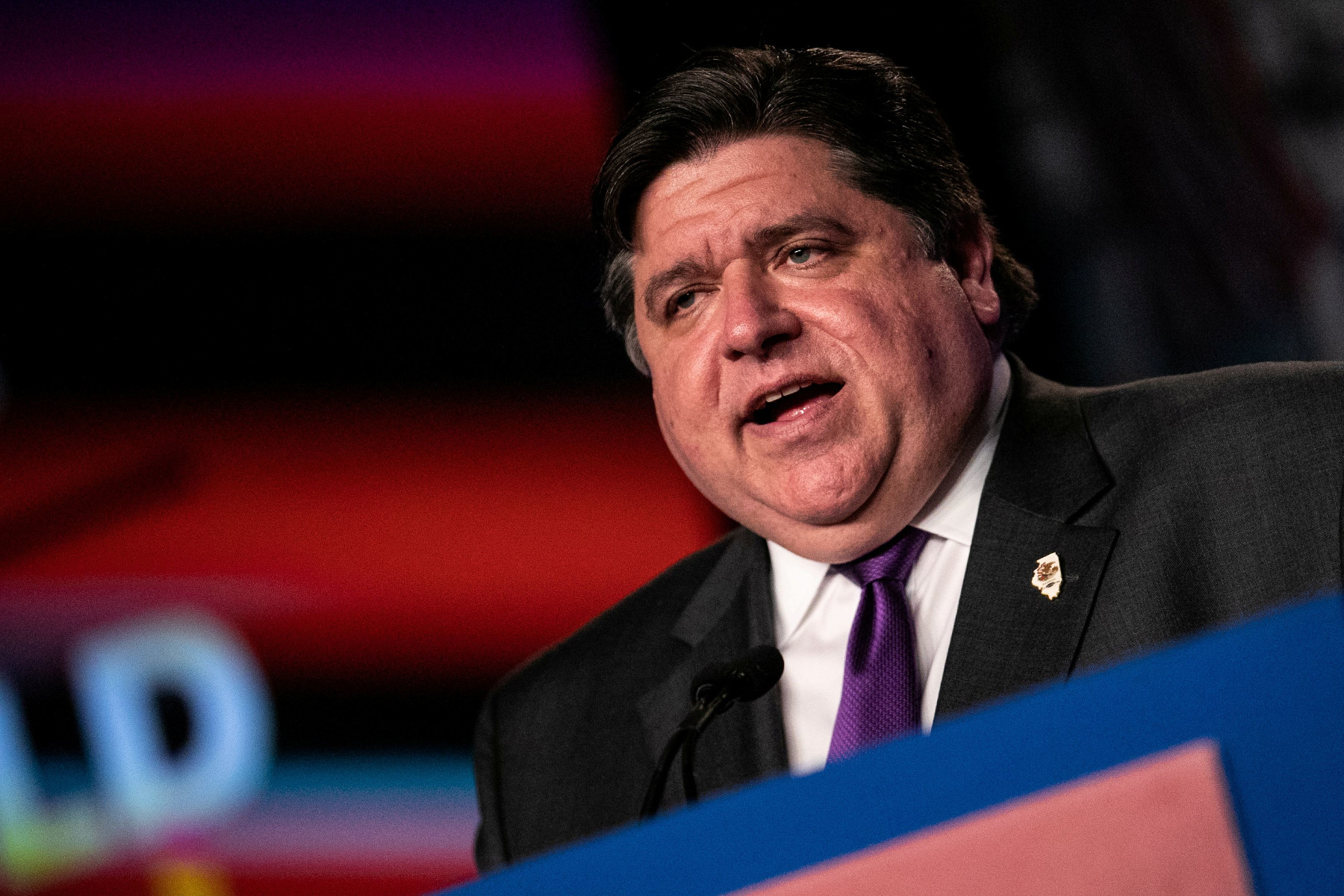
The mayor of Naperville, Scott Wehrli, released a video this week urging residents to contact their state legislators to oppose the Build Act, a bill being pushed by Governor Pritzker that would mandate developers be allowed to build six to eight-unit residential buildings on lots currently zoned for single-family homes, by right, with no local hearing, no city council vote, and no community input.
Stephen Moore, economist and co-author of The Trump Economic Miracle, joined Dan Proft on Chicago’s Morning Answer to weigh in on the Build Act, the housing crisis more broadly, New York Mayor Zohran Mamdani’s property seizure proposals, and the AI industry’s self-inflicted communications problem.
On Illinois housing policy, Moore made the sardonic observation that Pritzker actually has a very effective plan for lowering housing costs in Illinois, which is to drive another million productive residents out of the state and let supply and demand do the rest. He said the more serious problem is the composition of the population flow Illinois is producing, with departing residents earning median household incomes around eighty-five thousand dollars being replaced by arrivals earning fifty to fifty-five thousand dollars. That spread compounds over time and accelerates the fiscal deterioration that makes Illinois an increasingly unattractive place to invest or put down roots.
On the Build Act specifically, Moore said he has genuine uncertainty about zoning restrictions as a matter of principle, since a neighbor’s ability to prevent what someone does on their own adjacent property raises real property rights questions. But he said the libertarian argument for deregulating zoning does not apply here, because what the Build Act represents is state preemption of local decision-making, which is a fundamentally different question. He said as a believer in subsidiarity and local control, the state overriding the community planning decisions of Naperville, Wilmette, Hinsdale, and River Forest to mandate density that those communities have deliberately chosen not to allow is an entirely separate issue from whether any given zoning restriction is philosophically justified. The government closest to the people should be making these decisions, not Springfield.
He shifted briefly to note that he had been in Washington the previous day for a gathering of approximately forty Republican state attorneys general, and that not a single Democratic attorney general attended the White House meeting on government program fraud convened by JD Vance. He said the two possible explanations are Trump derangement syndrome or a genuine preference for the fraud to continue, and suggested they are probably two sides of the same coin.
On Mamdani’s proposal to seize rental properties in New York and convert them back to rent-stabilized units, Moore delivered his assessment with appropriate sarcasm, saying it makes perfect sense if your goal is to take property from rich people and give it to poor people in the name of income equalization. He said the broader pattern of vilifying economic success, treating the creation of a billion-dollar company as a moral offense deserving punishment, is something he has been writing about and has not seen in forty years of watching American politics.
On artificial intelligence, prompted by Harvard professor Arthur Brooks’s observation about commencement speakers being booed for promoting AI adoption and Pope Francis’s encyclical arguing that AI will ruin humanity if it does not make people more human, Moore said the technology industry has done a catastrophically bad job of explaining what AI will actually do for ordinary people. He said when he asks audiences how many are excited about AI, roughly a third raise their hands. When he asks how many are worried, two-thirds do. He said this is a communications failure, not a technology failure. The actual benefits of AI include giving blind people the ability to see, curing cancer within ten years, enabling people in wheelchairs to regain mobility, and eliminating the drudgery work that has always consumed the lowest-paid workers. He said within ten to fifteen years, many of the two million Americans currently driving trucks will find that work automated, which will produce short-term disruption but long-term prosperity for everyone including the workers displaced.
He expressed puzzlement that the people in Silicon Valley who are smart enough to build five-trillion-dollar industries cannot articulate a simple case for how this technology improves human life. He said the strange political coalition forming against AI, which unites old Occupy Wall Street leftists with elements of the MAGA movement around a shared anxiety about job displacement and technological change, represents an assault against economic progress that has no historical parallel in four decades of observing American politics, and that unless the people building these technologies start making the affirmative case for them in terms ordinary people can connect to their daily lives, the political environment around AI will become increasingly hostile.