




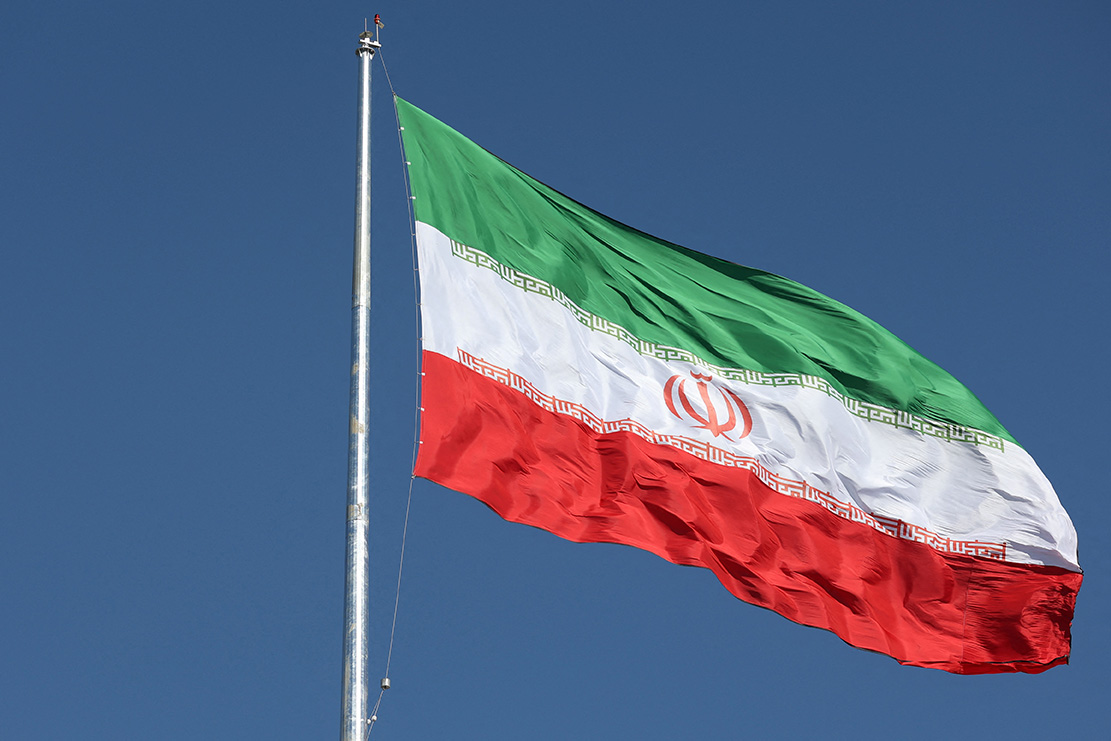
Prospective diplomatic talks between the United States and Iran broke down this week after Tehran rejected Washington’s insistence on a multilateral meeting in Istanbul, a move that analysts say underscores the growing likelihood of a more direct confrontation between the two countries. The talks, first reported by Axios, were intended to include other Middle Eastern nations as observers, but Iranian officials sought to relocate the meeting to Oman and limit it to a bilateral discussion focused solely on nuclear issues. U.S. officials declined, telling Iran it was “Istanbul or nothing,” prompting Tehran to walk away.
The collapse came as President Donald Trump publicly warned that Iran’s supreme leader “should be very worried,” language that observers note has often preceded concrete action in past foreign policy crises. The remarks followed a series of U.S. military deployments in the region and heightened tensions after Iran’s regime carried out what human rights groups have described as mass killings during recent internal unrest.
In a discussion on Chicago’s Morning Answer, Dan Proft spoke with Rich Goldberg, a senior adviser at the Foundation for Defense of Democracies and a former National Security Council and U.S. Senate official, about what the breakdown signals. Goldberg argued that if a similar diplomatic posture had emerged under a different administration, it would likely be viewed as a dangerous concession to a hostile regime. Iran, he said, has waged a four-decade campaign against U.S. interests, pursued nuclear weapons, supplied arms to Russia, and served as a critical energy partner for China.
Goldberg emphasized that the current situation cannot be separated from the U.S. military posture in the region, which he described as more robust than during previous attempts at engagement with Tehran. He pointed to recent operations targeting adversarial regimes and terrorist leaders as evidence that the administration is prepared to back its rhetoric with force. In his assessment, the Iranian regime crossed a red line by violently suppressing domestic protests, an act he said has fundamentally altered the strategic calculus.
The most immediate U.S. priority, Goldberg argued, would be degrading Iran’s missile, drone, and naval capabilities, which he described as direct, daily threats to American forces and allies. He also highlighted Iran’s economic vulnerability, particularly its reliance on oil exports, noting that a disruption of oil flows from key terminals could have a decisive impact on the regime’s stability. Such a move, he said, would likely provoke retaliation, including attempts to disrupt shipping in the Strait of Hormuz or attacks on regional energy infrastructure, making preemptive action against Iranian military assets critical in any escalation scenario.
When asked about the prospect of regime change, Goldberg cautioned that outcomes are inherently uncertain. A targeted campaign focused on military capabilities could weaken the regime over time without immediately altering its leadership, while a decapitation strike against senior figures could either trigger internal paralysis or lead to a successor government dominated by the Revolutionary Guard Corps. He noted that Israel’s 2024 strike on Hezbollah leadership demonstrated how removing top command figures can temporarily freeze an organization’s ability to respond, creating an opening for broader change, though no such result can be guaranteed in Iran.
The conversation also touched on U.S. relationships with regional partners such as Qatar and Turkey, which Goldberg described as longstanding challenges across administrations. He criticized what he sees as Washington’s reluctance to confront allies that simultaneously host U.S. forces while supporting Islamist movements hostile to American interests, arguing that this ambiguity complicates efforts to counter Iran and stabilize the region.
As diplomatic channels narrow, Goldberg framed the moment as one defined less by negotiation and more by deterrence. The key question, he suggested, is not whether the United States can force a specific political outcome in Iran, but whether it is willing to decisively neutralize threats that, in his view, have long endangered American security and regional stability.