




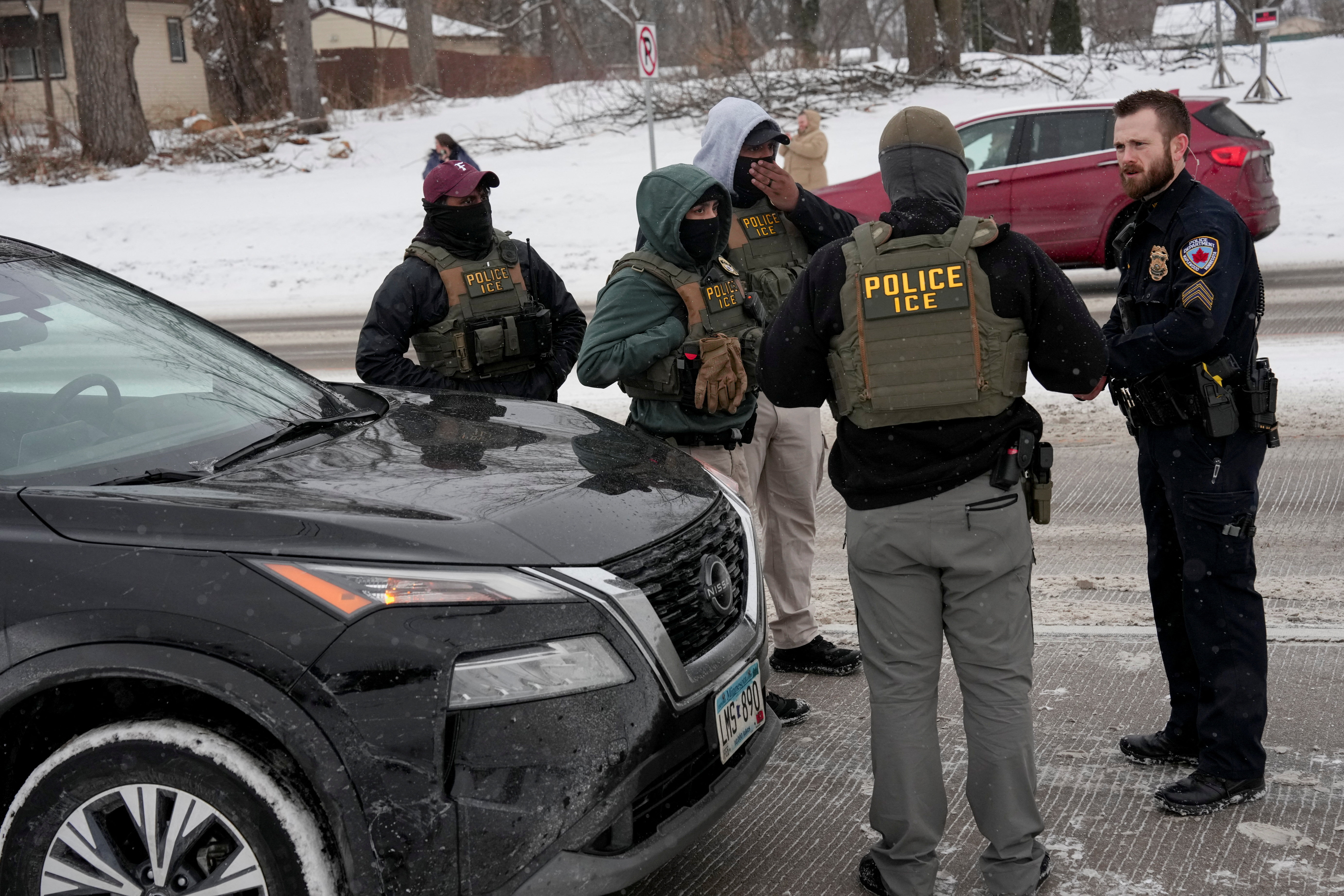
A series of high-profile arrests tied to disruptive protests and a new wave of judicial injunctions against federal immigration enforcement are intensifying debate over the balance of public order, executive authority, and the role of the courts. The developments span multiple states and institutions, underscoring how immigration policy and protest activity continue to collide in courtrooms as much as on city streets.
Dan Proft discussed arrests connected to demonstrations near Columbia University, where the New York City Police Department moved in after protesters blocked roadways and building entrances. Police actions resulted in multiple disorderly conduct arrests, which authorities said were carried out without major incident after demonstrators refused repeated orders to clear public access points.
The protests come as immigration enforcement actions by the Trump administration face renewed resistance from federal judges. Several recent rulings have temporarily blocked efforts to rescind Temporary Protected Status for Haitian nationals and restricted the federal government’s ability to use certain taxpayer data in locating individuals in the country illegally. Critics argue these decisions go beyond statutory interpretation and instead reflect policy preferences imposed from the bench.
To unpack the legal implications, Proft was joined by Will Chamberlain, senior counsel at the Article III Project. Chamberlain said the administration’s authority in both cases is well established in law, particularly regarding Temporary Protected Status, which by definition is not permanent. He argued that judicial efforts to prevent its rescission contradict the plain meaning of the statute and prior precedent.
Chamberlain also pointed to a broader pattern of what he described as judicial overreach, noting instances where lower-court judges have issued injunctions that directly conflict with congressional authority or prior appellate rulings. In his view, repeated reversals by higher courts have not deterred some judges from reissuing similar orders, effectively delaying enforcement even when the executive branch is likely to prevail on appeal.
Beyond the courtroom, the discussion turned to public safety concerns tied to illegal immigration, including cases involving commercial driver’s licenses allegedly obtained through fraud. Chamberlain said lax enforcement and verification standards have allowed unqualified drivers to operate heavy commercial vehicles, creating risks that extend well beyond immigration policy and into everyday public safety.
The conversation also touched on the political battle over election integrity, particularly Democratic opposition to the SAVE Act, which would require proof of citizenship to register to vote and voter identification at the polls. Chamberlain criticized claims that such measures amount to voter suppression, noting polling that shows broad bipartisan support for identification requirements. He argued that access to basic identification is already essential for modern life and that portraying large segments of the population as incapable of obtaining IDs is both inaccurate and condescending.
Taken together, the arrests, injunctions, and legislative fights illustrate a widening struggle over who sets the rules in areas ranging from immigration enforcement to election administration. As appeals move forward and protests continue, the tension between executive action, judicial intervention, and public order shows no sign of easing.