




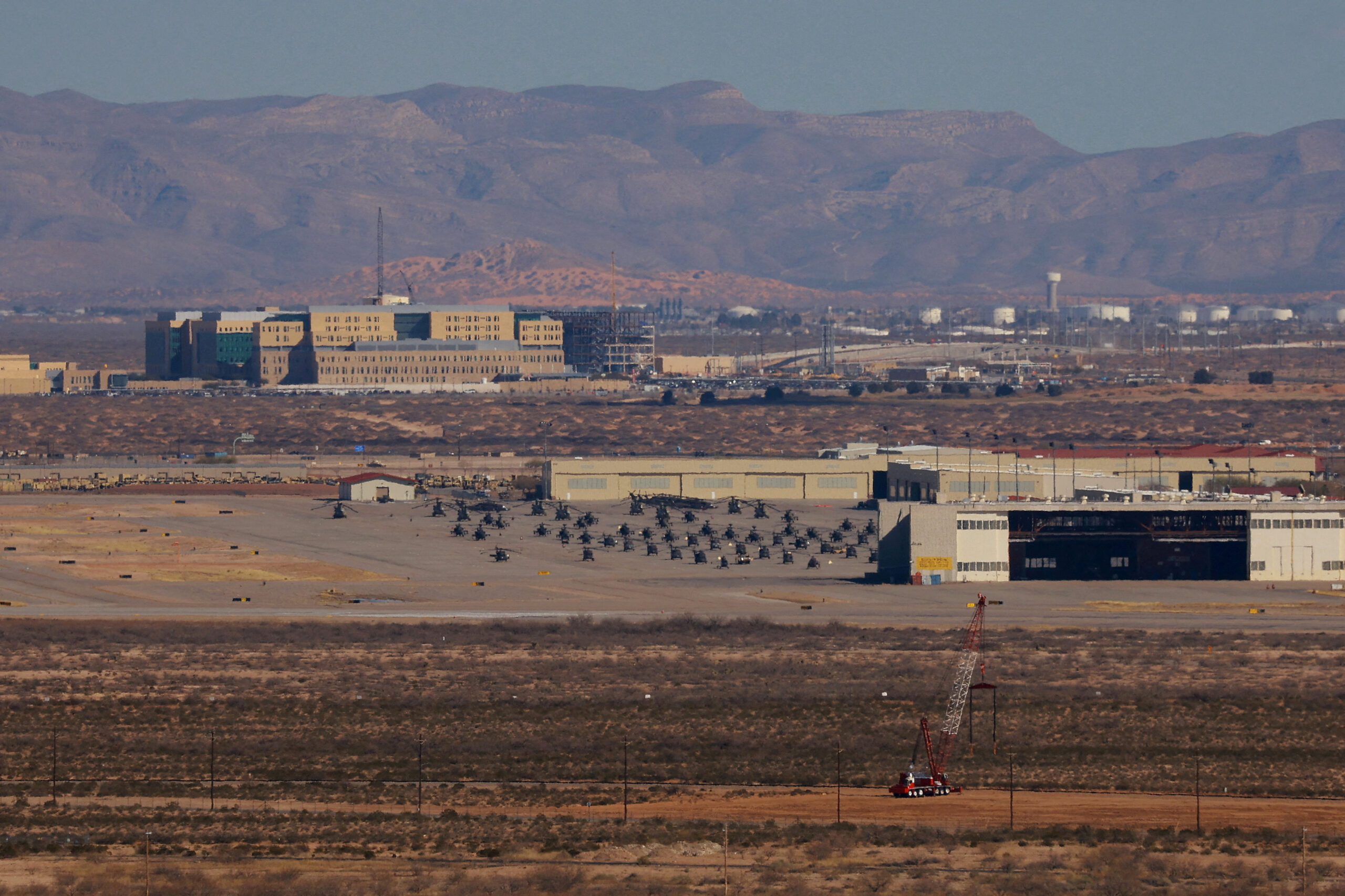
As federal appellate courts hand the Trump administration key victories on immigration enforcement, a temporary shutdown of airspace over El Paso has added a new dimension to border security concerns, highlighting the growing role of cartel drone activity along the U.S.-Mexico border.
In recent days, the Fifth Circuit Court of Appeals ruled that asylum seekers who enter the United States unlawfully do not have an automatic right to remain in the country while their claims are processed. The court pointed to longstanding statutory language requiring that applicants for admission who cannot demonstrate lawful entry “shall be detained” pending removal proceedings, reinforcing the executive branch’s authority to enforce federal immigration law.
The Ninth Circuit also sided with the administration in a separate case, upholding the Department of Homeland Security’s decision to end Temporary Protected Status for migrants from Nepal, Honduras, and Nicaragua. The court rejected claims that the decision was arbitrary and capricious, affirming the executive branch’s discretion in immigration policy.
Ammon Blair, a former U.S. Border Patrol agent and now a senior fellow at the Texas Public Policy Foundation, said the rulings reflect a return to statutory clarity.
“Physical presence does not confer lawful status,” Blair said, noting that asylum is a discretionary form of relief, not a guaranteed right to remain in the country. “Asylum does not erase an unlawful entry. It does not eliminate inadmissibility. It’s a temporary relief that the executive branch has discretion to grant or deny.”
The decisions come amid broader political and legal battles over immigration enforcement, including disputes over funding for Immigration and Customs Enforcement and other Department of Homeland Security agencies.
Meanwhile, a separate border-related incident unfolded when airspace over El Paso and parts of southern New Mexico was briefly shut down. Federal officials later indicated the disruption was linked to concerns over cartel drone activity crossing into U.S. airspace.
Blair described the incident as part of a growing pattern of aerial incursions by Mexican cartels, which use drones for surveillance, smuggling narcotics, and transporting migrants across the border. In some cases, he said, cartels deploy swarms of drones to disrupt U.S. air operations and limit law enforcement visibility.
Thousands of drone incursions are reported annually in high-traffic sectors such as the Rio Grande Valley, according to congressional testimony from border officials. Until recently, Blair said, the Department of Homeland Security lacked a centralized counter-drone program, relying instead on memorandums of understanding with the Department of Defense to access advanced detection and mitigation technology.
In the El Paso case, confusion reportedly arose among multiple federal agencies, including Customs and Border Protection, the Federal Aviation Administration, and the Department of Defense. Concerns over unidentified aerial objects and the use of counter-drone measures prompted the FAA to temporarily restrict air traffic in the area.
Beyond surveillance, Blair warned that cartels have been studying drone warfare techniques used in global conflicts. Some groups have reportedly sent operatives abroad to observe and learn tactics involving fiber-optic-controlled drones and electronic warfare-resistant systems.
While Blair emphasized that cartels have generally avoided direct attacks on U.S. soil that could trigger a major federal response, he said the capability exists. He also suggested that rival cartels could attempt to manipulate U.S. enforcement resources by staging provocations in competitors’ territories.
Complicating matters further, Blair described what he characterized as deep corruption within Mexican institutions, arguing that cartel organizations operate with influence extending from local governments to the federal level. He said the cartels’ involvement in industries beyond narcotics, including agriculture and supply chains, creates economic interdependencies that make aggressive enforcement more complex.
The combination of legal battles in U.S. courts and evolving cartel tactics along the border underscores the multifaceted challenges facing immigration enforcement and national security officials. With appellate courts reinforcing executive authority and new technological threats emerging, border policy remains at the center of national debate.
As litigation continues and federal agencies adapt to changing conditions, the administration’s broader strategy on immigration and border security is likely to face both judicial scrutiny and operational tests in the months ahead.