




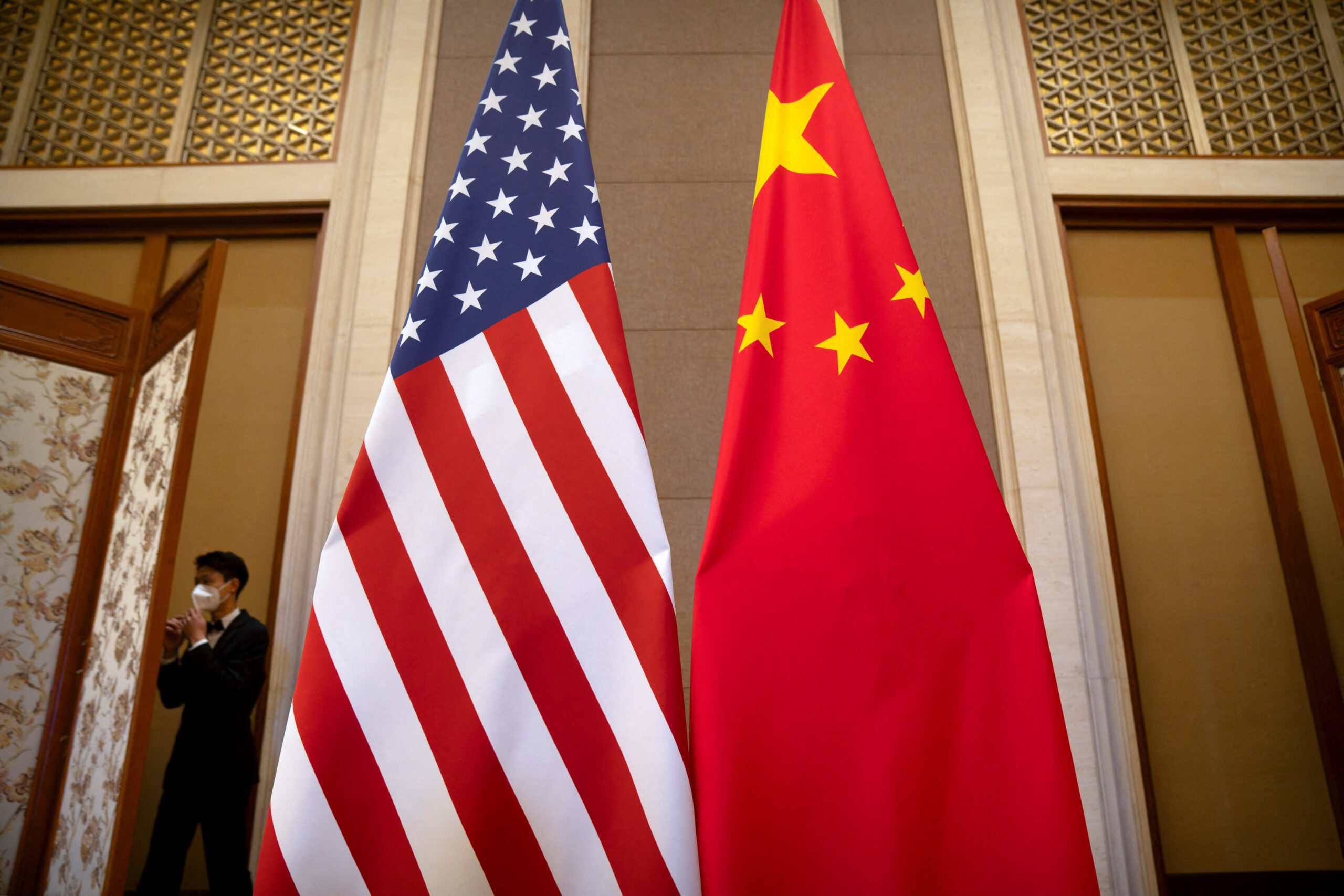
As tensions escalate in the Middle East, analysts are increasingly examining the role China may play in shaping the broader geopolitical consequences of the conflict with Iran.
Foreign policy expert Gordon Chang said the relationship between Beijing and Tehran has become a critical factor in understanding how the crisis could ripple beyond the region and affect global power dynamics.
Chang noted that China has long maintained close economic ties with Iran, particularly through energy trade. In recent years, Beijing has purchased the vast majority of Iran’s crude oil exports, providing the regime with a crucial financial lifeline despite international sanctions.
“China bought more than 80 percent of Iran’s crude exports last year,” Chang said, arguing that the purchases effectively helped sustain Iran’s government at a time when its economy faced mounting pressure.
Beyond oil purchases, Chang said China has also supported Iran diplomatically and militarily, providing technology, equipment, and other assistance that has strengthened Tehran’s strategic capabilities.
He suggested that Iran’s nuclear ambitions have also been influenced by Chinese involvement, describing the program as heavily shaped by Beijing’s technological support over the years.
From Chang’s perspective, the partnership reflects a broader geopolitical strategy in which China cultivates relationships with governments that oppose U.S. influence. Iran, he said, has been one of Beijing’s most important partners in that effort.
While Iran may not view itself as a proxy, Chang believes China benefits from the relationship by expanding its global reach without directly confronting the United States.
That dynamic has led some analysts to view recent military actions against Iran as potentially weakening China’s international network of allies.
Chang argued that the United States has increasingly targeted governments that maintain strong ties with Beijing, including countries such as Venezuela and Cuba.
He described the strategy as a form of geopolitical counterpressure designed to disrupt China’s efforts to expand influence around the world.
“China has been trying to encircle the United States with its partners,” Chang said. “What we’re seeing now is the United States pushing back.”
At the same time, the conflict has raised questions about whether China could attempt to exploit the situation in other parts of the world, particularly in East Asia.
Some analysts have warned that if U.S. military resources become heavily focused on the Middle East, Beijing might see an opportunity to increase pressure on Taiwan.
Chang said such a move appears unlikely in the immediate term, in part because China’s military leadership has recently been shaken by internal purges that have disrupted the chain of command.
The leadership body responsible for overseeing China’s armed forces normally consists of seven members, he said, but currently only a fraction of those positions are filled due to ongoing political investigations and dismissals.
The turmoil has left senior officers uncertain about their standing within the government, which Chang believes has weakened operational coordination within the military.
“Chinese generals are more worried about the person in the office next door than they are about the United States,” he said.
Despite that instability, Chang cautioned that the strategic implications of the conflict could still affect China’s economy in the near term.
Because Chinese industry relies heavily on imported energy, disruptions to Iranian oil shipments could increase fuel costs and strain supply chains.
Early signs of that pressure have already appeared in China’s domestic energy markets, where prices for gasoline and diesel have recently climbed amid uncertainty about supply.
Chinese authorities have reportedly responded by limiting new export contracts for refined petroleum products and encouraging refiners to prioritize domestic demand.
Chang said Beijing may ultimately turn to alternative sources of energy, including increased purchases of Russian oil, though those supplies may come at higher prices as demand rises.
China could also draw from its strategic petroleum reserves if the disruption persists, though those reserves provide only a limited buffer.
Estimates suggest China’s emergency oil stockpiles represent roughly several months of import coverage, which means prolonged instability could still have economic consequences.
While the economic ripple effects are significant, Chang emphasized that the conflict with Iran should primarily be understood as a security decision rather than a maneuver aimed at influencing trade negotiations with China.
He pointed to Iranian statements and intelligence assessments indicating that Tehran was advancing both nuclear and missile capabilities capable of threatening U.S. territory.
According to Chang, the urgency of those developments made military action unavoidable from the perspective of national security planners.
“This was something that had to be addressed,” he said, arguing that Iran had openly signaled hostility toward the United States while continuing to develop long-range missile technology.
For Chang, the broader lesson is that regional conflicts are increasingly intertwined with global competition among major powers.
While the immediate focus remains on Iran, the outcome could reshape geopolitical relationships far beyond the Middle East, particularly if China’s ability to support key partners is weakened in the process.
As the situation evolves, analysts say the intersection of energy markets, military strategy, and great-power competition will likely continue to shape how the conflict unfolds on the world stage.